Schedule your Complimentary Design Consultation


Leather Reclining Sectionals for Coastal Living

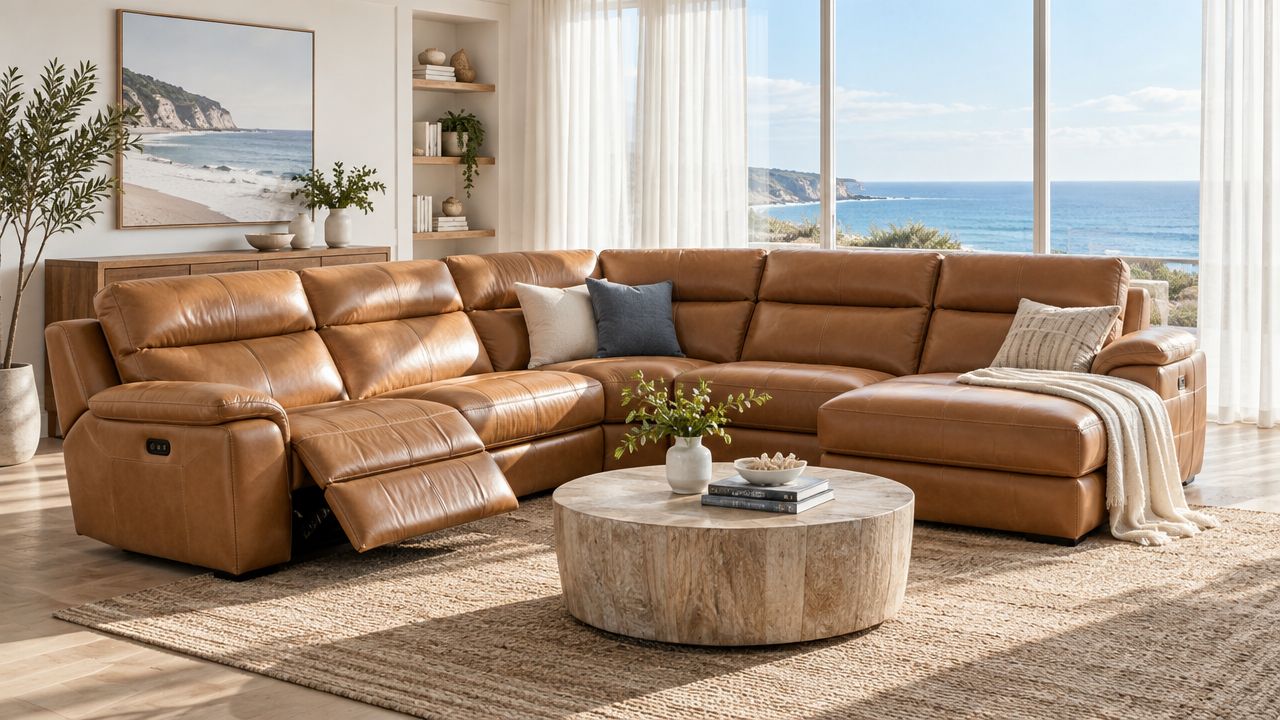
After a long day in Brevard County, the living room often becomes the place where everyone gathers. Shoes come off, the ceiling fan turns slowly, and the right leather reclining sectional gives each person room to stretch out without separating the household into different corners. In Florida, that piece also has to handle bright windows, shifting humidity, pets, guests, and the steady rhythm of everyday life.
Choosing well means looking beyond color and showroom appearance. Leather grade, frame construction, reclining hardware, room clearance, climate control, and the ability to test the seat in person all shape whether your sectional feels like a thoughtful investment or a frustrating compromise.
The Allure of the Leather Reclining Sectional
You know the feeling of settling into a well-made recliner after a demanding day. The leather feels cool beneath your hand at first, then warms to your body. The seat supports your hips instead of swallowing them, your shoulders relax into the back, and the footrest rises with a quiet, satisfying mechanical movement. In a shared room, that comfort becomes more than personal luxury. It creates a natural gathering place.
A leather reclining sectional combines the generous footprint of a sectional with the ergonomic relief of motion seating. One person can sit upright with a book, another can recline for a film, and someone else can stretch along the chaise. The arrangement supports conversation when the footrests are closed and relaxed, parallel lounging when the evening slows down.
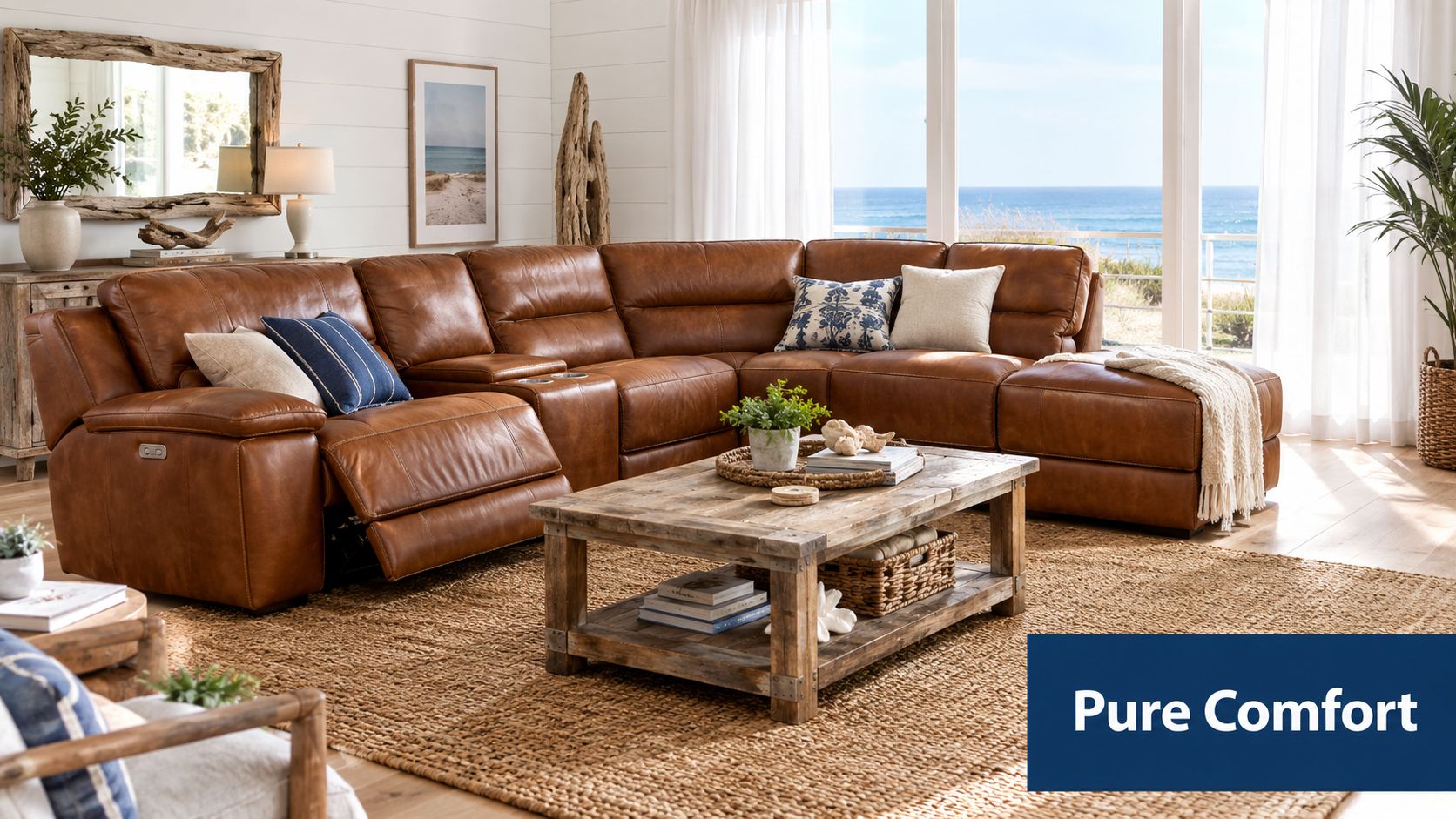
Comfort that earns its place
Leather has a distinctive sensory quality. A good hide feels supple rather than slick, with enough resilience to support repeated use. Over time, natural leather can develop a patina, so the surface gains character instead of looking like a disposable covering.
The broader category has also moved well beyond niche luxury. The global leather furniture market was estimated at $72.4 billion in 2025 and is projected to reach $118.6 billion by 2034, with a projected 5.6% CAGR, according to Dataintelo's leather furniture market overview. Recliners represented 17.6% of leather furniture sales in the cited 2025 breakdown, placing motion seating within a substantial part of leather upholstery demand.
That context helps explain why this form works so well in coastal homes. It carries a refined, polished appearance, but it also serves practical family-room needs. Motion seating represented 47.4% of total upholstery sales in 2021, while motion sofas and chairs rose 32.6% from 2020 to 2021 and recliner sales increased 26.1% during the same period, as reported in Lectra's leather furniture market analysis.
A useful test: A sectional should make the room feel more welcoming, not simply more furnished. If everyone naturally chooses a seat and the room still has an easy path through it, the design is doing its job.
The best leather reclining sectional becomes part of the household's rhythm. It hosts Sunday visits, quiet mornings, movie nights, and the occasional afternoon nap. Its value comes from that repeated usefulness, supported by honest materials and craftsmanship that can age gracefully.
Understanding Reclining Mechanisms
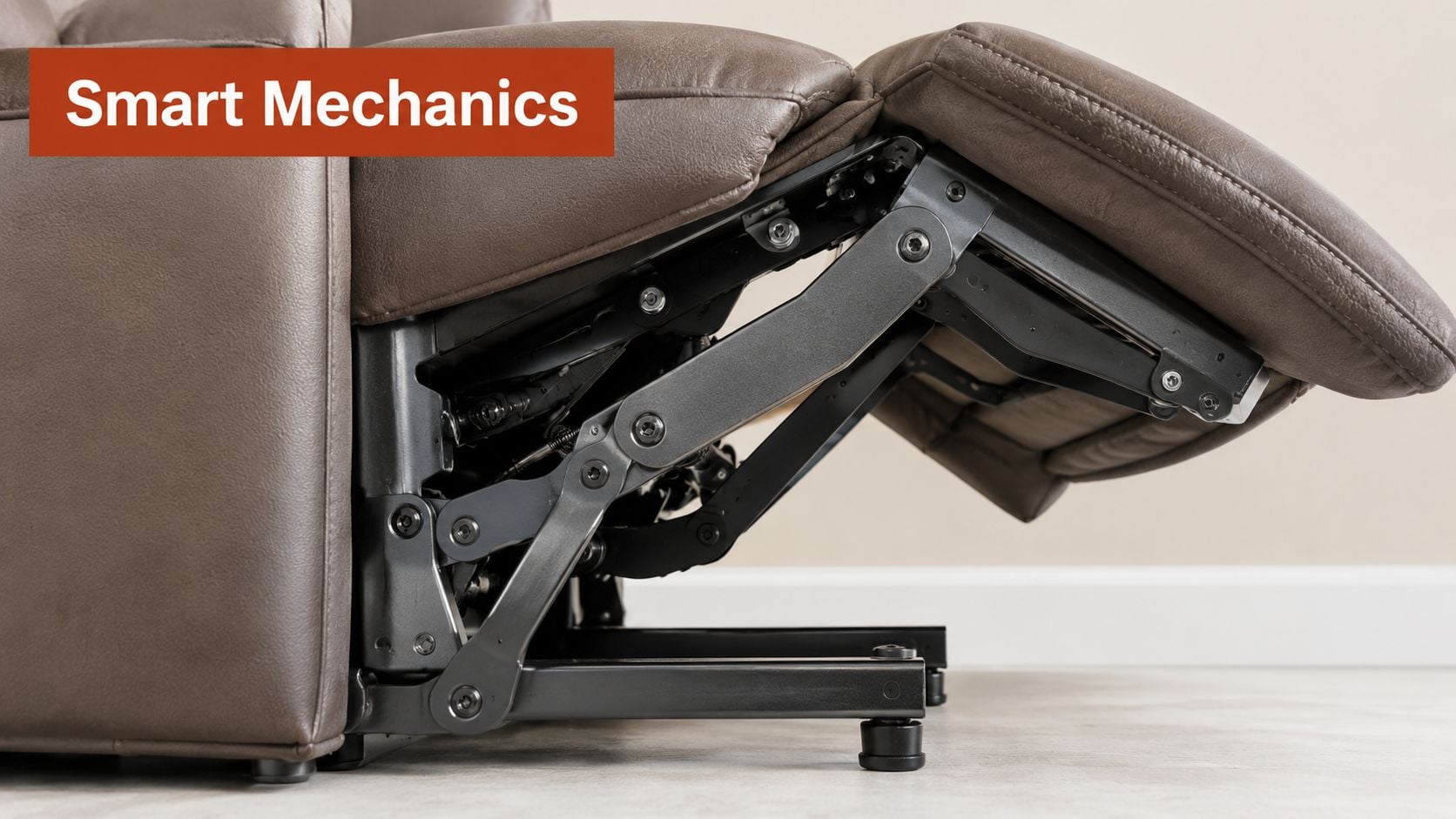
The mechanism determines how a sectional behaves in your room, how much effort it takes to recline, and how confidently it supports your body. Think of the options as different door systems. A manual mechanism uses your own movement, a wall-hugger changes the path through the room, and power controls let you make small adjustments with precision.
Manual movement and wall-hugger design
A traditional manual recliner usually opens when you lean back or pull a side handle. It has fewer electrical components and gives the movement a direct, familiar quality. For someone who likes a simple chair and doesn't want cords near the wall, manual reclining can be a practical choice.
A wall-hugger mechanism is about geometry rather than strength. Instead of sending the backrest directly backward, the seat moves forward as it reclines. That lets the sectional sit closer to a wall while preserving the opening path. It can work especially well in a compact family room, near a window, or along a wall shared with a walkway.
Before choosing one, sit fully upright, partially reclined, and fully reclined. Check whether your head rests naturally against the upper cushion and whether your heels stay supported when the footrest opens. A seat that feels comfortable in one position but strains your neck in another won't become more comfortable through daily use.
Powered adjustment and individual control
Powered reclining uses a motor to move the footrest and back. Depending on the design, the controls may offer a continuous range of positions rather than a single preset. That flexibility helps households with different body proportions, reading habits, and comfort needs.
A dual-power configuration can separate the movement of the headrest and footrest. You might raise your legs while keeping your back relatively upright, or recline farther when watching a film. The benefit isn't speed. It's fine adjustment, particularly for people who need a specific angle to feel supported.
Power seating does introduce more components, including motors, switches, and wiring. Complaint records and consumer discussions repeatedly identify mechanism failures, sinking seats, connectivity problems, and concentrated wear in the most-used position as issues worth investigating before purchase. That doesn't make powered seating a poor choice. It means the warranty, service process, replacement-part availability, and construction deserve as much attention as the upholstery.
A practical showroom sequence
Use the controls several times rather than pressing them once for demonstration. Listen for smooth, even operation. Check that the footrest closes without a jolt, that the seat doesn't twist, and that your knees and lower back remain supported throughout the movement.
For a closer look at configurations, materials, and motion features, explore this power reclining sectional sofa collection. Then test the exact seat in person. A photograph can't show whether the pitch suits your posture or whether the arm height feels natural when you're reclined.
Choosing the Right Leather Grade
Leather grades are easier to understand when you compare them with wood. Full-grain leather is like a solid board that retains its natural surface. Top-grain leather is still strong and refined, but it has been lightly adjusted for consistency. Corrected-grain leather is more like a finished surface that has received additional treatment to create a uniform appearance and added protection.
None of these categories automatically determines whether a sectional is well made. The grade tells you about the hide's surface and fiber structure. The frame, cushioning, stitching, treatment, and care routine still determine how the finished piece performs.
Full-grain leather
Full-grain leather retains the natural fiber structure and surface character of the hide. It tends to feel rich and tactile, with variations that make each piece distinctive. In a busy home, those natural marks can become part of the furniture's story rather than looking like flaws.
Its strength makes it a compelling choice for the high-contact zones of a reclining sectional, especially the seat, arms, and chaise. It generally develops patina instead of showing the same type of surface wear associated with fabric pilling. The trade-off is that natural character can include visible grain variation, and the surface benefits from consistent care.
Top-grain leather
Top-grain leather also retains a strong fiber structure, while manufacturers may refine the surface for a more even appearance. It usually offers a balanced combination of durability, softness, and visual consistency.
For many households, it provides the most comfortable middle ground. You get a polished look suited to coastal elegance, with enough resilience for regular lounging. Pay attention to the specification for the seating areas and exterior panels. A sectional may use stronger leather where bodies make contact and a different material on low-stress areas.
Corrected-grain and mixed constructions
Corrected-grain finishes can add surface protection and create a consistent color. That can be useful for households that prefer a more uniform appearance or need a surface that tolerates active use. The compromise is that additional correction can reduce some of the leather's natural texture and strength.
Leather-match construction requires particular attention. It may use genuine leather on the primary seating surfaces and a coordinated coated material or split leather on exterior panels. That isn't automatically a problem, but the materials may age differently in areas exposed to sunlight, rubbing, or repeated movement. Ask exactly where each material appears, how it should be cleaned, and whether the color is expected to remain consistent over time.
Ask before you sit down: Which leather covers the seat, arm, chaise, and footrest zones? Those are the places where material choice matters most.
A practical specification should match the wear pattern. Guidance from Wirecutter's leather sofa buying advice identifies full-grain and top-grain leathers as typically durable options for high-use seating, while noting that corrected-grain finishes can add protection with a trade-off in natural strength.
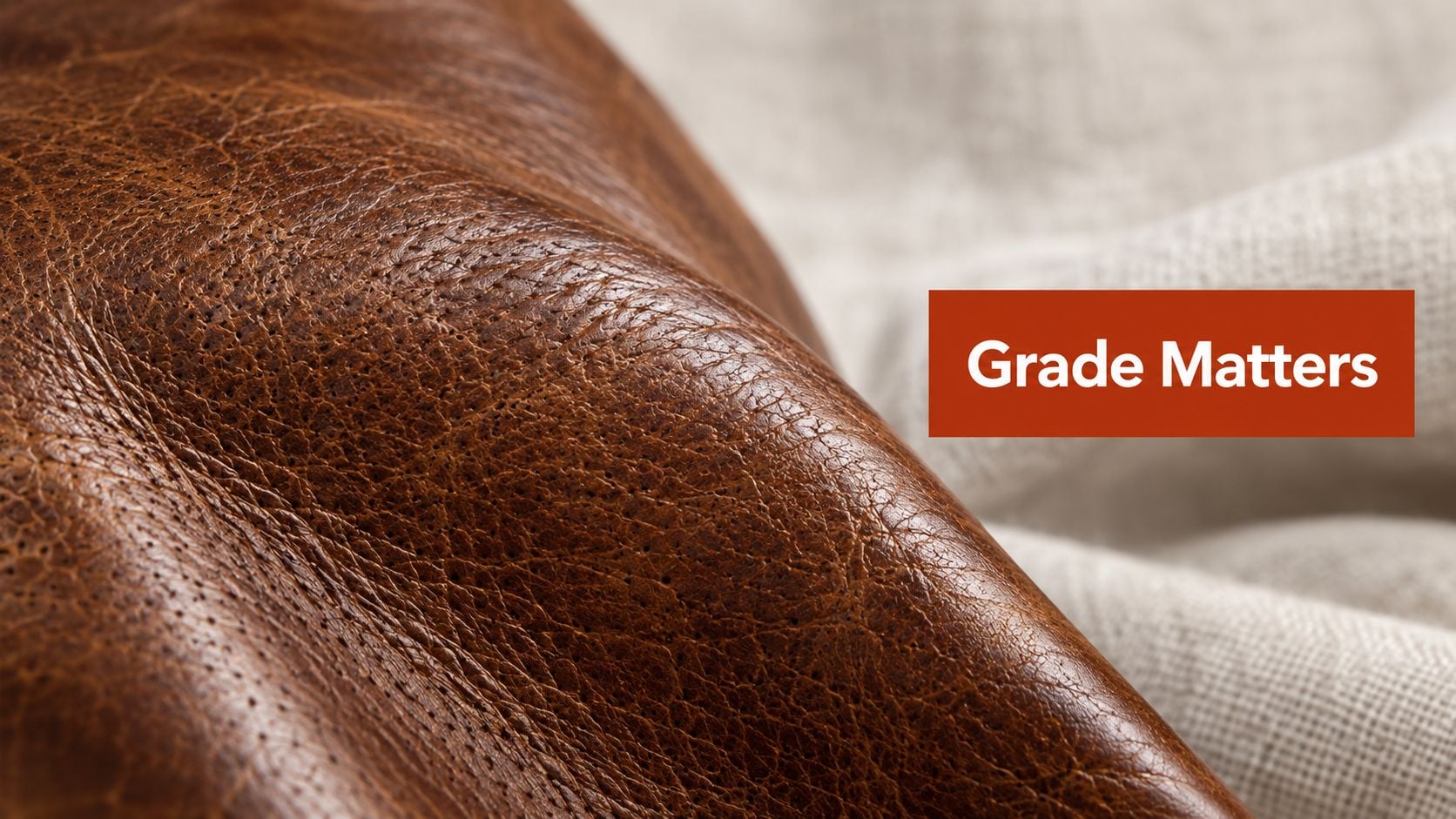
The final decision should reflect your household, not a label alone. A home with pets, children, frequent visitors, and direct afternoon sun needs a different material conversation than a quiet sitting room. Compare the tactile feel, surface finish, stitching, and care requirements side by side, then review relevant options such as this green leather sectional collection.
Caring for Leather in Florida
Florida asks more of leather furniture than a climate-controlled showroom does. Coastal air, strong sunlight, air-conditioning cycles, and changing indoor moisture levels can all affect the hide and the reclining hardware. Treat leather more like fine skin or a cherished wood heirloom than like a surface that can be ignored.
Independent care guidance recommends maintaining indoor relative humidity around 45% to 65%, avoiding direct heat and sunlight, and conditioning leather every 3 to 6 months, according to Goodrich Global's leather upholstery care guide. The same guidance connects low humidity with drying and cracking, while excess humidity can encourage mold and damage finishes.
Placement comes first
A bright room can be beautiful without placing the sectional directly in the strongest sun. Keep the piece away from unfiltered window exposure, sliding-door glare, heating sources, and air vents that blow conditioned air directly across the leather. If the room has intense afternoon light, use window treatments that soften ultraviolet exposure while preserving the coastal brightness.
Leave room for air circulation around the back and sides. Pressing a large sectional tightly against a wall can trap moisture, especially in a warm, humid home. Careful placement also protects the moving components from awkward contact with baseboards, vents, and nearby tables.
A right-arm-facing or left-arm-facing configuration should be selected with the room's light, traffic, and ventilation in mind. Review the right-arm-facing sectional options alongside your floor plan rather than choosing the orientation by appearance alone.
A simple maintenance rhythm
Dust weekly with a soft microfiber cloth or a soft brush attachment. Fine grit can work into seams and create abrasion when people sit, recline, or shift position.
Conditioning frequency depends on use and climate. Broader leather-care guidance recommends conditioning every 3 to 12 months, with the shorter interval more relevant to heavier use or demanding environments, as described in Urban Barn's leather care resource. Always use a product suitable for the specific finish and test it in an inconspicuous area first.
Use this routine:
- Weekly dusting: Clean the surface and seams gently, without scrubbing.
- Prompt spill response: Blot rather than rub, then follow the care instructions for the finish.
- Seasonal inspection: Look at the primary seat, arm, chaise, and footrest folds for dryness, scratches, or color change.
- Periodic conditioning: Apply an appropriate conditioner at the interval your climate and household use require.
- Gentle household habits: Keep sharp objects, pet claws, and abrasive rubbing away from the surface.
Rotate cushions where the design permits and vary the seats people use most often. This Old House's leather cleaning guidance also recommends distributing wear and warns that sharp objects, claws, and rubbing can scratch or tear leather.
The goal isn't to make the sectional look untouched. Natural leather should gain depth and softness with use. Good maintenance keeps that aging graceful, prevents avoidable damage, and helps the mechanism and upholstery remain comfortable through Florida's demanding seasons.
Designing with Your Sectional
A leather reclining sectional changes the room's social map. It can face a television, frame a view, divide an open-plan space, or create a relaxed conversation zone. The right configuration depends less on the sectional's shape in isolation and more on how people enter, move through, and use the room.
An L-shaped design usually gives you a defined corner without closing off the space. It works well when one side can face a focal point and the return can support conversation or lounging. A U-shaped arrangement creates a more enveloping setting, but it needs generous circulation and careful attention to how the reclining seats open.
Start with movement
Draw the room on paper or mark the proposed footprint on the floor before ordering. Include door swings, walkways, windows, outlets, media units, coffee tables, and the full path of each footrest. A sectional that fits when closed may feel entirely different when several seats are extended.
Keep the primary traffic route clear. Don't force guests to walk between an open footrest and a coffee table, and don't place a side table where it becomes a collision point during reclining. In an open living area, the sectional can define the lounge zone, but it shouldn't turn the kitchen path into an obstacle course.
Build a coastal vignette
Coastal design works best when it feels collected rather than themed. Pair the substantial presence of leather with lighter textures, such as woven accents, pale timber, natural fibers, and softly patterned textiles. A restrained palette lets the leather's grain and silhouette provide visual warmth without making the room feel heavy.
A low, rounded coffee table can soften the sectional's geometry. Accent chairs should complement the seating height and leave enough space for movement. Lighting should create layered pools of warmth rather than placing a harsh source directly over the leather.

Room-planning principle: Treat the sectional as an anchor, not a boundary. It should organize the room while leaving the eye and feet an easy route around it.
Homes with unusual structures deserve the same level of planning as conventional rooms. If you're furnishing a distinctive build or adapting a space with an unconventional footprint, this resource on customizing steel frame homes in Jacksonville offers useful context for coordinating furniture with architectural conditions.
Match the configuration to real routines
For households that host often, prioritize open sightlines and a comfortable upright position. For television rooms, direct the primary seats toward the screen while preserving a secondary conversation angle. For a condo or vacation property, a smaller L-shape may provide the same shared comfort without overwhelming the room.
The sectional's color should respond to the home's light. Tan and warm brown leathers sit naturally with coastal neutrals, while deeper shades create contrast in a bright room. If you're developing a complete palette, explore coastal design style ideas that connect seating, case goods, lighting, and accessories into one cohesive environment.
The Indian River Difference
A leather reclining sectional is too personal to choose from a photograph alone. The angle of the back, the height of the arms, the depth of the seat, the timing of the footrest, and the feel of the leather all affect daily comfort. Those details become clear when you sit, recline, stand, and repeat the movement yourself.
Indian River Furniture has served Brevard County, the Space Coast, and Central Florida since 1939. Its Rockledge showroom covers 32,000 square feet, with curated room displays and coastal vignettes that help homeowners judge scale, color, and proportion in a more realistic setting than an isolated product image.
Comfort before commitment
The ownership team follows a No Blind Ordering promise. Every sofa, recliner, and chair is hand-tested for pitch, structural integrity, and comfort before it reaches the showroom floor. That approach matters because a beautiful sectional can still feel wrong if the seat tilts too far back, the headrest misses your neck, or the footrest leaves your legs unsupported.
Use the visit as a practical evaluation:
- Sit upright: Check whether your feet rest naturally and your lower back feels supported.
- Recline fully: Notice pressure behind the knees, head support, and the path of the footrest.
- Change seats: Compare the pitch and cushion response across the configuration.
- Inspect the materials: Look closely at grain, stitching, seams, and any leather-match areas.
- Test the controls: Listen for smooth movement and confirm that each seat responds as expected.
The hidden structure deserves attention too. Quality furniture construction commonly uses corner blocks, glue, screws, and strong joinery, while mortise-and-tenon connections are recognized as particularly durable wood joints in this furniture craftsmanship guide. Solid hardwood frames and time-tested construction help the seating remain aligned under repeated motion.
Service that continues after selection
A complimentary in-house interior design consultation can help with orientation, room flow, leather selection, performance fabrics, accent pieces, and a cohesive coastal palette. That guidance is especially useful when the sectional must work around windows, sliders, media equipment, or an open kitchen.
Delivery is part of the furniture experience, not an afterthought. Indian River Furniture provides uniform, in-house white-glove delivery, including unboxing, inspection, and room setup, with a $99 delivery fee within its service area as described by the company's history and service information.
Visit the Rockledge showroom, bring your room measurements, and sit in more than one configuration. Let the design team help you compare the leather feel, ergonomic pitch, frame construction, and coastal placement before you commit to an heirloom-quality centerpiece.
If you're furnishing a home in Brevard County or Central Florida, schedule time to visit Indian River Furniture in Rockledge and hand-test the leather reclining sectional that fits your room, posture, and daily routine. Bring measurements and photos of your space, then work with the in-house design team to select the right configuration, leather or performance material, and white-glove delivery plan.