Schedule your Complimentary Design Consultation


The Brown Microfiber Couch Guide for Coastal Living


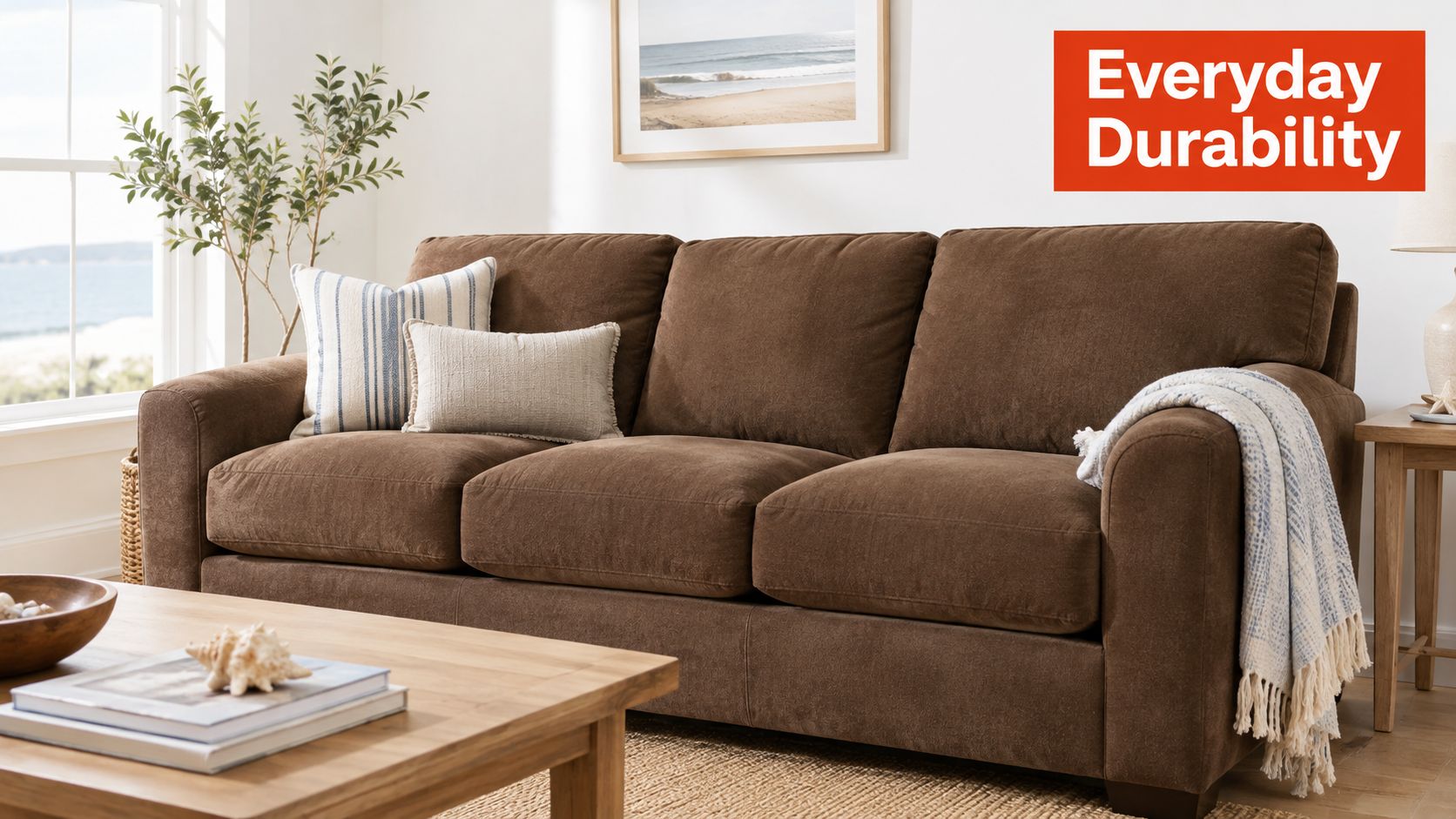
You can tell a lot about a home by the sofa people choose first. In Central Florida, that choice has to do more than look refined in afternoon light, it has to live well through humid days, bright windows, sandy shoes, pets, and family traffic. A brown microfiber couch fits that reality neatly, with a soft, suede-like feel and a warm color that settles into a room without overpowering it.
Why Choose a Brown Microfiber Couch
A homeowner in Rockledge once described the problem plainly, the living room needed to feel calm after school pickups, weekend guests, and the usual Florida humidity, but it still had to look intentional. A brown microfiber couch answers that kind of brief because it combines a grounded color with a fabric that feels welcoming the moment you sit down. Brown has long worked well in furniture settings, and microfiber adds a refined softness that keeps the room from feeling stiff.
Why the color works so easily
Brown carries a quiet advantage in interiors, it links upholstered seating with wood floors, tables, cabinetry, and woven accents without demanding all the attention. In a coastal home, that matters. You can place a brown sofa beside cream accents, sea-glass tones, brass hardware, or natural fiber rugs, and the whole room still feels connected instead of busy.
Brown also behaves like a flexible neutral. A lighter tan version feels airy, while espresso and chocolate shades read more anchored and formal. For families who want a room that feels curated rather than precious, that range gives real design freedom.
Why microfiber makes the choice practical
Microfiber is a manufactured textile with a suede-like surface, so the comfort feels familiar, but the material is engineered rather than animal suede. That distinction matters when you want an upholstered piece that fits everyday life. The fabric's fine structure helps create a dense, soft hand, and it supports the kind of consistent color that makes brown look rich instead of flat.
A good brown sofa should feel like the room can breathe around it, not like the room has to perform for it.
That is why the pairing works so well. Brown adds visual warmth, microfiber adds everyday ease, and together they create a piece that feels steady in both casual and more polished spaces.
Understanding Microfiber Durability and Comfort
Microfiber earns its reputation through construction, not buzz. It is generally made from synthetic fibers finer than 1 denier, and the material definition also points to filaments below 10 micrometers in diameter, roughly one-fifth the diameter of a human hair (CRS microfiber white paper). That fine structure creates a tightly interlocked surface, which is part of why the fabric feels so smooth under the hand.
What those fine fibers change
The main benefit is density. Fine fibers sit close together, so the surface can feel plush without being loose or fuzzy in a way that wears unevenly. That makes a brown microfiber couch especially useful in family rooms, because repeated sitting, shifting, and pet traffic are less likely to distort the overall look as quickly as with softer but less structured fabrics.
Microfiber upholstery is typically made from synthetic fibers finer than 1 denier, with reported fiber diameters around 6.4 to 11.1 microns compared with cotton at roughly 16 to 20 microns (material summary). That tighter construction helps explain why the fabric feels suede-like while still being engineered for daily use.
What to ask before you buy
The word microfiber alone doesn't tell you enough. Ask for the abrasion test method and rating, then compare the fabric's weave, finish, and cleaning code. Standard references for upholstery evaluation include ASTM D4966, ASTM D4157, and EN ISO 12947-2. A resident in Florida who plans to use the sofa daily should care about documented performance, not just the showroom feel.
If you like seeing how texture changes from one textile family to another, our guide to Cuddle 3 solids is a helpful way to compare softness, surface density, and color behavior across fabrics. For a broader upholstery overview, the Indian River Furniture upholstery materials guide gives a useful framing for how different coverings behave in a real home.
Practical rule: if a sofa feels soft but collapses visually after a short sit, the comfort is surface-level. True upholstered quality comes from the balance of fabric structure, cushion recovery, and frame support.
Stain Resistance and Cleaning Care
Brown helps, but it doesn't replace good care. On a practical level, the darker color can make everyday life feel less stressful because small marks often read less sharply than they do on pale upholstery. That visual forgiveness is one reason brown works so well in active homes, especially where snacks, pets, and coastal living all share the same room.
Clean it according to the code, not the assumption
The fabric code matters more than the couch color. W means water-based cleaning, S means solvent-based cleaning, WS means either method, and X usually limits care to vacuuming or brushing. Those labels aren't decorative, they determine what is safe for the upholstery.
Dense microfiber surfaces can delay liquid penetration, which gives you time to blot a spill. That said, moisture can still stay in the pile or cushion after wet cleaning, so drying matters just as much as cleanup. Blot with a clean cloth, don't scrub the spill deeper, and dry the area thoroughly afterward.
Use the room around the sofa wisely
A brown microfiber couch often lives alongside the places where families move, dining spills, wet swim towels, and shoes coming in from the lanai. That's why care needs to be routine instead of reactive. Vacuum grit with a soft upholstery attachment, inspect seams after a spill, and pay attention to the underside if any moisture reaches the cushions.
For a deeper look at what a professional clean typically addresses, what a deep clean covers is a helpful reference point when you're deciding what can be managed at home and what needs more thorough attention.
A couch can look dry on the surface and still hold moisture inside the pile or fill. That hidden dampness is what turns a simple spill into a maintenance problem.
Styling a Brown Microfiber Couch
Brown is one of those colors that rewards restraint. It can lean rustic, coastal, or softly modern depending on what sits around it, so the styling goal is to create balance rather than crowd the room. In a Florida home, that usually means letting light, texture, and a few well-chosen accents do the work.

Start with the colors already in the room
If you have wood flooring, cabinetry, or a stained coffee table, brown microfiber naturally ties those pieces together. That is especially useful in coastal interiors, where you may also be working with woven baskets, cream upholstery, brass details, and blue-green accents. The sofa becomes the anchor, not the loudest voice.
The coastal design style guide can help you think through how to keep the palette relaxed without making the room feel unfinished. The key is repetition. Repeat one or two tones in the pillows, rug, or curtain fabric, and let the brown sofa provide the visual center.
Use texture to soften the look
Microfiber already brings a suede-like finish, so add pieces that contrast gently rather than competing with it. A knitted throw, linen-look pillows, or a woven rug can keep the room from feeling one-note. If you want a cleaner look, choose fewer accessories and make sure the shapes stay simple.
For day-to-day upkeep, keep the routine straightforward.
- Blot first: Press spills with a dry cloth before they spread.
- Check the code: Clean only with the method the upholstery tag allows.
- Dry thoroughly: Airflow matters after any wet cleaning.
- Vacuum seams: Grit shortens the life of the nap and the cushion edge.
That small maintenance rhythm protects both appearance and comfort.
Protecting Your Couch in Florida
Florida homes ask more of furniture than many people expect. Sunlight is strong, indoor humidity can rise quickly, and a sofa often sits in the part of the home that gets the most daily traffic. A brown microfiber couch can handle a lot, but the room around it still needs to support the fabric and the frame.
Control moisture before it reaches the upholstery
Indoor humidity should stay around 30% to 50% relative humidity, with a broader recommended range of 30% to 50% and indoor temperatures between 60°F and 80°F in Florida housing guidance. That matters because moisture affects more than the visible fabric. It can also affect wood, foam, adhesives, and hardware inside the couch.
Keep the sofa away from direct dampness, persistent exterior-wall moisture, and localized airflow changes from vents or humidifiers. If a spill or storm dampness reaches the cushion, dry it promptly. Fabric can tolerate everyday use, but trapped moisture can create odor and deterioration inside the upholstery system.
Reduce sun exposure without darkening the room
Brown hides some wear visually, but sunlight still fades dyed textiles over time. Window sheers, UV-filtering shades, and thoughtful placement help protect the couch while keeping the room bright. In a coastal setting, that balance matters because you want airy light, not harsh exposure on the upholstery.
The summer-proof your furniture guide is a useful companion if you're thinking through the broader room conditions that affect upholstery longevity. Small environmental choices add up, especially in a humid state where furniture lives close to the rhythm of the weather.
In Florida, a sofa's lifespan is shaped as much by the room it lives in as by the fabric on top of it.
The Indian River Furniture Experience
Since 1939, Indian River Furniture has served Brevard County and Central Florida with a focus on durable furniture, thoughtful design, and personal guidance. That long history matters because upholstery selection is easier when you can feel the differences, sit on the piece, and see how it works in a room rather than judging it from a screen. A brown microfiber couch may look right in a photo, but the question worth asking is how it sits, how it supports, and how it fits your daily routine.

Why in-person testing still matters
The No Blind Ordering Promise is simple. Every sofa, recliner, and chair is hand-tested by ownership for pitch, structural integrity, and comfort before it reaches the showroom floor. That kind of screening matters because the best upholstery in the world can still feel wrong if the seat angle, cushion response, or frame geometry doesn't suit your body.
The about us page gives more context on the store's long-standing service model and showroom approach. For a customer trying to choose a brown microfiber couch, that means more than browsing. It means sitting, comparing, and trusting a team that pays attention to the ergonomics of the piece.
How service supports the purchase
Complimentary interior design consultations help connect the sofa to the rest of the room, which is useful if you're working with coastal colors, a vacation rental setup, or a full living room refresh. The in-house white-glove delivery service also reduces stress during setup, since the team handles the placement and room arrangement once the piece arrives. That kind of support is part of what turns furniture selection into a long-term investment instead of a rushed purchase.
A carefully chosen sofa should fit the way your home really works, not just the way it looks in a catalog.
Investing in Lasting Comfort
A brown microfiber couch earns its place when it serves three jobs at once, it looks composed, feels comfortable, and handles real life. That combination is why so many people keep returning to the same material and color family, especially when they want a room that feels relaxed without losing its polish. Brown carries the warmth, microfiber carries the touch, and the right frame carries the whole piece through the years.
Think beyond the first impression
The smartest buyers look at the entire upholstery system. They ask about the fiber, the cleaning code, the abrasion rating, the frame, and the cushion build, because those details decide how the couch ages once it leaves the showroom. A sofa that feels good on day one but doesn't recover well after repeated use won't serve a busy household for long.
That is also why a brown microfiber couch can become a dependable centerpiece rather than a temporary stopgap. It works with changing décor, it coordinates with wood and coastal textures, and it stays visually calm in rooms that see a lot of movement. If you choose well, the piece can feel like part of the home's architecture rather than another item to replace later.
Choose with the long view
The best outcome comes from pairing good material knowledge with real-world testing. Sit on the couch, check the pitch, ask about the frame, and make sure the cleaning code fits your household habits. If humidity, pets, and sunlight are part of your daily reality, those details are not side notes, they're the core of the decision.
For a broader framework before you shop, the ultimate sofa buying guide is a practical next read. Then visit a showroom, feel the upholstery, and compare how the piece supports your posture and your style in person. That's the clearest way to choose a sofa that will feel right in a Florida home for years.
Visit Indian River Furniture in Rockledge to sit on curated brown microfiber options, compare them with other performance fabrics and genuine leathers, and get a complimentary design consultation for your room. If you want help choosing a piece that fits your home's light, layout, and daily routine, the showroom team can walk you through the options and arrange white-glove delivery when you're ready.