Schedule your Complimentary Design Consultation


8 Seater Table Sizing Guide: Dimensions and Room Planning

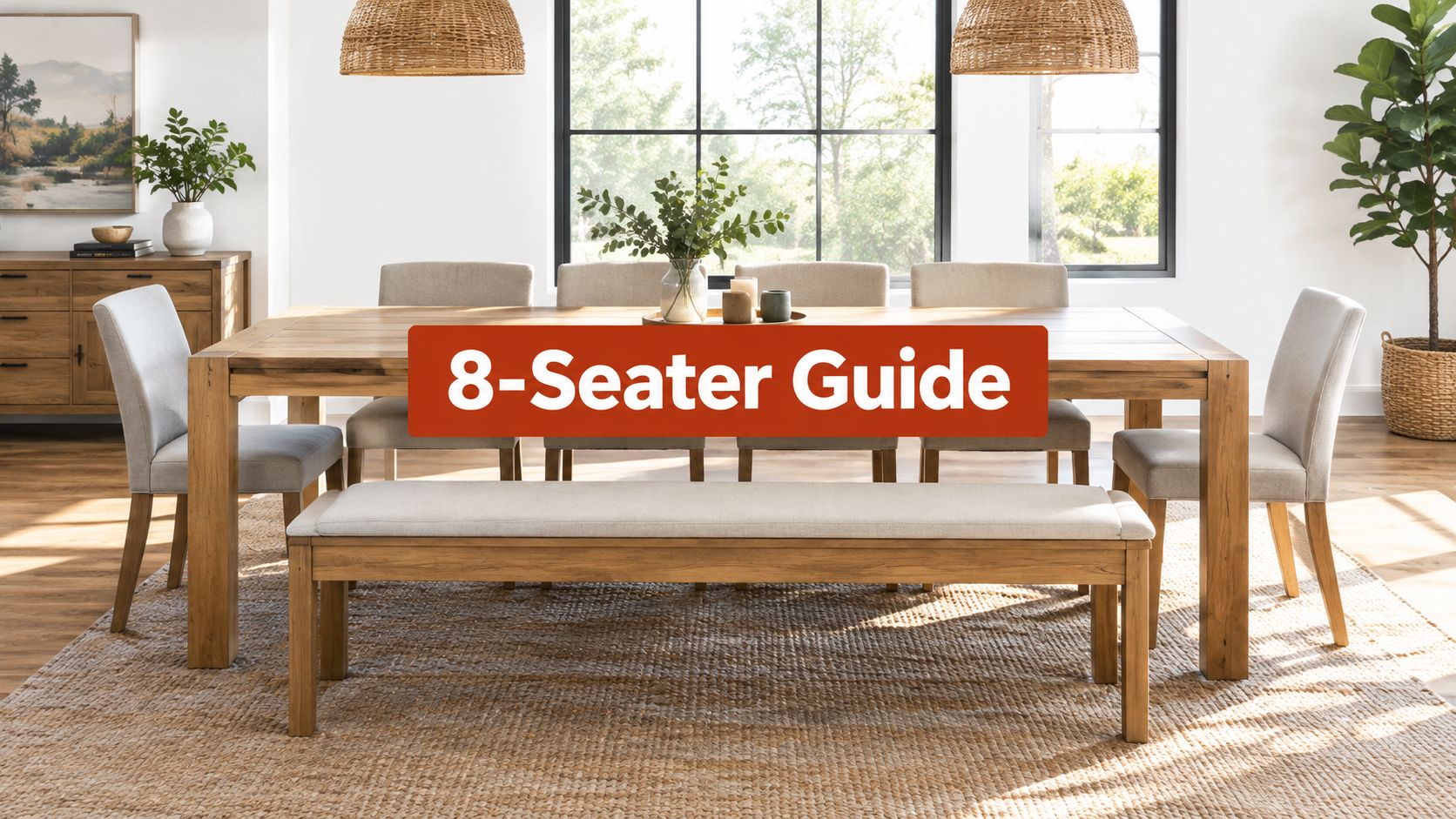
You've measured the room, liked the look of a larger table online, and still felt that uneasy question settle in before you click buy. Will an 8 seater table feel gracious in daily use, or will it turn the dining room into a tight path around chair backs and serving platters?
In Brevard County homes, that question comes up all the time. A table can seat eight on paper and still fail in real life if the chairs crowd each other, the legs hit knees, or there's no room to walk past once dinner is set. The better approach is to think like a designer, not just a shopper, and measure the whole dining zone with the same care you'd give the table itself.
Why Your 8-Seater Might Feel Either Cramped or Wasteful
A family walks into a Rockledge dining room on Sunday evening, expecting a comfortable gathering spot. The 8 seater table in the center looks right at first glance, but the ends feel pinched, the serving bowl has nowhere to land, and the person at the narrow end keeps shifting their chair to avoid the wall. That's the common problem with capacity labels, they don't tell you how the table behaves once real chairs, real people, and real movement come into play.
The opposite happens too. A homeowner chooses an oversized rectangular table because eight seats sound perfect, then discovers the room feels heavy every weekday. The table dominates the floor, traffic slows down, and the dining area starts to feel more like a formal hall than part of a relaxed Florida home. That's why the phrase “seats eight” matters less than “comfortably seats eight.”
What the label leaves out
A showroom tag can't show you elbow room, chair width, or whether the table legs sit where knees want to go. It also can't show how a table will feel during a long meal, when guests lean in for conversation and serving dishes stay on the surface longer than they would at a quick breakfast. In practice, the difference between pleasant and cramped is usually the difference between enough edge and enough breathing room.
Practical rule: if a table only works when everyone sits rigidly still, it's not really comfortable seating.
Indian River Furniture's approach has always been to think in terms of lived use, not showroom labels. If you want a deeper framework for narrowing down a dining table before you shop, this guide helps set the stage: 5 key steps to picking the perfect dining table.
Why Florida homes magnify the issue
Space Coast homes often do double duty. The dining table becomes a homework station, a laptop perch, a buffet landing zone, and the place where guests linger after dinner. In those homes, a table that merely fits eight chairs can still feel wrong if the room loses circulation or the surface can't handle serving pieces comfortably. That's the core tension, maximum seating versus comfortable seating, and once you see it, the right decision becomes much clearer.
Measuring an 8-Seater Table by Shape and Edge
A table for eight can still feel wrong if the edge space is too tight for real use. A better check is usable perimeter, because that tells you whether guests can sit without crowding elbows, serving bowls, or the chair frame. Contemporary planning guidance commonly allows about 24 inches of table edge per person, and another guide uses the same basic idea, noting that an eight-person arrangement often needs roughly 60 to 70 cm per person for comfort. That is the gap between seats eight and comfortably seats eight.
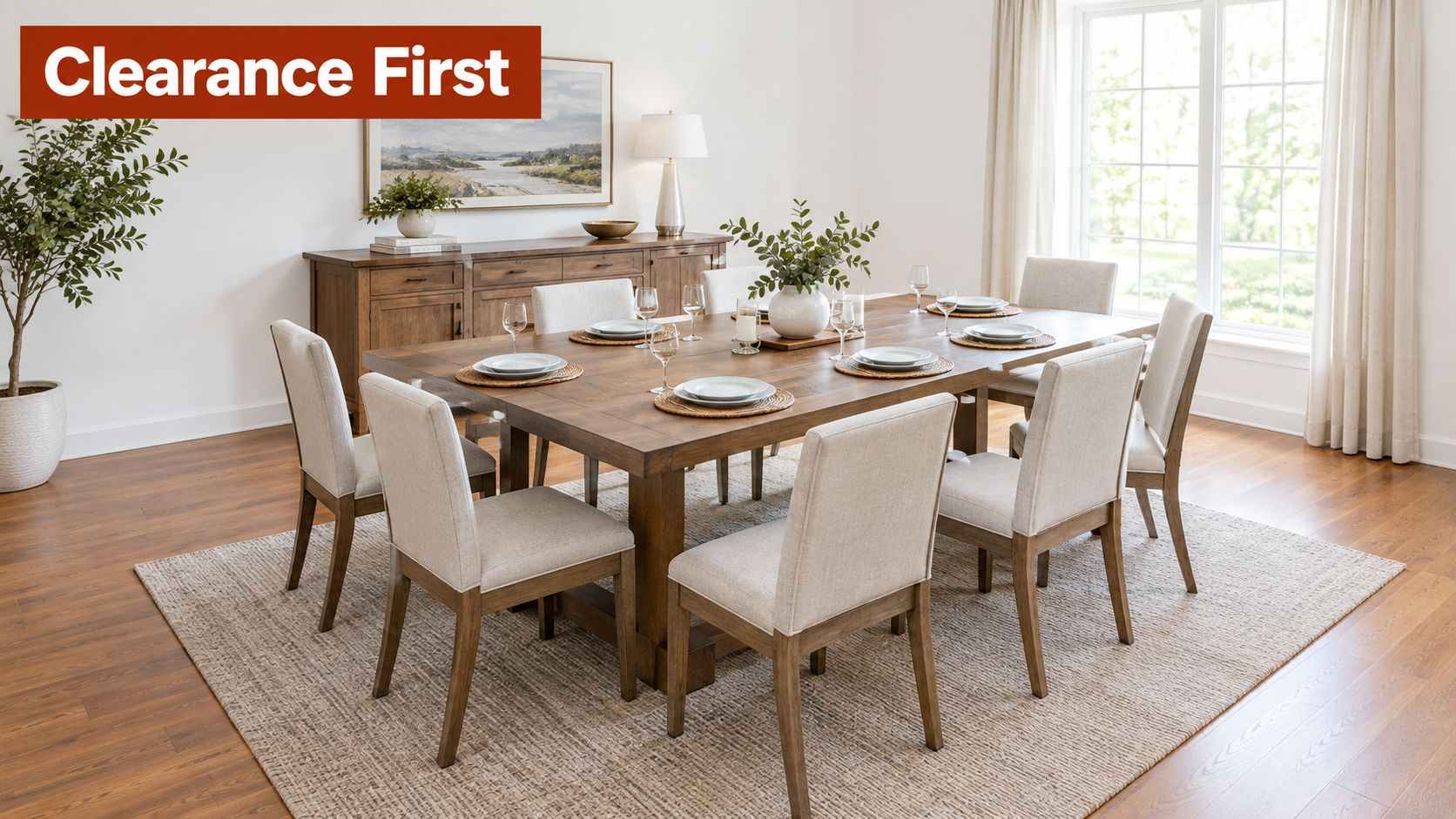
Rectangular tables do the hard work best
Rectangular tables for eight commonly run about 72 to 96 inches long and 36 to 44 inches wide. A 72-inch version can seat eight in a tighter layout, usually with three along each side and one at each end, but the end seats tend to feel closer to the action. Once the length moves toward 84 to 96 inches, the setting usually feels calmer for shared meals, platters, and lingering conversation.
Round tables trade edges for conversation
Round tables commonly measure about 60 to 72 inches in diameter. A larger round top can work for eight when the room needs softer movement and fewer sharp corners, but serving dishes have less separation than on a long rectangle. That makes the table feel warm and sociable, while asking more care in how food is passed and placed.
Height matters as much as footprint, and this guide to dining table heights covers the standards: the ultimate guide to dining table heights.
The table shape comparison
| Shape | Best For | Edge Use | Serving Space |
|---|---|---|---|
| Rectangular | Family meals and straight wall placement | Uses length efficiently | Strongest for platters and place settings |
| Round | Conversation and softer room flow | Shared edge feels even | Less separation for serving pieces |
| Oval | Narrower rooms with gentler corners | Easier traffic around the ends | Better than round, lighter than rectangle |
| Extension | Households that need flexibility | Compact day to day | Grows well for guests |
The right shape still depends on how the room is used. A table near a patio door, a buffet, or an open kitchen has to leave room for people to move without turning sideways. If you want to compare shape behavior in a more practical way, this dining-space guide is useful context: maximizing your dining space with table shapes and seating arrangements. If you are comparing materials and table forms for casual seating, this discussion can help as well: compare cafe table materials.
Planning Your Dining Room Around Clearances and Circulation
A table can fit the room on paper and still feel wrong once chairs are pulled out. For comfortable use, leave at least 36 inches between the table edge and walls or nearby furniture, and give 42 to 48 inches where people need to pass behind seated guests.
Measure the room, not just the tabletop
Start by taping the table outline on the floor, then add the chair pull-out zone on every side. That shows how the room works during a meal, not just when it is empty. For an eight-person rectangular table around 72 inches by roughly 38 inches, published space-planning tables place the minimum room footprint at about 11 by 14 feet, or 154 square feet.
An 84-inch table commonly needs about 11 by 15 feet, or 165 square feet, while a 60-inch round table may fit within roughly 11 by 12 feet, or 132 square feet. That gap matters in coastal Florida homes, where one dining room may need to handle daily family meals, open traffic from a patio, and the extra movement that comes with guests.
Keep height and accessibility in view
Standard dining-table height is generally about 28 to 30 inches.
Accessible layouts use separate clearance benchmarks as a planning guide. U.S. ADA-related furniture guidance includes a 27-inch minimum knee-clearance dimension, while public-dining benchmarks also point to a 30-inch table-height reference (Sizemarker). Those figures do not govern every private home, but they are useful when comfort, reach, and entry space matter.
Measuring tip: if a chair cannot slide out without hitting a wall, the room is smaller in practice than it looked on paper.
For hosts who manage a vacation rental or rotating guest stays, room planning and turnover work together. That is why some owners review smart operations with Global, then shape the dining area for easy circulation as well as a good table fit.
Choosing Between Rectangular, Round, Oval, and Extension Designs
An eight-seat dining room can feel generous on paper and tight in daily use if the table shape fights the room. The right choice depends on how often the table handles everyday meals, serving dishes, and traffic from the kitchen or patio. A rectangular table usually suits a longer room because it keeps chair placement predictable and gives each diner clear elbow room. For households that want the most balanced fixed setup, that shape still makes the strongest case.
Choose the shape that fits the room
If your room is long and narrow, a rectangular table usually gives you the cleanest circulation and the easiest chair layout. If the room is more square, a round table can work well, especially when conversation matters more than formal serving space. Oval tables soften corners and reduce visual bulk, which helps in open-plan homes where people move between zones all day. Extension tables suit rooms that need to stay open during the week and work harder when guests arrive.
The trade-off is simple. A round table can seat eight and still feel intimate, but serving dishes have less room and guests sit a little closer together, as noted in this guide to table shapes and seating layouts. That makes it a good fit for homes built around conversation, less useful if the table also serves as a buffet, homework station, or game table.
Match the design to how your household uses the room
For families who use the dining room every day, a fixed rectangular top often feels the most settled and practical. It gives structure to the room and keeps place settings clear.
For homes that host often, extension designs earn their keep. They preserve walking space when the room is quiet, then expand when the table has to handle company, holiday meals, or a full house. That flexibility matters in vacation homes and multigenerational households, where the dining room rarely serves just one purpose.
If you want a relaxed, coastal feel with softer edges, oval or round can work well. If you want the table to serve more functions without crowding the room, extension is the better answer. If you want the most straightforward fit for a true eight-seater, rectangular usually gives the clearest path from seating plan to daily comfort.
For homeowners who also want to compare cafe table materials, the same practical thinking applies. Shape first. Room movement second. Style last.
Selecting Coastal-Ready Materials and Construction Details
A well-chosen dining table should feel good to touch long after the showroom glow fades. In Florida homes, that means looking beyond shape and size to the materials underneath, the finish on top, and the way the base handles daily use. Solid hardwood frames, genuine leathers, and performance fabrics all bring different strengths to a coastal interior, especially when the home sees humidity, family traffic, and the occasional rush of guests.
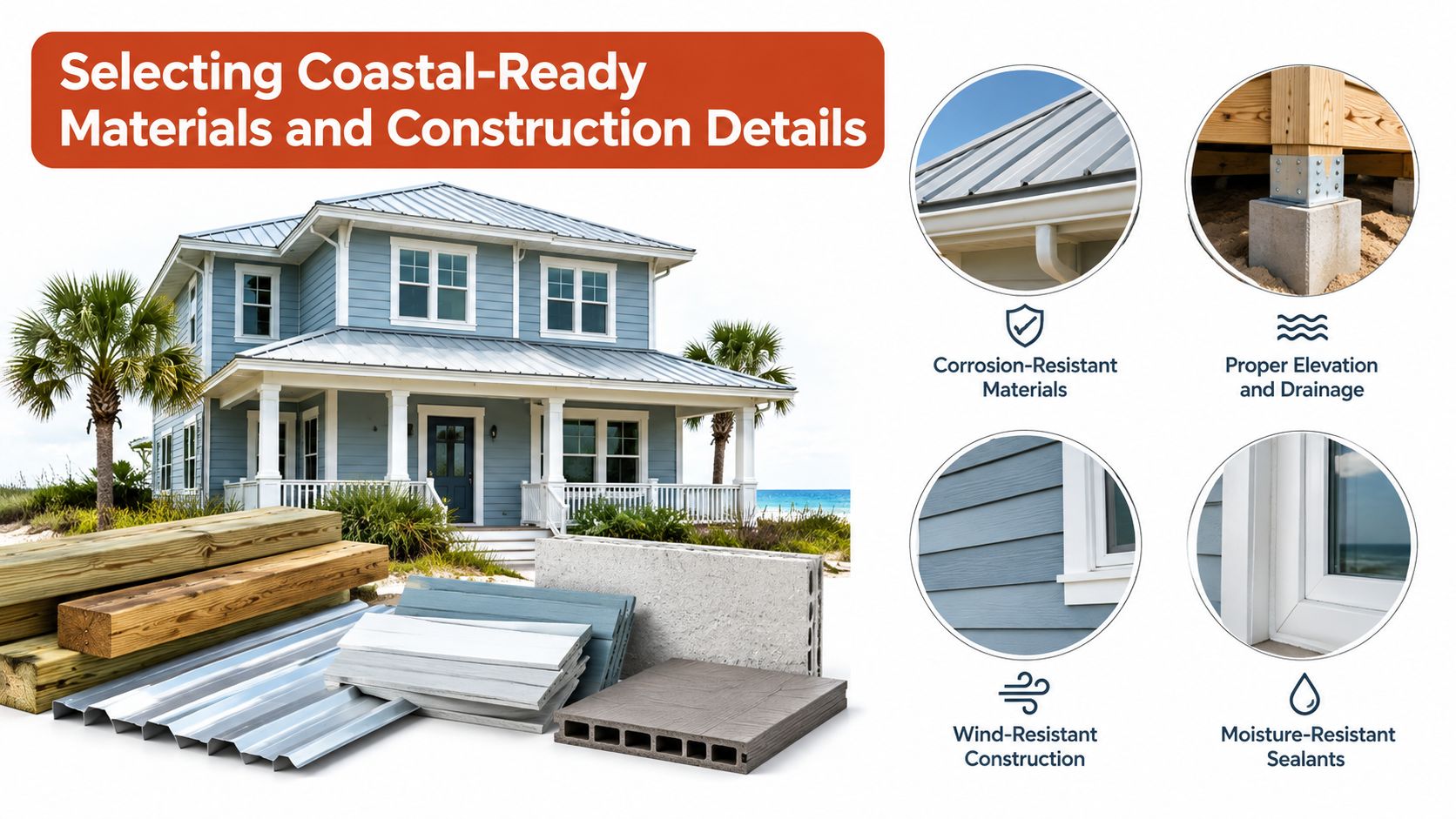
What craftsmanship should feel like
Good joinery feels stable rather than hollow. The top should finish cleanly, the base should sit with confidence, and the entire piece should look considered instead of overbuilt. In a home where the dining table might host dinner, puzzles, and a laptop in the same week, that kind of craftsmanship matters because it supports both comfort and longevity.
Why base design matters more than people expect
A pedestal can improve knee space, while certain leg placements can interfere with the ends of the table. That matters for multigenerational dining and for anyone who needs easy access without twisting around supports. It's also where comfort and accessibility intersect, because a thoughtfully built base can make the table feel open even when the room is full.
For homeowners who want a made-to-fit table, a custom hardwood dining table can be a practical way to align the piece with room dimensions and daily habits: custom hardwood dining table. A bespoke build can support the room instead of forcing the room to adapt around the furniture.
Good construction shows up quietly, in stable legs, smooth edges, and a top that still feels composed after real use.
Since 1939, Indian River Furniture has built its dining selection around that idea, pairing curated wood finishes with durable performance materials and a focus on Florida living. The result should feel coastal, restrained, and ready for everyday use, not fragile or fussy.
Why Hand-Testing Every Seat Matters Before You Commit
A table and chair set can look perfect in a photograph and still feel wrong once you sit down. The angle of the chair back, the way the seat pitches, and the amount of space your knees have under the apron all change the experience. That's why hand-testing matters, because dining comfort is sensory, not just visual.
What you notice when you sit, not just when you measure
A good dining chair lets you settle in without fighting the frame. Armchairs should invite conversation, not crowd the ends. Bench seating can help in tighter layouts, but it changes how people enter and exit the table, so it works best when the room and the table shape support that flexibility.
The ownership team at Indian River Furniture hand-tests every seat, sofa, and recliner for pitch and comfort before it reaches the showroom floor. That practice is a direct answer to blind ordering, because it removes guesswork from something you'll live with for years. A dining room should be judged by how it feels over a long meal, not by how polished it looks for a quick glance.
Why showroom visits still matter
A 32,000-square-foot Rockledge showroom gives you a way to compare scale, texture, and chair-to-table relationships in person. You can view curated coastal vignettes, test different seating combinations, and feel how a bench changes the rhythm of the room. The right setup is the one that supports the way your household gathers.
If you're weighing a bench against individual chairs, this is a helpful companion piece: dining bench modern. It's easier to choose confidently when you've sat, leaned back, and checked how the table behaves in real space.
Completing Your 8-Seater Investment with Curated Service
An 8 seater table is rarely just a table. In a family home, it becomes the place where birthdays happen without ceremony, where holiday dishes are passed down the line, and where everyday conversation has room to breathe. In a coastal renovation or vacation rental, it becomes part of the home's identity, which is why the supporting service matters as much as the piece itself.
Design help and delivery complete the experience
Complementary in-house interior design consultations can help coordinate the table with chairs, benches, buffets, and lighting so the room feels pulled together instead of pieced together. That matters in relaxed luxury interiors, where one intentional decision should support the next. When a dining room is planned well, it feels calm before anyone even sits down.
White-glove delivery adds another layer of ease. Indian River Furniture's in-house delivery team handles unboxing, inspection, and full room setup, so the furniture arrives as a finished part of the home rather than a project waiting to happen. That kind of service fits the same long-view mindset as the furniture itself, practical, careful, and built around trust.
A table worth living with
Flexible financing, a dedicated help center, and service request tools help carry the purchase forward after delivery. That matters because a dining table isn't a one-time event, it's part of daily life. Since 1939, Indian River Furniture has approached furnishing as a long-term relationship with Brevard County and the Space Coast, and that shows most clearly when a family can depend on the piece, the setup, and the support around it.
If you're comparing 8 seater tables for a Rockledge, Viera, or Melbourne home, visit the showroom, sit in the chairs, and test the room for yourself. Bring your room measurements, your questions, and a clear sense of how you live, then let the design team help you match shape, comfort, and circulation to the way your home actually works.