Schedule your Complimentary Design Consultation


Custom Hardwood Dining Table: Your Complete Buying Guide

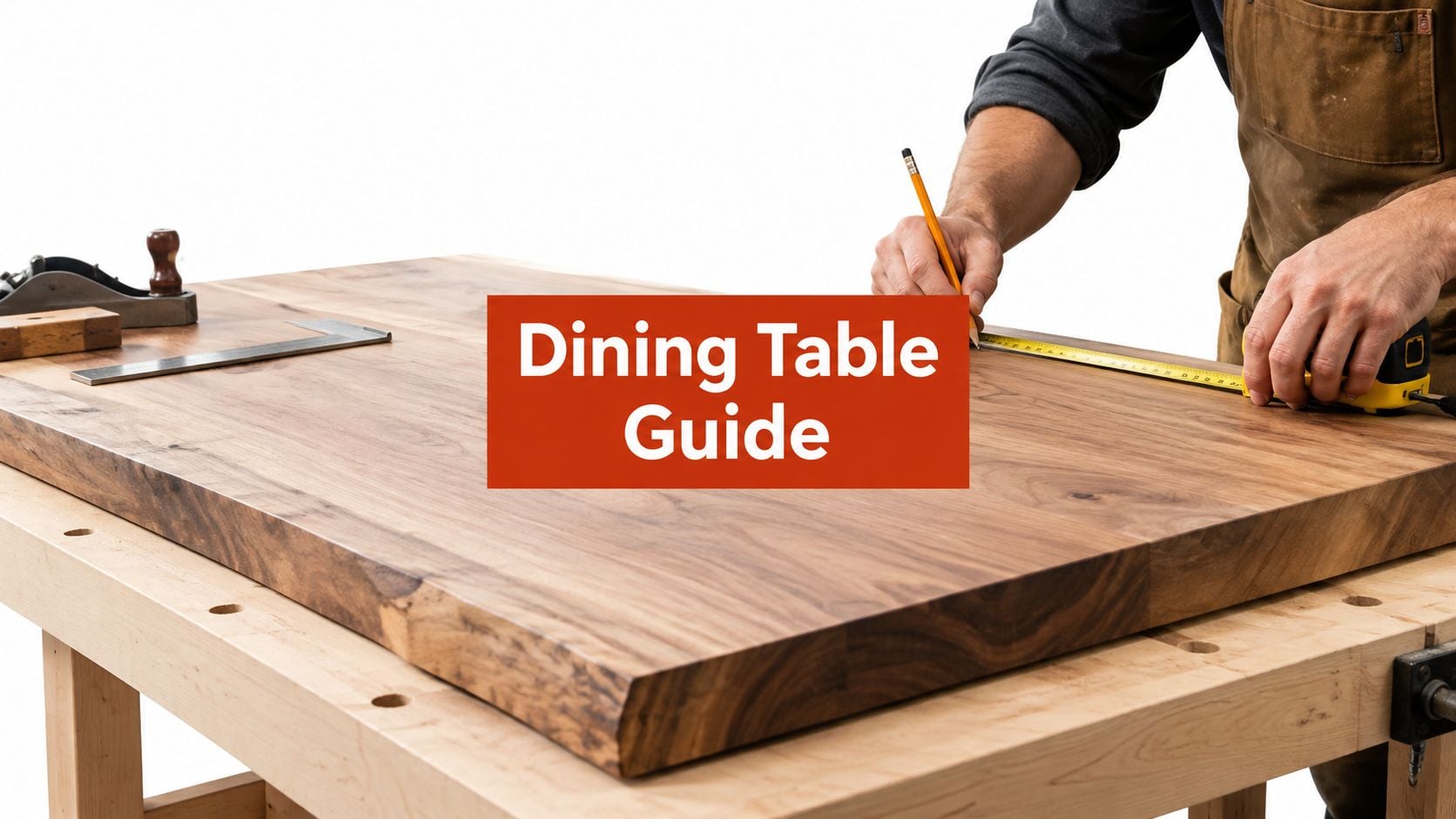
You're sitting at the dining table after another crowded family meal, moving plates aside so everyone has room to reach the centerpiece. The chairs bump into a wall, one guest is perched at the corner, and the finish already shows the marks of daily life. That moment often leads Central Florida homeowners to consider a custom hardwood dining table, not because they want something ornate, but because they need a table that fits the room, the people, and Florida's climate.
A well-made table brings more than visual warmth. It provides comfortable proportions, dependable structure, tactile craftsmanship, and a surface that can develop character rather than becoming disposable. The important questions reach beneath the finish: Was the lumber properly dried? Can the top move with humidity? Are the joints engineered for repeated use? Does the maker understand the environment where the table will live?
Why a Custom Hardwood Dining Table Matters
A family may start shopping after outgrowing a table that once seemed perfectly adequate. The dining room hasn't changed, but the household has. Children need homework space, visiting relatives need comfortable seating, and holiday meals require more elbowroom than a standard table provides. A custom design can respond to those realities with length, width, leg placement, edge profile, and finish.
That flexibility matters in Central Florida, where homes range from compact coastal condos to open-plan residences and vacation properties. A table that looks balanced in a showroom may crowd a passageway at home. A top that feels solid on delivery may develop problems if the lumber wasn't prepared for the humidity and temperature conditions at its destination.

The value beneath the surface
Solid hardwood remains meaningful because it can be repaired, refinished, and adapted over a long period of use. A U.S. Forest Service analysis found that domestic wood-furniture shipments declined significantly as imports grew, but hardwood lumber remained the most important wood-based input consumed by U.S. furniture and cabinet manufacturers measured by product value, underscoring the lasting material significance of solid hardwood construction (U.S. Forest Service analysis of wood furniture manufacturing).
That history also puts custom furniture in perspective. Standardized furniture competes through repeatable dimensions and volume, while a custom hardwood dining table earns its place through craftsmanship, fit, material selection, and repairability. The distinction isn't merely whether the table is made from wood. It's whether the design anticipates how wood behaves.
Practical rule: Don't judge durability by the tabletop's thickness or finish alone. Ask how the entire table was prepared for movement, daily loading, cleaning, and the humidity of its actual home.
At Indian River Furniture, the broader buying experience includes curated coastal vignettes, custom wood finishes, complementary in-house interior design consultations, and uniform white-glove delivery. The showroom is also designed for physical evaluation. Ownership hand-tests every seat, sofa, and recliner for pitch and comfort before it reaches the 32,000-square-foot Rockledge showroom, reflecting the same preference for informed selection over blind ordering. Established in 1939, the business has served Brevard County, the Space Coast, and Central Florida through changing furniture trends while keeping comfort and construction central to the conversation.
Measuring Your Dining Space Correctly
Start with the room, not the replacement table. Measure the usable dining area from wall to wall, then mark doors, windows, built-ins, columns, vents, and nearby furniture. A table can fit mathematically and still fail functionally if chairs block a doorway or a person can't walk behind a seated guest.
Build a clearance map
Use painter's tape on the floor to outline the proposed tabletop. Pull imaginary chairs away from each side and walk the routes people will use during an ordinary meal. Repeat the exercise with one person seated and another carrying a serving dish. This reveals problems that a tape measure alone won't show.
Write down:
- Wall clearance: Leave enough room for chairs to pull back without scraping walls or trim.
- Traffic paths: Protect the route between the kitchen, entry, patio, and living area.
- Adjacent pieces: Account for buffets, consoles, bar carts, and open cabinet doors.
- Architectural limits: Measure around windows, corner conditions, built-ins, and swinging doors.
A square room often needs a restrained rectangular table so the corners don't dominate circulation. An elongated room may accept a longer top, but width still matters. A narrow table can feel elegant while leaving too little room for serving dishes, place settings, and shared centerpieces.
Match dimensions to real use
List the people who regularly sit down together, then separate everyday seating from occasional entertaining. Consider whether you want end seats, benches, extension leaves, or space for a high chair. Don't promise yourself that guests will “just squeeze in.” Repeated crowding changes how often the dining room gets used.
Table height must work with the chairs, armrests, and the people using them. Bring chair measurements to the consultation, including seat height, arm height, and the distance from the seat to the table apron. If the table includes an overhang, review SouthRay overhang for comfortable seating to understand how legroom and support interact.
For a reliable process, compare your notes with this furniture measuring guide, then measure the room again on a different day. Custom dimensions become part of the build, so verify every number before approval.
Measure the clear walking route, not just the empty rectangle where the tabletop will sit.
Choosing the Right Hardwood Species
Species selection should begin with use and climate, then move toward color and grain. White oak, hard maple, walnut, red oak, and cherry can all create beautiful dining furniture, but they don't produce the same visual or maintenance experience.
White oak suits relaxed coastal interiors with its pronounced grain and adaptable tone. Hard maple provides a smoother, lighter appearance that works well in bright rooms and active households. Black walnut brings depth and variation, while red oak offers warm grain and a familiar traditional character. Cherry begins warm and develops a deeper patina as it ages.
The table below uses practical qualitative comparisons. Janka hardness and movement rates should be confirmed for the specific stock and construction, because a species label doesn't account for board orientation, moisture history, or internal stress.
Popular Hardwood Species Comparison
| Species | Janka Hardness | Grain Pattern | Color Range | Movement Rate | Florida Suitability |
|---|---|---|---|---|---|
| White oak | Hard and durable | Prominent, open grain | Cream, tan, warm brown | Moderate, reduced with suitable grain orientation | Strong choice for coastal and transitional rooms |
| Hard maple | Very hard | Fine, tight grain | Pale cream to light brown | Moderate | Well suited to active daily use and light interiors |
| Black walnut | Moderately hard | Open, expressive grain | Brown, chocolate, occasional lighter variation | Moderate | Excellent for refined interiors with attentive care |
| Red oak | Hard and durable | Open, pronounced grain | Pink, honey, warm reddish brown | Moderate | Practical for traditional and coastal warmth |
| Cherry | Moderately hard | Smooth, flowing grain | Reddish brown that deepens over time | Moderate | Suitable when patina and careful placement are desired |
Inspect the boards, not only the sample
Quarter-sawn stock generally moves less across its width than flat-sawn stock. Wider and thicker boards can magnify the absolute amount of movement, so species choice must be paired with sensible top construction.
Before fabrication, inspect boards for substantial end checks, twist, and reaction wood. Select pieces with compatible grain direction, similar moisture content, and minimal internal stress. Alternating growth-ring orientation may improve visual balance and flatness, but it can't compensate for inadequately dried lumber or weak support.
For a deeper explanation of grain, durability, and selection criteria, review wood furniture and choosing hardwood for longevity and style. The right species is the one that supports your household's habits, desired atmosphere, care tolerance, and room conditions.
Understanding Joinery and Construction Quality
A table may look substantial and still feel unsettled when you lean against it. Construction quality becomes apparent when you test the base, examine the joints, and ask how the top attaches to the frame.
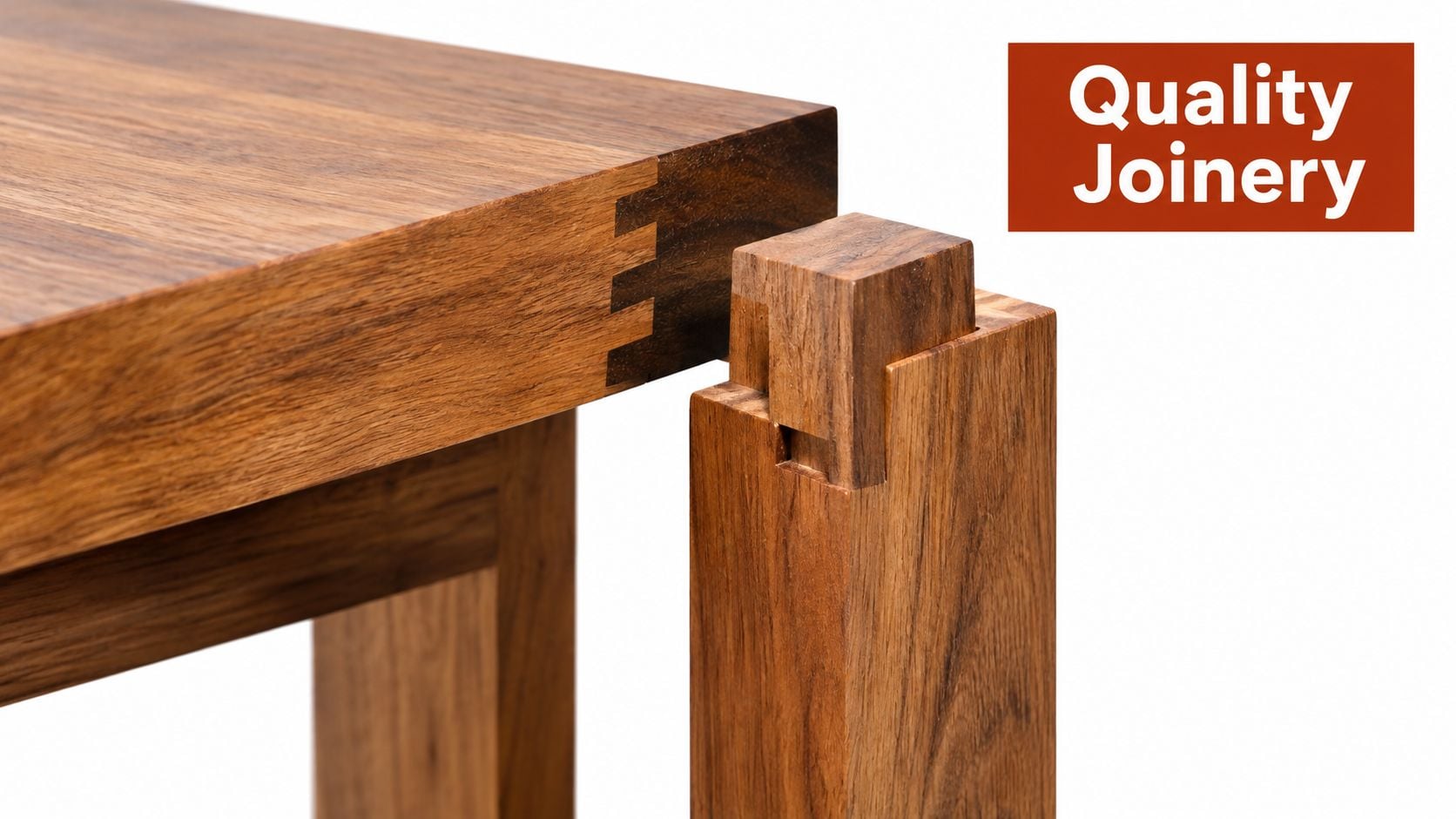
The leg-to-apron connection carries much of the table's everyday stress. Mortise-and-tenon joinery creates a broad mechanical connection between members, while dowels can work well when accurately placed and properly glued. A peer-reviewed furniture-joint study comparing white oak and red oak found that T-shaped mortise-and-tenon joints carried higher bending moments than dowel joints, with white-oak mortise-and-tenon joints reaching an average bending moment capacity of 436.71 N·m in the tested configuration (peer-reviewed furniture-joint study). Laboratory results don't guarantee performance in every table, but they support evaluating joinery rather than judging appearance alone.
Compare the base and the top separately
The base should resist racking when people lean, rise, or shift around the table. Check whether the legs remain planted when you apply gentle pressure at different corners. Look for clean joint lines, consistent apron thickness, and foot placement that doesn't interfere with chairs.
The tabletop needs a different kind of engineering. Wood moves substantially more across the grain than along it, so a wide solid top shouldn't be rigidly trapped against its base. Clips, elongated holes, or other movement-permitting fasteners can hold the top securely while allowing controlled transverse travel. A fixed attachment may feel firm at first, but it can create stress as humidity changes.
Use your hands during inspection
Run your fingers along the underside and the exposed joinery. Gaps, uneven shoulders, excessive glue residue, or a joint that flexes under light pressure deserve questions. View the top under angled light to find uneven glue lines, finish irregularities, or subtle cupping.
A practical inspection sequence includes:
- Confirm the lumber preparation.
- Dry-fit the tabletop panel.
- Check flatness with a straightedge.
- Verify diagonal measurements for squareness.
- Test each attachment point for cross-grain travel.
The quiet solidity of a well-built table is a sensory experience. It's the absence of wobble, rattling, and sharp transitions when your hand meets the edge. More guidance on evaluating enduring construction is available through the sovereignty of quality.
Finishing Options and Florida Climate Care
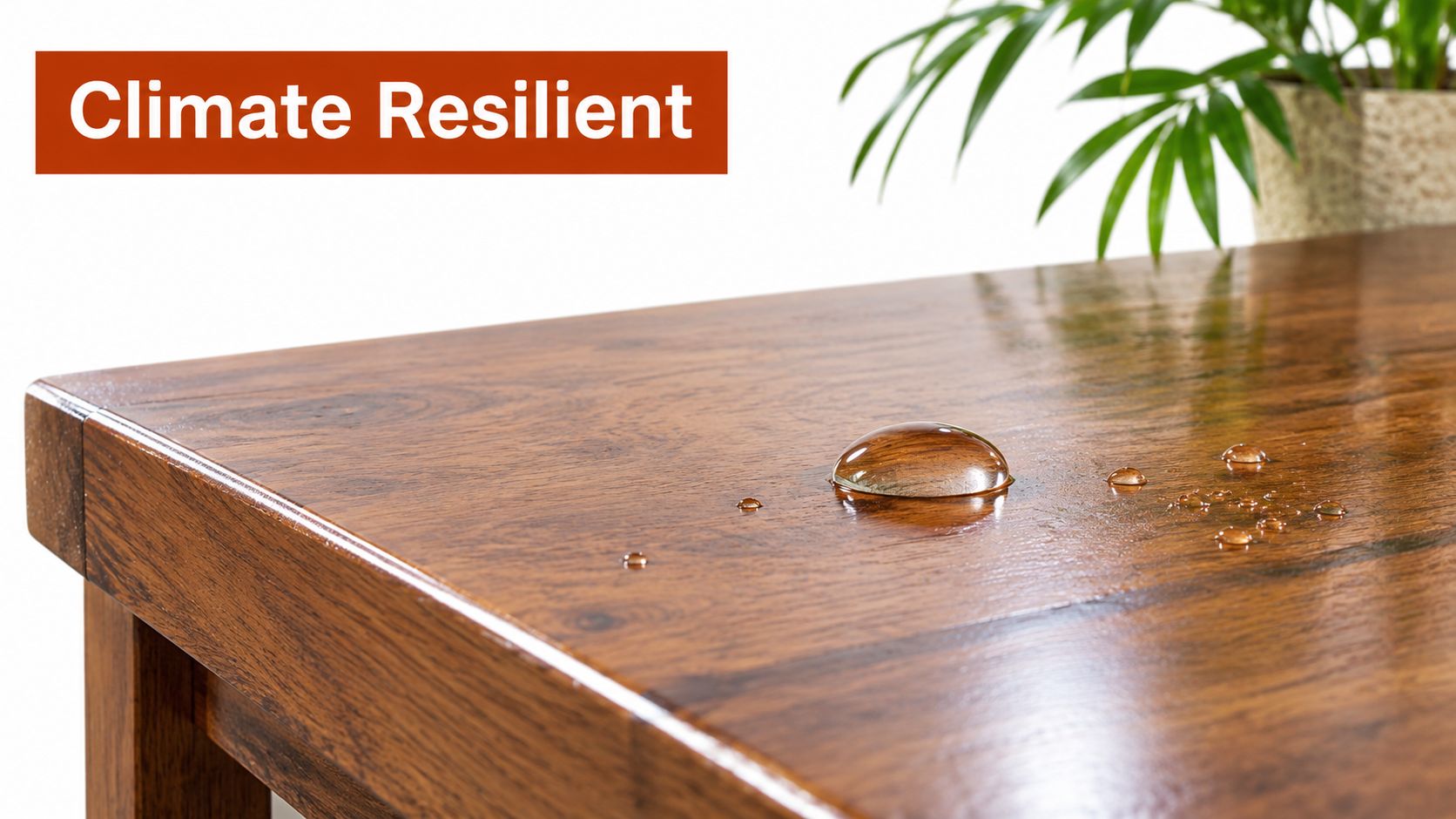
A finish protects the surface, shapes the color, and influences how the wood feels under your hand. It doesn't turn solid hardwood into a climate-neutral material. Coatings slow moisture exchange, but they can't mechanically prevent shrinking or swelling.
Oil-based polyurethane typically adds warmth and a durable film, while water-based polyurethane keeps the appearance lighter and dries with less color shift. Conversion varnish can provide a hard, furniture-grade surface when applied under controlled conditions. A penetrating hardwax-oil finish preserves a natural touch and can support localized maintenance, though it requires disciplined care and clear expectations about wear.
Choose protection by household behavior
A table used for crafts, homework, and frequent entertaining benefits from a more resistant film finish. A formal dining room used less often may prioritize depth, texture, and ease of future renewal. Ask how the finish responds to warm dishes, standing water, citrus, alcohol, cleaning products, and direct sunlight.
Florida homes create changing conditions. Air-conditioning can dry interior air, while open windows, coastal exposure, and seasonal humidity can move the table in the opposite direction. Don't place the table directly under an HVAC discharge, against a damp exterior wall, or where strong sunlight repeatedly heats one portion of the top.
The USDA Forest Products Laboratory states that hardwood lumber intended for furniture, cabinetry, and millwork is typically dried to a final moisture content of 6% to 8%, a range designed to approximate moisture equilibrium in many indoor environments and help limit post-manufacturing movement (USDA Forest Products Laboratory guidance).
Plan the handoff and care routine
Ask the maker where the table was acclimated, how the finish was cured, and whether the destination's indoor conditions were considered. After delivery, use coasters, wipe spills promptly, lift objects instead of dragging them, and follow the maker's cleaning instructions. Avoid silicone-heavy polishes and aggressive household cleaners unless the finish manufacturer specifically approves them.
A finish may need refreshing when the surface becomes unevenly dull, absorbs moisture differently, or develops wear that routine cleaning can't improve. The care framework in this guide to protecting wood furniture from scratches and stains can help you establish habits before problems appear.
Planning Your Custom Order and Delivery
A custom order works best when the first conversation includes the details that affect construction. Bring room measurements, chair dimensions, photographs, preferred wood species, finish samples, and a clear description of daily use. Mention children, pets, frequent entertaining, periods when the home may be vacant, direct sunlight, and any move you may anticipate. These factors can change the tabletop design, edge profile, finish, base, and delivery requirements.
A useful consultation is collaborative and specific. You are choosing more than a color. Discuss the amount of visible grain, whether the base should look architectural or restrained, how the table will relate to nearby case goods, and whether the finished piece should suit a coastal, traditional, transitional, or contemporary room. Ask the maker to explain which choices affect appearance and which protect the table through years of use.
Ask questions that reveal the build
A reputable maker should explain the lumber, moisture preparation, joinery, attachment method, finish, and care requirements in plain language. Ask for the intended moisture range at fabrication and delivery rather than accepting “kiln dried” as a complete answer. Purdue Extension places the fiber-saturation point for North American woods at approximately 28% to 30% moisture content. Below that point, substantial physical and mechanical changes begin as moisture leaves the cell walls. Its guidance lists 6% to 8% as suitable for indoor furniture (Purdue Extension wood-science guidance).
Florida's warm, humid conditions make destination preparation especially important. For interior woodwork in damp, warm coastal regions, guidance identifies an installation moisture-content target averaging about 11%, with individual pieces commonly ranging from 8% to 13%. General U.S. interior woodwork is listed at an average of about 8%, with individual pieces at 6% to 10% (coastal installation moisture guidance). The table still needs a reasonably controlled indoor environment after installation, but preparation suited to the destination can reduce avoidable stress.
Ask these questions before approving the build:
- Material traceability: Which species and grade are being used, and how were the boards selected?
- Movement allowance: How does the top attach to the base, and where is it allowed to expand and contract?
- Joinery: What connects the legs, aprons, stretchers, and other support components?
- Finish care: Which cleaners, heat protections, and renewal methods are approved?
- Service support: What happens if the table later needs adjustment, repair, or refinishing?
The same planning discipline applies to connected custom work. If the dining area is part of a renovation, the resource on designing a custom kitchen island provides useful prompts about proportions, circulation, seating, and coordination between fixed cabinetry and movable furniture.
Expect a process, not an instant transaction
Custom furniture may involve species availability, board selection, drying and acclimation, construction, sanding, finish application, curing, inspection, and scheduling. Timelines vary with the design and the maker's workflow. Request clear milestones, including design approval, construction, finishing, inspection, and delivery, instead of relying on a general promise.
Your order record should state the approved dimensions, species, finish, edge treatment, base design, extension details, care instructions, and delivery requirements. Keep photographs or samples from the approval stage. Written details and physical references make it easier to resolve small misunderstandings before they become permanent features of the table.
Delivery deserves the same attention as construction. Confirm doorway measurements, floor protection, placement, packaging removal, and inspection procedures in advance. A professional white-glove team should protect the home, unbox carefully, check for transit issues, position the table according to the agreed layout, and remove packaging. Within its service area, Indian River Furniture provides in-house white-glove delivery for a $99 delivery fee, including unboxing, inspection, and room setup.
Make the showroom visit count
Bring chair dimensions and room photographs to the appointment. Sit at comparable dining furniture, run your hand across different edge profiles, inspect the underside, and check knee clearance. Spend several minutes seated. Posture and comfort are easier to judge in use than from across a showroom.
Indian River Furniture in Rockledge hand-tests seating and offers complimentary design consultations before a custom order is placed. Use the custom-order starting guide before the appointment so you can discuss measurements, materials, finish preferences, and delivery questions with practical information already in hand.
A well-planned delivery ends with more than a table in the room. It should leave you with the correct scale, a stable base, a finish suited to the household, and a clear care routine. After delivery, use coasters, wipe spills promptly, lift objects instead of dragging them, and follow the maker's cleaning instructions. Avoid silicone-heavy polishes and aggressive household cleaners unless the finish manufacturer approves them.
A finish may need refreshing when the surface becomes unevenly dull, absorbs moisture differently, or shows wear that routine cleaning cannot improve. The care framework in this guide to protecting wood furniture from scratches and stains can help establish good habits before those problems appear.
A custom hardwood dining table earns its place in the home through sound preparation and honest documentation. Bring your measurements, ask how the wood was prepared for Florida conditions, examine the joinery, and confirm the delivery plan before signing off. Then schedule a complimentary consultation with Indian River Furniture to review the design, construction, finish, and intended use.