Schedule your Complimentary Design Consultation


Dining Bench Modern Style Guide for Coastal Homes


You're probably standing in your dining room right now looking at one of two situations. Either the chairs feel too formal for the way you live, or the room looks good in photos but doesn't quite work when family drops by, kids slide in for breakfast, or neighbors linger over coffee after dinner. That's where a modern dining bench starts to make sense.
A well-chosen bench changes the rhythm of a room. It softens the stop-and-start feeling of individual chairs, opens up sightlines in an airy coastal layout, and makes the dining area feel more relaxed without becoming casual in the unfinished sense. In a Rockledge home, especially one with open-plan living and plenty of natural light, that balance matters. You want seating that feels carefully chosen, but never stiff.
Table of Contents
- Introduction to Modern Dining Bench Living
- What Makes a Dining Bench Modern Today
- Modern Dining Bench Styles You Will Love
- Dimensions and Fit for Comfortable Seating
- Materials and Craftsmanship Built for Florida Living
- Pairing Your Modern Bench With Tables and Chairs
- Bringing Your Modern Dining Vision Home
Introduction to Modern Dining Bench Living
A modern dining bench often enters the conversation in a very practical way. Someone wants easier flow around the table. Someone else wants more flexible seating for grandchildren, guests, or a multipurpose dining space that shifts from homework to holidays without fuss. Then the design question follows. Can a bench still look polished enough to belong in a thoughtfully furnished home? The answer is yes, if the proportions and materials are right.
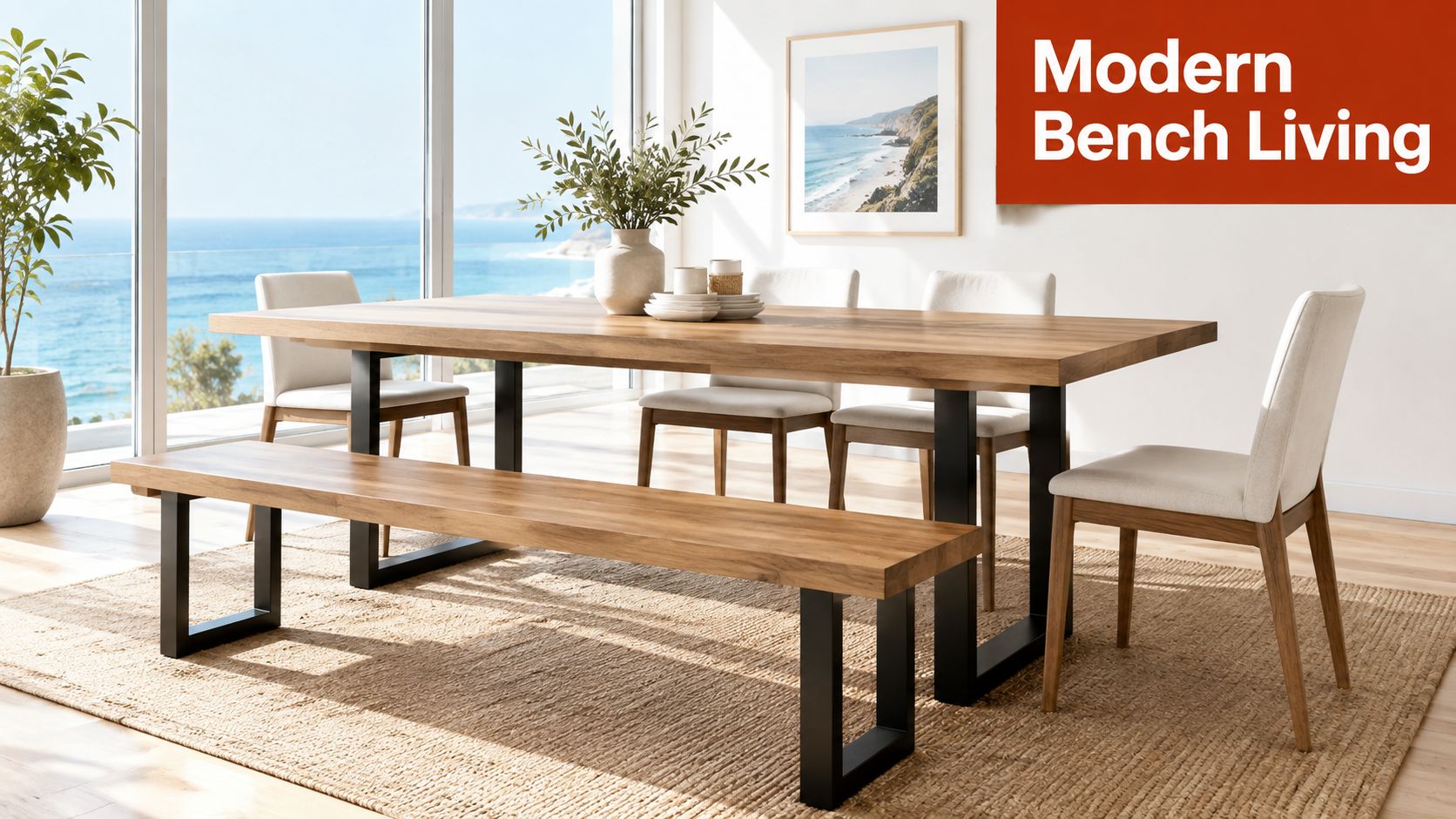
What feels current about the dining bench modern look isn't just style. It's function. One independent market report says dining benches accounted for 19.8% of the upholstered-benches market in 2025, with a projected 5.9% CAGR from 2025 to 2034, which places them as a meaningful category rather than a fringe accent piece within the broader bench market, according to Dataintelo's upholstered benches market report.
That matters in real homes because people aren't buying benches as decorative extras. They're choosing them as part of a larger shift toward flexible, multifunctional furniture that works in compact rooms, open-plan homes, and spaces that need to do more than one job.
Why benches feel at home in coastal interiors
Clean lines help. So does visual openness. A bench keeps the dining area from feeling crowded, especially when you can tuck it partly under the table between meals. In a coastal interior, where the goal is often calm rather than clutter, that lower profile can make the whole room breathe.
Practical rule: A modern bench should make the room feel lighter, not emptier. If it clears visual space while still feeling grounded and comfortable, you're on the right track.
The local lens matters
Around Brevard County and the Space Coast, homes often need furniture that handles gatherings, sandy feet, humidity, and daily movement without looking overworked. Since 1939, families have come to Rockledge looking for pieces that don't just match a room, but support the way life happens inside it. That's the right mindset for choosing a bench. Think less about trend and more about comfort, craftsmanship, and whether the seat still feels inviting after the second hour at the table.
What Makes a Dining Bench Modern Today
Modern doesn't mean cold. It means edited.
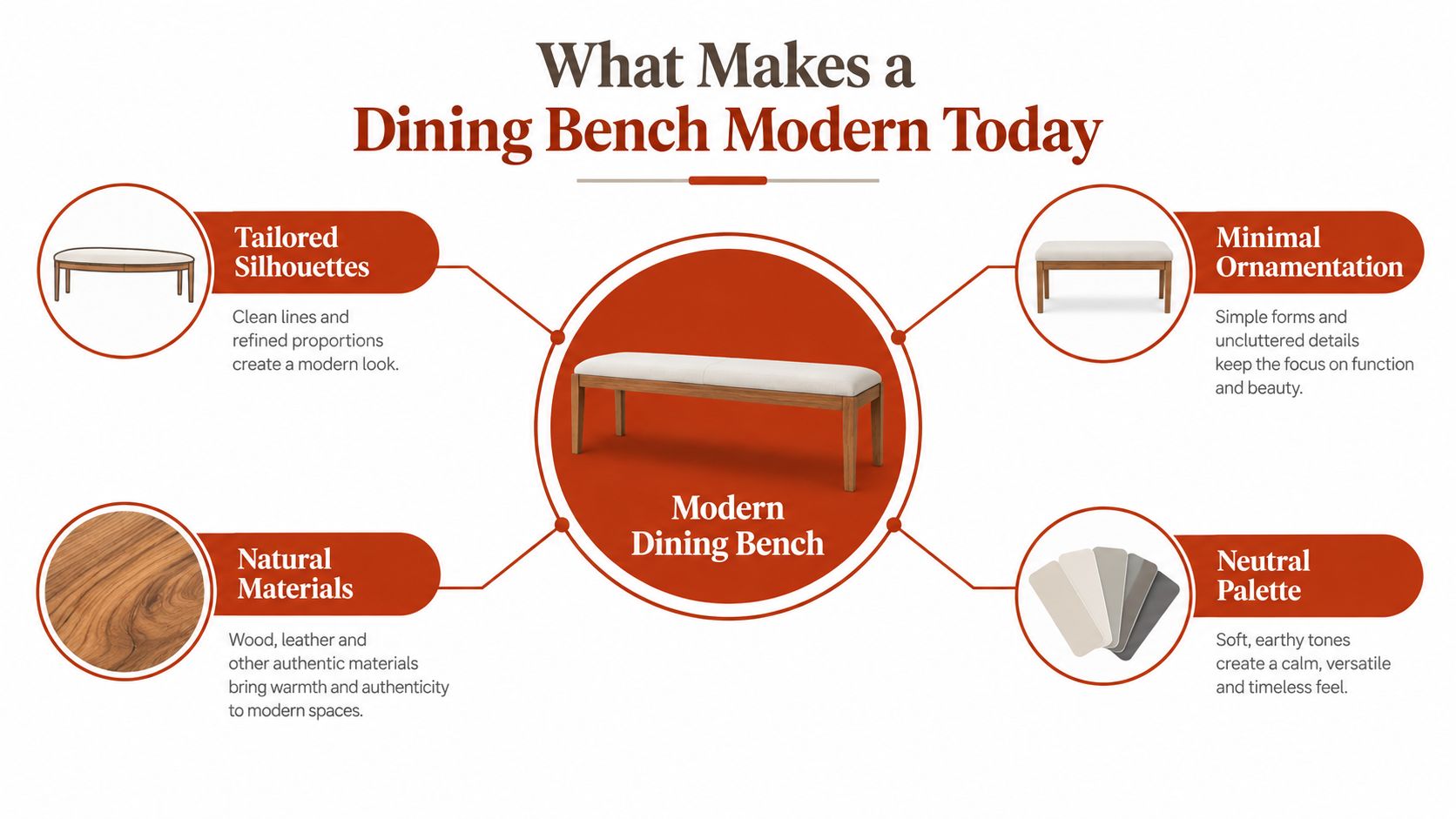
A dining bench modern in spirit has clear intent in its shape, scale, and materials. You can usually spot it before you know why. The outline is cleaner. The profile sits lower and quieter in the room. The details feel deliberate, not decorative for decoration's sake.
Start with the silhouette
A modern bench usually favors a precise form. That might mean a slim upholstered seat, a crisp wood slab with softened edges, or a mixed-material frame with restrained lines. This approach echoes coastal architecture done well. Wide windows, simple trim, balanced proportions. The room doesn't need extra ornament because the structure already feels resolved.
Three visual cues usually signal a modern bench:
- Clean geometry that feels composed from every angle
- Minimal ornamentation so the material itself does the work
- Balanced proportions that look calm beside a dining table rather than bulky or fussy
Notice what's missing
Traditional benches often lean on turned legs, carved aprons, or visibly rustic distressing. Farmhouse benches may feel thicker, more rugged, and intentionally casual. Modern benches strip most of that away. What remains is the essentials. Good joinery. Good scale. A shape that looks relaxed but still refined.
That's why proportion matters more than trend details. A bench can wear a neutral performance fabric, warm oak tone, or matte metal stretcher and still look modern if the lines are disciplined and the seat doesn't feel overbuilt.
The easiest test is simple. If the bench looks quieter the longer you study it, it's probably modern. If it keeps asking for attention through decorative details, it usually isn't.
Material mix should feel curated
Modern dining benches often pair natural surfaces with a subtle contrast. A wood frame with upholstery. A sculptural base under a simple cushioned top. A textured fabric against smooth hardwood. The finish palette tends to stay controlled, which is part of what gives the piece longevity as an heirloom investment rather than a passing style note.
Modern means usable, not severe
People sometimes get confused. They assume modern seating has to feel firm, sharp, or visually strict. In good furniture, it doesn't. Modern means every line earns its place. Comfort can still be generous. Texture can still be inviting. The difference is that the softness is intentional, not overstuffed.
A useful checklist in the showroom looks like this:
- Look at the outline first. Does it read as simple and specific?
- Check the detailing next. Are the legs, seams, and edges restrained?
- Study the material transition. Does wood meet fabric in a thoughtful way?
- Sit with your eyes closed. If the comfort feels as resolved as the shape looks, the design is doing its job.
Modern Dining Bench Styles You Will Love
Not every modern bench serves the same household. Some are made for long, easy dinners. Some are ideal for tighter footprints. Some bring softness and quiet luxury. Others act almost like sculpture beside the table.
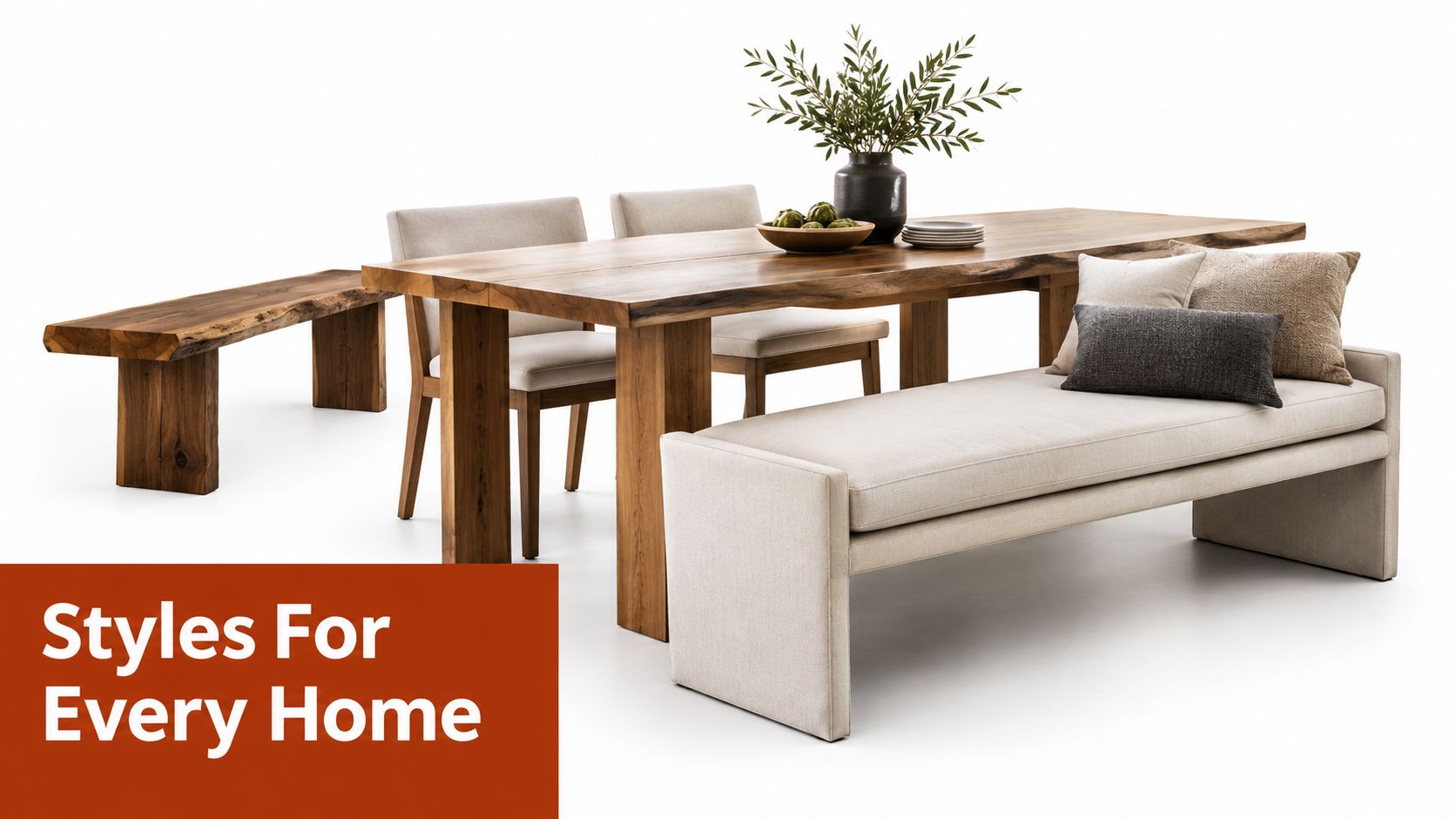
Upholstered benches
These are often the first choice for homeowners who want the dining room to feel gentle and finished. An upholstered bench absorbs sound, softens the edges of a wood-heavy room, and adds that refined layer that makes a dining space feel complete. The hand-feel matters here. You want fabric that feels smooth and substantial, with cushioning that supports rather than swallows you.
Best fit for:
- Longer meals where comfort matters
- Homes with mixed textures like woven lighting, hardwood floors, and linen drapery
- Spaces aiming for relaxed luxury rather than stark minimalism
Wood benches
A solid wood bench reads lighter in one sense and more architectural in another. It can ground a table beautifully without adding visual bulk. In a coastal setting, this style often works well when the table already has character in the grain, edge profile, or base shape.
Wood benches usually suit households that want:
- easier wipe-downs
- a cleaner, more sculptural look
- flexibility to move the bench to an entry, hallway, or bedroom later
Backless benches
A backless bench is the quiet workhorse of the modern category. It tucks under the table more easily, preserves open sightlines, and helps a compact dining area feel less interrupted. If your room does double duty, this style can be especially useful.
A backless bench often looks the least demanding in the room, which is exactly why it works so well in smaller or busier layouts.
The tradeoff is obvious. It doesn't offer the same support for long, lingering meals as a bench with a shaped or upholstered back.
Back-supported and banquette-inspired benches
If your household loves extended dinners, game nights, or coffee that turns into conversation, a back-supported bench deserves a close look. These pieces borrow some of the comfort logic of banquette seating without requiring built-in construction. They feel inviting, anchored, and a bit more enveloping.
Mixed-material benches
These blend categories in a way many homeowners love. A hardwood frame with an upholstered top, or a bench with a clean metal accent under a warm wood seat, can bridge classic and contemporary furnishings very gracefully.
Here's a quick way to compare them:
| Style | What it feels like | Where it shines |
|---|---|---|
| Upholstered | Soft, tailored, cushioned | Formal-casual dining rooms |
| Solid wood | Crisp, natural, sculptural | Clean coastal interiors |
| Backless | Open, adaptable, space-aware | Smaller rooms and flexible layouts |
| Back-supported | Settled, supportive, lingering | Households that dine slowly |
| Mixed-material | Curated, balanced, refined | Transitional modern spaces |
Dimensions and Fit for Comfortable Seating
A beautiful bench that's the wrong size won't feel modern for long. It will just feel awkward.
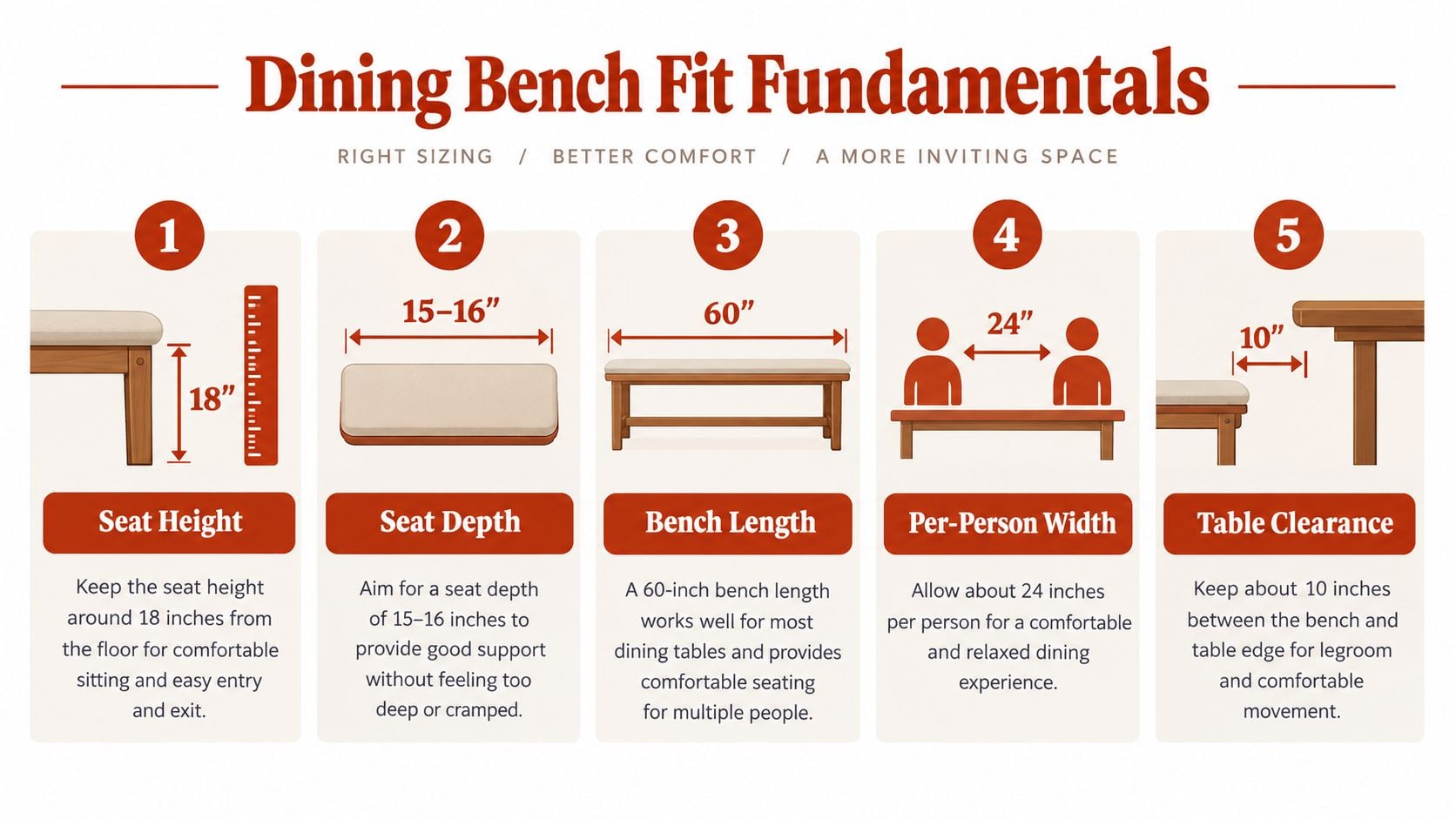
The most practical ergonomic range for a dining bench is about 17 to 19 inches in seat height, 14 to 18 inches in seat depth, and 48 to 72 inches in length, with roughly 24 inches of width per adult as a planning benchmark, according to Loomlan's dining bench guide. Those numbers work because they pair well with a standard dining table and help preserve a neutral sitting posture.
The seat height people feel immediately
Seat height is usually the first comfort cue your body notices. Too high, and your knees lift uncomfortably. Too low, and the table edge starts to feel awkward against your arms and shoulders. That 17 to 19 inch zone tends to align well with standard dining use because it supports a natural leg position without making you perch or sink.
If you're comparing your bench with your table, it also helps to understand overall table proportion. This guide on dining table heights can help you evaluate the pairing before you commit.
Depth, length, and personal space
Seat depth is where many benches go wrong. Shallower than about 14 inches, and support starts to feel skimpy. Deeper than about 17 inches, and some sitters may round through the lower back to stay comfortable, especially during longer meals. The right depth supports the thighs without pushing the body into an awkward posture.
For sizing the whole bench, a few benchmarks help:
- Length matters for function. A shorter bench can look elegant, but it still needs to support the number of people you expect to seat.
- Allow about 24 inches per adult. That gives enough personal space for elbows, plates, and natural movement.
- Think about the room edge too. A bench that fits the table but crowds the walkway will never feel graceful in daily use.
Showroom check: Sit all the way back, place both feet flat on the floor, and notice whether the seat supports your thighs without pressing sharply behind the knees.
Clearance makes or breaks comfort
Bench-to-table geometry is just as important as bench size. A dining bench is typically designed to sit about 10 to 12 inches below the tabletop, and the front edge should be rounded with roughly a 1-inch radius to reduce pressure behind the knee, according to Rustic Red Door's dining bench sizing guide. The same guide notes that leaving 1 to 2 inches of under-table clearance helps avoid contact with aprons or stretchers and makes entry and exit easier.
For tuck-under use, choose a bench slightly shorter than the table. That keeps the silhouette clean and helps with day-to-day movement around the room.
There's another layer here that often gets overlooked. Independent ergonomic research on seating evaluation points to anthropometric fit, posture, and support as central to comfort, and it notes that poor seat height, limited seat dimensions, and insufficient support can drive discomfort, as outlined in this seating ergonomics study. That's one reason ownership teams who hand-test seating for pitch and comfort before it ever reaches a 32,000 square foot Rockledge showroom add real value to the selection process. Numbers matter, but so does how the bench feels under your body.
Materials and Craftsmanship Built for Florida Living
A dining bench earns its keep through contact. Hands grip the edge. Guests slide in from the side. Fabric catches sunscreen, crumbs, damp swimsuits tossed over a shoulder, and the normal wear of a lived-in Florida home. That's why materials matter just as much as style.
Start under the upholstery
The frame determines whether a bench feels steady after years of use or starts to loosen and flex. Hardwood is generally favored in furniture joinery because its higher density offers stronger resistance to compression and shear forces, which supports stronger joints and longer-lasting frames, as explained in this overview of wood type and joint strength.
That doesn't mean every good bench has to look heavy. A profile can still hide serious structure. What you're listening for is steadiness. What you're feeling for is confidence when you sit down.
Florida-friendly surfaces
In coastal homes, upholstery should work hard without feeling utilitarian. Performance fabrics are often specified for resistance to moisture, mildew, odor, and microbes. One product factsheet describes this category as anti-moisture, mildew-resistant, odor-resistant, antimicrobial, luxurious, and easy to clean, according to the PureTech performance fabric factsheet.
That combination makes sense here. You want the seat to feel soft to the hand, but you also want fewer worries when humidity rises or everyday life gets messy.
A few practical signs of a strong material choice:
- Performance upholstery with a smooth, tight hand and easy-clean character
- Genuine leather that develops patina rather than peeling or flattening
- Solid hardwood framing that keeps the bench from wobbling over time
For homeowners refining a relaxed, breezy interior, this overview of coastal design style can help connect material choices to the room's overall mood.
Daily care should be simple
Modern benches often succeed because they simplify the room visually. Their maintenance should feel equally manageable. For fabric care habits that help preserve texture and appearance, Canes Cleaners upholstery advice offers useful reminders on routine cleaning and stain response that translate well to upholstered dining seating.
A bench can be a design statement. It should also survive family life with grace.
Pairing Your Modern Bench With Tables and Chairs
The strongest dining rooms rarely match every seat perfectly. They balance them.
A modern bench works especially well when you let it play a specific role in the composition. It can lower the visual weight on one side of the table, add softness opposite framed dining chairs, or keep a casual breakfast area from feeling overfurnished.
Balance the table first
The bench should support the table, not compete with it. If the table has a bold pedestal or a substantial base, the bench often looks best with a quieter outline. If the table is visually light, a fully upholstered bench can add welcome substance.
The bench also needs to relate to the room beyond the table. A nearby buffet, sideboard, or woven light fixture can echo its tone, texture, or finish so the entire vignette feels curated instead of assembled piece by piece.
For a broader look at layout planning, this guide to table shapes and seating arrangements is a helpful companion when you're deciding how a bench fits your floor plan.
Mix seating with intention
Pairing a bench with chairs is often where the room comes alive. The contrast gives the space personality, but only if the comfort level feels consistent.
Here's a practical comparison:
| Seating Mix | Best For | Comfort and Care Note |
|---|---|---|
| Fully upholstered bench with upholstered chairs | Long meals and more formal-coastal rooms | Soft feel throughout, but fabrics should be chosen with easy cleaning in mind |
| Wood bench with upholstered host chairs | Active family dining and easier upkeep | Wipe-down convenience on the bench, added comfort at the ends |
| Backless bench with side chairs opposite | Compact rooms and open sightlines | Excellent tuck-under flexibility, lighter visual footprint |
| Bench on one side, mixed chairs on the other | Casual entertaining and layered interiors | Feels collected and designer-led if heights and finishes stay cohesive |
Small details complete the look
Textiles can help a bench feel integrated. A rug underfoot softens acoustics. Nearby drapery can echo the upholstery tone. Even a bench cover can be useful if you want to protect a seat while preserving the silhouette. If you're considering that route, this guide on how to measure a bench cover is a handy reference before ordering anything custom.
One market guide on space-saving furniture adds another practical angle. It defines the category by usable floor area recovered and lists bench seating with storage as recovering 10 to 16 square feet, while also warning that hinged lids can pose safety concerns unless they use soft-close mechanisms, according to StudioMatrx's space-saving furniture guide. That's worth thinking about if your dining area also needs hidden function.
Mixed seating usually feels most successful when each piece solves a different problem. One adds softness. One adds structure. One preserves space.
Bringing Your Modern Dining Vision Home
A modern dining bench earns its place when it does three things well. It fits the room visually, supports the body comfortably, and holds up to the habits of daily life. That's why this decision works best when you treat it as an investment in how your home functions, not just how it photographs.
The style piece matters, of course. You want a bench with clean lines, calm proportions, and materials that feel at home in a coastal interior. But the better question is always how it sits, how it wears, and how it lives beside your table every day.
Comfort should be tested, not guessed
Many homeowners save themselves frustration by visiting a showroom instead of relying on dimensions alone. A bench can measure well on paper and still feel off in pitch, cushion firmness, or edge comfort. That's why hand-testing matters. Sit down. Slide in and out. Rest your feet flat. Stay long enough to notice what your back and legs do after a few minutes.
At Indian River Furniture, one option available to local homeowners is a Rockledge showroom experience where ownership hand-tests every seat, sofa, and recliner for pitch and comfort before it reaches the floor. That kind of screening aligns well with a category like dining benches, where subtle comfort differences matter more than people expect.
Good service supports good design
The other part of confidence is seeing the bench in context. Curated coastal vignettes help you compare wood tones, upholstery textures, chair pairings, and room scale all at once. Complimentary in-house interior design consultations can also help narrow the field if you're balancing open-plan flow, family use, and a specific style direction.
The broader category supports this long-view approach. One market forecast valued the global kitchen and dining furniture market at USD 26.65 billion in 2024 and projected it to reach USD 49.83 billion by 2033, with a 7.2% CAGR from 2025 to 2033, while a separate living-and-dining room furniture forecast placed that market at USD 256.10 billion in 2026, rising to USD 314.43 billion by 2031 at a 4.19% CAGR, with North America identified as the largest market and Asia Pacific as the fastest-growing, according to this dining room benches market report summary. In plain terms, dining furnishings remain a meaningful part of how people invest in home life.
If you want the bench to feel right years from now, trust your body, your measurements, and the craftsmanship in front of you.
If you're refining a dining room on the Space Coast, Indian River Furniture offers a hands-on way to compare modern dining benches, tables, fabrics, and finishes in person. Visit the Rockledge showroom to test comfort, explore curated coastal vignettes, and work with the design team on a plan, with uniform white-glove delivery available for a flat $99 within the service area.