Schedule your Complimentary Design Consultation


High Leg Recliner Chair: Style, Fit, and Comfort

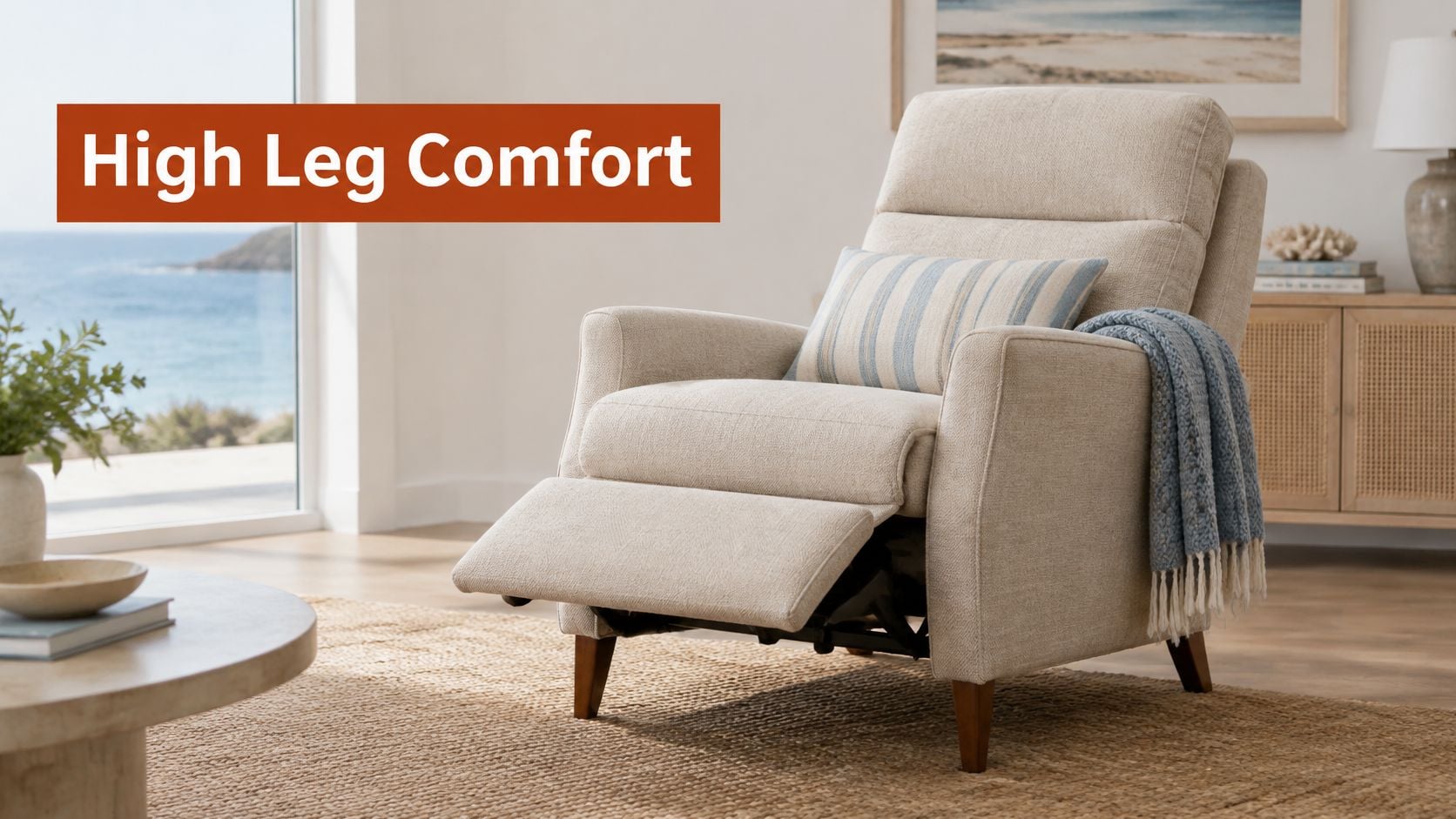
You've settled into your living room after a long day, feet tired, back ready to let go, and you wish your favorite chair would lean back with you. It won't. So you prop your feet on an ottoman, shift a cushion behind your back, and make do. That's the small, familiar moment where a high leg recliner chair earns its place, giving you genuine reclining comfort without asking your room to look like it was built around a piece of motion furniture.
Why a High Leg Recliner Chair Belongs in Your Living Room
Many homeowners hesitate at exactly this point. They want the deep, familiar comfort of a recliner, but they've worked hard to create a light, coastal living room filled with polished upholstery, natural texture, and breathing room around each piece. A traditional recliner can visually dominate that kind of space. It sits low, wide, and heavily padded, and it announces its purpose before you ever sit down.
A high leg recliner chair resolves that tension with subtlety. From across the room, it reads as a well-proportioned accent chair, the kind you'd place beside a sofa or angle toward a window for morning coffee. The legs lift the frame so light passes underneath, and the silhouette stays composed. Sit down, lean back, and the chair reveals what it has been hiding all along, a smooth recline and a leg rest that rises to meet you.

A Considered Investment in Daily Comfort
Choosing this chair well means looking beyond style alone. You'll want to understand what defines the category, how to fit the seat to your own body, how manual and power mechanisms feel, and which materials hold their beauty through Florida humidity, sunlight, and daily use.
A chair you use every single day should be chosen the way you'd choose a bed, by fit first and fabric second.
Think of it as an investment in a daily ritual rather than a quick purchase. If you're also working out how seating should relate to the rest of the room, our guide to thoughtful living room arrangement ideas offers a helpful starting point for placement and proportion. With that picture in mind, you can judge any chair by how it looks, how it supports you, and how gracefully it will age in your home.
What Sets a High Leg Recliner Chair Apart
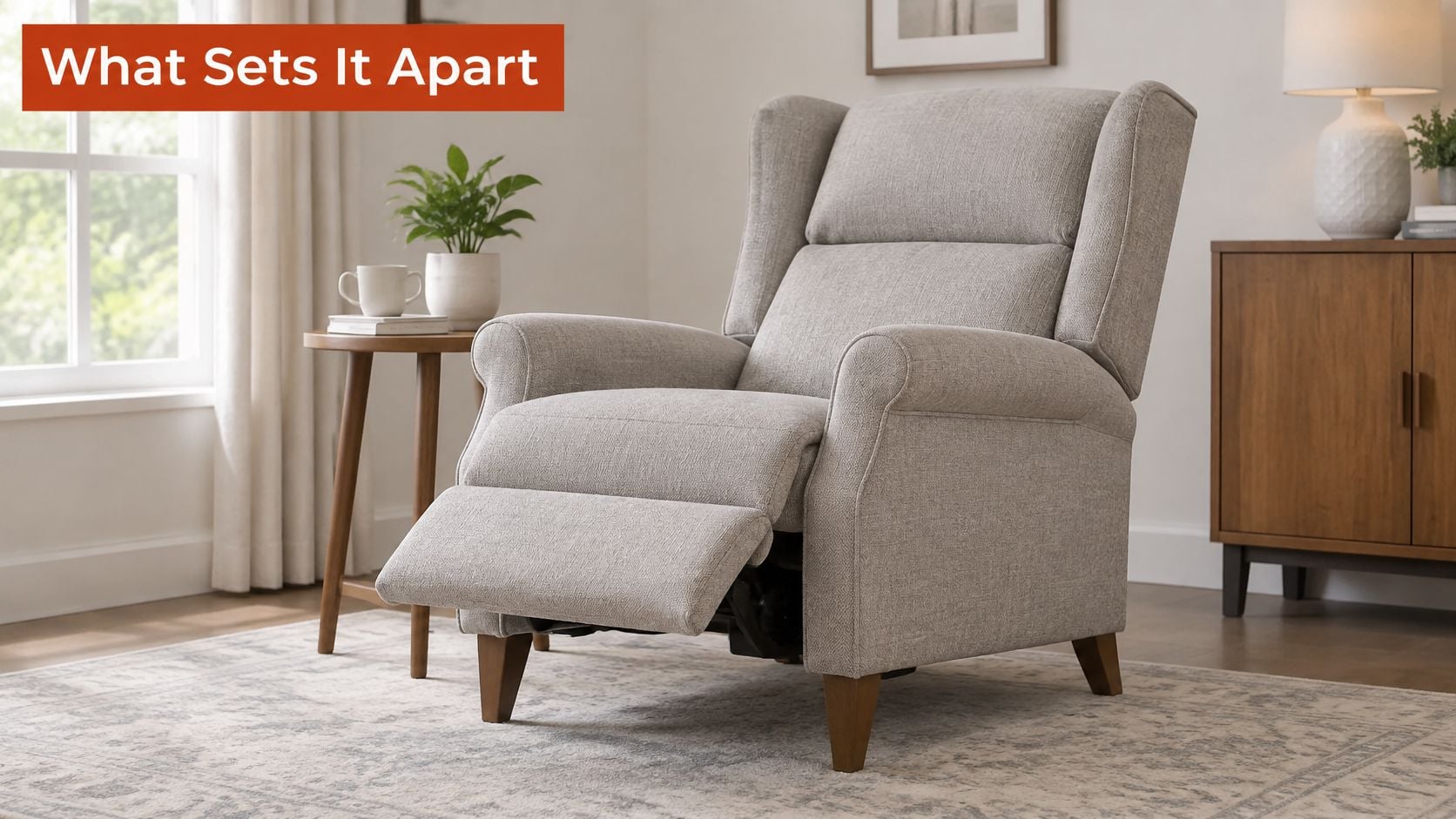
A high-leg recliner pairs the familiar outline of an accent chair with a hidden reclining mechanism. Its legs raise the seat above the floor, leaving the space beneath visible. A 2024 United States patent application describing high-leg seating designs uses this raised-leg arrangement. In a living room, the open space can make the chair feel less visually heavy and makes cleaning beneath it easier.
Furniture First and Mechanism Second
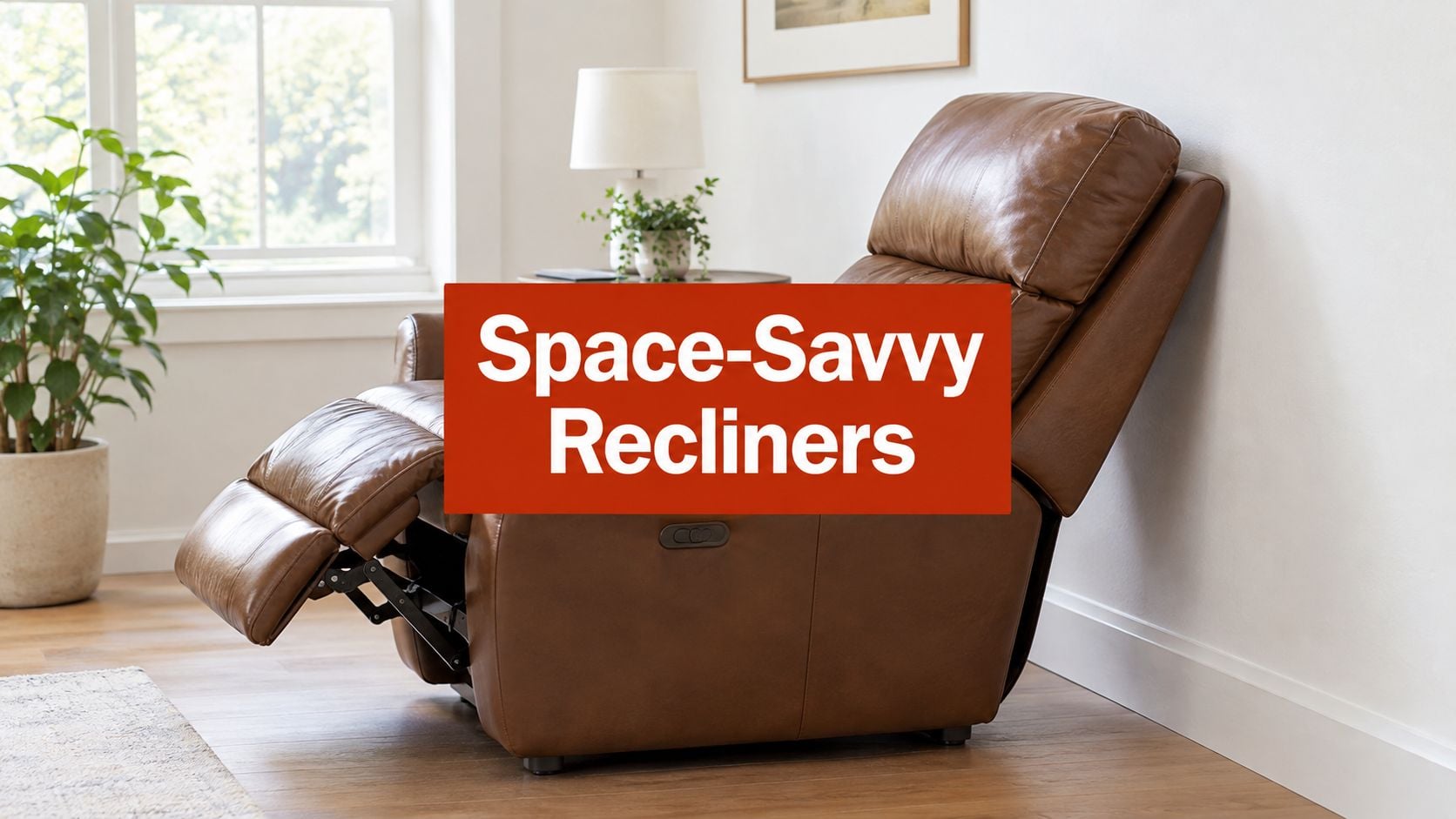
A conventional recliner often has a low base that hides its hardware, while a stationary accent chair keeps a neat, fitted profile but does not recline. A high-leg recliner brings those qualities together: its concealed mechanism sits within the frame, and the footrest folds away when not in use. The result is a chair that can look at home beside other raised-leg furniture, then change position when you settle in.
Reclining furniture has a long history. An early reclining-chair design appeared in a British periodical in 1813. By 1883, the Morris chair, designed by William Watt and made by Morris and Company, had become an influential adjustable easy chair, according to this history of the recliner. In the United States, Edward Knabusch and Edwin Shoemaker incorporated their company in 1929. A patent for an upholstered reclining chair followed in 1930, as recounted in the same history.
Engineered for a Raised Profile
The high-leg format has been patented since at least 1991, when a high-leg reclining-chair mechanism was patented. Later designs added concealed ottoman and footrest systems. Keeping the legs visible while supporting moving parts calls for a frame that accommodates the mechanism and allows the footrest to extend and retract safely. The raised silhouette and the reclining action must work together.
- Raised legs leave the floor visible and give the chair an open profile.
- Concealed hardware keeps the mechanism within the frame.
- Integrated footrest extends when you recline and tucks away afterward.
Look beneath the chair to understand its construction. Finished legs and clear space below the frame are useful signs of the high-leg design; a fabric skirt, by contrast, hides the base and changes the look of the chair. Check how the footrest moves, too. Its action should fit neatly within the chair's frame and return out of sight when closed.
Measuring Your Body for the Right Fit
Plenty of shoppers measure the room and forget to measure themselves. That's backwards. A chair can be the perfect width for your wall and still leave your feet dangling, your lower back unsupported, or pressure building behind your knees. Your body is the specification the chair has to meet.
The Three Measurements That Matter Most
Start with popliteal height, the distance from the floor to the underside of your knee while you're seated with feet flat. That number tells you the seat height you can sit on without the front edge pressing into your thighs. Next, consider your hip width against the usable seat width between the arms, which is always narrower than the chair's exterior width. Finally, think about seat depth, because a seat that's too deep forces you to slouch forward to reach the floor, and your lumbar curve loses contact with the backrest.
Conventional chair seat height falls around 420 to 480 mm and seat depth around 400 to 490 mm, with a minimum armrest spacing of approximately 540 mm for chairs with arms, based on anthropometric seating data summarized in an academic design source. Treat those figures as screening benchmarks rather than guarantees. Cushions compress, and the effective dimensions shift as the seat-back angle changes.
High Leg Recliner Fit Benchmarks
| Measurement | Typical Benchmark | How to Check in the Chair |
|---|---|---|
| Seat height | 420 to 480 mm | Feet rest flat and secure on the floor |
| Seat depth | 400 to 490 mm | Back meets the backrest without knee pressure |
| Arm spacing | About 540 mm minimum | Hips settle comfortably between the arms |
What Good Fit Feels Like
Sit upright first. Your feet should plant securely, your knees should hold a modest, relaxed angle, and you shouldn't feel yourself sliding forward. Too much seat height compresses the underside of your thighs and can obstruct lower-leg circulation. Too little height encourages you to lift your legs and round your spine, which compromises lumbar support.
Then recline. In the extended position, the calf support should meet your lower leg broadly, spreading contact along the calf rather than concentrating force at the Achilles tendon or the tender area behind the knee. If you feel a hard edge at either spot, the leg-rest length or seat depth doesn't match your leg, no matter how pleasant the backrest feels.
Bring your numbers with you. A tape measure and three quick measurements turn a vague impression of comfort into a decision you can trust.
This is also why proportions deserve individual attention. If you're shopping for a taller or larger frame, it helps to review guidance on recliners sized for larger people before you sit down, so you know how width, depth, and weight capacity work together. Arrive knowing your measurements, and you'll recognize the right chair within moments of sitting in it.
Manual and Power Recline Mechanisms Compared
Once you know your fit, the mechanism is how the chair delivers it. Both manual and power designs can feel wonderful. The right choice depends on your strength, your room, and how precisely you like to dial in your position.
Manual Push-Back Recline
A manual high leg recliner chair reclines when you lean back and apply gentle pressure with your body weight. There's no cord, no motor, and nothing to plug in, which makes placement easy anywhere in the room. The trade-off is effort. You supply the force to recline and to return upright, and the chair typically offers a more limited set of resting positions. For an able-bodied reader who values simplicity, that direct, mechanical feel can be exactly right.
Power Recline
Power mechanisms move at the touch of a button, gliding through small increments so you can stop precisely where your back relaxes. That range matters more than most shoppers realize. Supported recline angles of approximately 110 to 130 degrees are associated with reduced lumbar-disc pressure, lower back-muscle activity, and improved comfort compared with upright sitting, according to Cornell University ergonomics guidance on chair design. A chair that locks into one fixed lounging angle can't adapt to reading, conversation, and rest the way a smooth, adjustable one can.
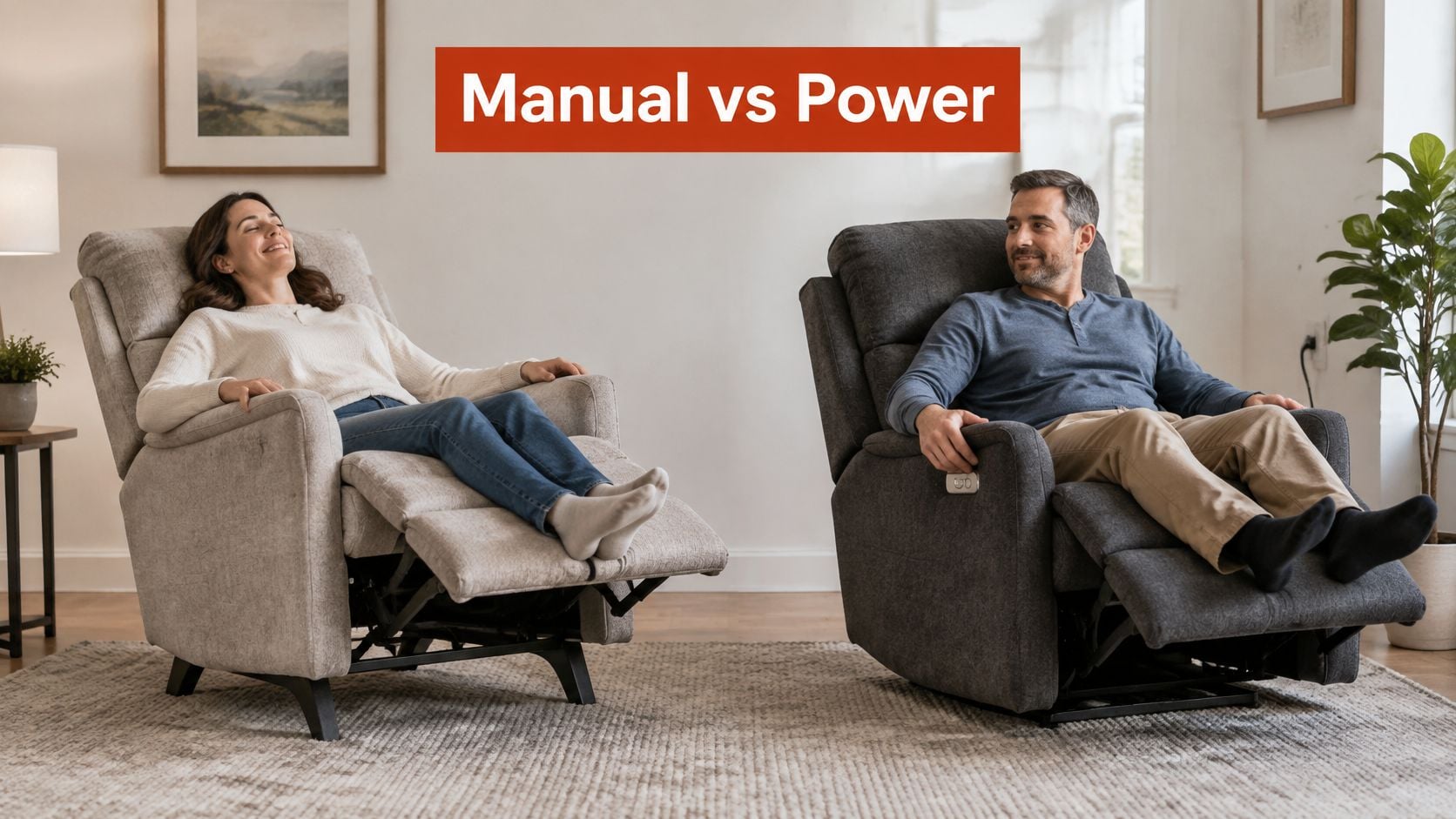
Pay attention to the footrest as part of the same system. It should raise your lower legs without forcing your knees or ankles into sharp flexion, and your heel and calf should feel continuously supported. Power also brings practical questions worth asking early, including cord placement, battery backup options, and whether the mechanism can be serviced years from now. Our overview of the types of power reclining seating walks through those configurations in more detail.
One honest note on mobility. A standard recliner, manual or power, still requires you to rise under your own strength. If standing itself has become difficult, it may help to find a recliner for easier standing and compare that category before deciding. Matching the mechanism to your real abilities now prevents frustration later.
Fabrics and Frames That Stand Up to Florida Living
A chair that feels perfect in the showroom still has to survive your actual life. On the Space Coast, that means humidity, salt air drifting through open doors, strong sunlight, sandy feet, pets claiming the warmest seat, and guests settling in after a day outside. Materials and construction decide whether the chair still looks composed after years of that rhythm.
Leather and Performance Fabric in Real Homes
Genuine leather wipes clean easily and develops a rich character over time, softening where your hands and shoulders rest. It can feel warmer against the skin in a sunlit room, though, and it appreciates periodic conditioning to stay supple. Performance fabrics open a wider world of coastal color and woven texture, from pale linen looks to nubby, sand-toned weaves. Market reporting notes that leather remains a major premium upholstery category while fabric is gaining appeal among younger buyers, with fabric projected to grow at 6.8 percent annually through 2034 in one market estimate cited in Grand View Research furniture market analysis.

The word performance, however, isn't a universal standard. Ask for test data instead of adjectives. Related ASTM guidance identifies minimum abrasion levels of 3,000 double rubs for light-duty use, 9,000 for medium-duty use, and 15,000 for heavy-duty use, under the ASTM D3597 performance specification for woven upholstery fabrics. For context, ACT performance guidance lists 30,000 Wyzenbeek double rubs or 40,000 Martindale cycles for heavier-use settings, while noting that ratings above 100,000 double rubs may not provide meaningful additional value in use, as explained in the ACT performance guidelines for upholstery textiles.
If you're weighing the two paths for your own household, our comparison of leather versus fabric upholstery lays out care and comfort trade-offs side by side.
Frames, Joinery, and Indoor Climate
Under the upholstery, look for solid hardwood frames with reinforced attachment points. Construction details carry measurable weight. In a comparative study of 600 samples, the probability of joints lasting beyond 50,000 cycles was approximately 99 percent for confirmat-screw joints, 89 percent for dowel joints, and 0 percent for eccentric joints under the study conditions, reported in a comparative reliability study of furniture joints. A recliner cycles through sitting, shifting, and rising every day, so that quiet rigidity is what keeps the chair feeling solid rather than creaky.
Your home's climate helps protect that craftsmanship. Wood, leather, and textiles absorb and release moisture as humidity changes, and maintaining indoor relative humidity between 35 and 65 percent helps preserve wood furniture, according to the Museum of Florida History guide to caring for wood artifacts. Keep the chair out of direct, sustained sun and away from damp exterior walls, and the frame, legs, and upholstery will reward you with an heirloom kind of longevity.
How to Test a Recliner in the Showroom
You have measured your body and considered how you use a chair. Now give the recliner a proper sit test. Set aside a few unhurried minutes, because a quick perch tells you little about how the chair will feel through a full evening.
A Simple Sit Test Worth Doing Slowly
- Sit fully back until your lower back meets the lumbar contour. Check that the headrest supports you without a pillow.
- Recline gradually through the full range. Pause in the positions where you might read, watch television, or rest.
- Check the leg rest for steady support from heel to calf. Notice any hard edge pressing behind your knees.
- Return upright and stand using the chair's arms for support. Do not pull on a nearby table.
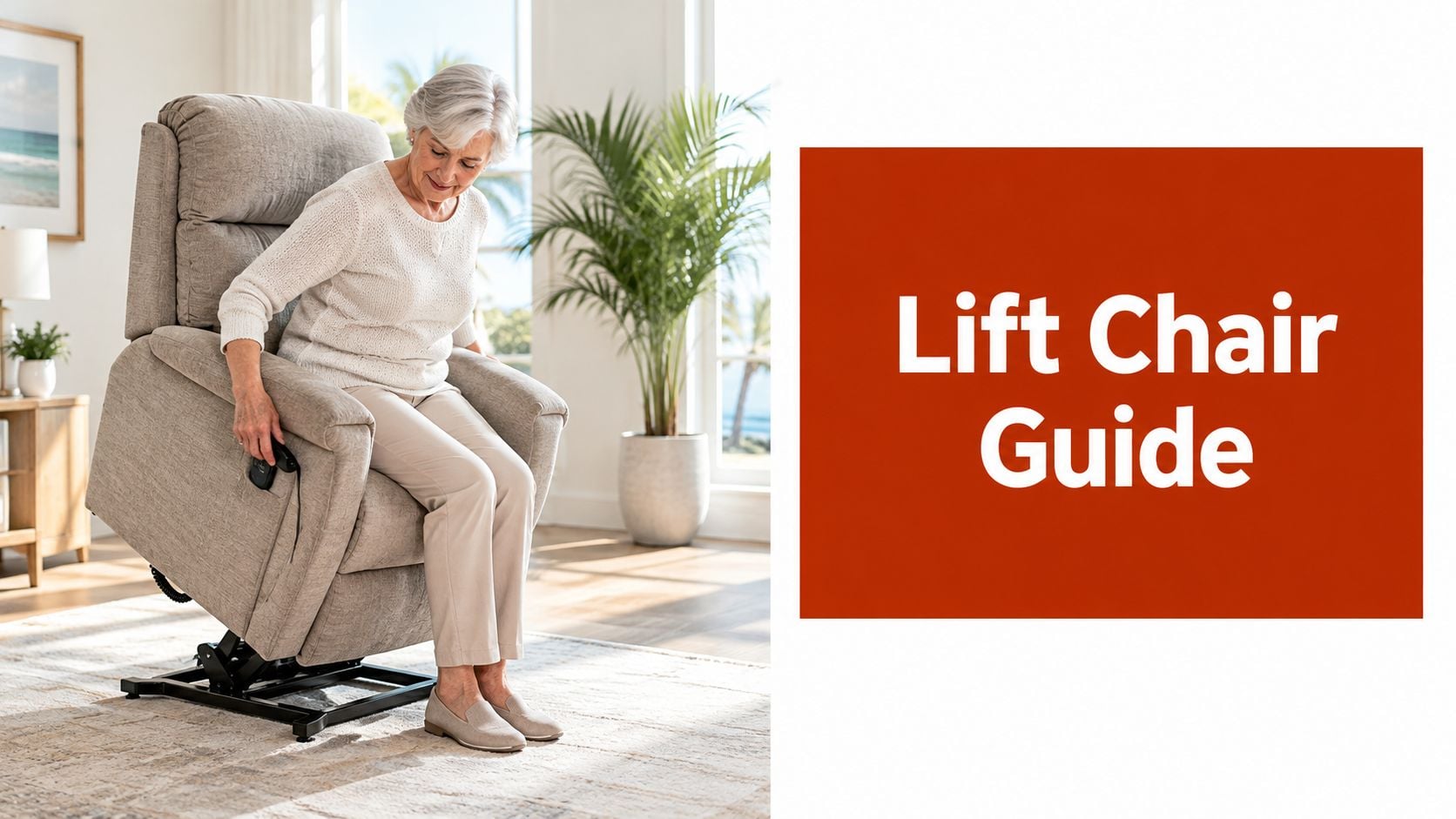
Standing up offers a useful test of the chair's purpose. A comfort chair rather than a lift chair reclines to support rest, but it does not provide powered assistance as you rise. Choose the height that matches your proportions and transfer ability. If standing strains your knees or affects your balance, consider whether a lift chair better suits your needs. For more preparation before a showroom visit, the ultimate recliner buying guide gathers practical checks for comparing chairs.
Testing the Indian River Furniture Way
At Indian River Furniture, you can try recliners in person, move through their full range, and discuss how fabrics and finishes will work in your room. A design consultation can help you narrow the options, while the sit test lets your body confirm the fit.
Take your time. Notice where the chair supports you, whether the controls feel easy to reach, and how steady you feel when standing. A few minutes in the showroom can reveal details that a photograph or product description cannot.
Bringing Home a Recliner You Will Love for Years
After the first few weeks, a new recliner starts to show how well it fits real life. The seat may feel inviting in the showroom, but daily use reveals whether its support suits your usual routines, from reading to resting after a long day. That lasting fit is what makes a high leg recliner chair a worthwhile investment.
Notice how your body feels after a month of regular use. Does the seat still support you comfortably through a full evening? Does the upholstery feel pleasant in Florida's humidity, and does the chair still work naturally in the room? Small observations can help you distinguish a chair that merely looks right from one that continues to serve you well.
A brief check-in can be useful: note what feels comfortable, what you adjust often, and whether the chair's finish is easy to care for. Keep those details in mind if you are choosing between options, or when deciding how to maintain the chair you brought home. Good furniture earns its place through everyday use, one relaxed sit at a time.