Schedule your Complimentary Design Consultation


White Wood Desk Chair Selection and Styling


You've found the desk, chosen the pale rug, and arranged the room so morning light can move across the walls. Then the chair arrives, and the problem becomes obvious. It looks lovely in the photograph, but after a short work session your shoulders tighten, the seat feels too shallow, and the frame shifts whenever you lean back.
That's the central challenge of choosing a white wood desk chair. Coastal style asks for visual lightness, natural texture, and a relaxed sense of luxury. Daily work demands stable construction, supportive proportions, and ergonomic features that hold up through real use. A chair can deliver both, but only if you evaluate it as working furniture rather than as a decorative accent.
Designing a Coastal Home Office That Supports Real Work
The room is finished, but the chair still needs to earn its place. In a coastal home office, white wood can brighten a compact space, soften a darker desk, and echo the sand, shell, and sun-washed tones common across Brevard County homes. Woven texture, a custom-fitted cushion, and natural materials keep the room collected rather than themed. The chair should complete that composition without becoming its weakest element.
A homeowner I'd guide through a 32,000-square-foot showroom often begins with one clear request: “I want something airy, but I'll be sitting here all day.” That requirement narrows the field. An occasional writing chair may have a graceful back and a beautiful white finish, yet still lack the seat geometry, adjustability, and structural resilience required for sustained work.
Practical rule: If the chair looks perfect from across the room but feels wrong after several minutes of sitting, it is not the right office chair.
Buyers now expect comfort features alongside an attractive finish, which is why a decorative occasional chair rarely survives daily desk use. A white wood desk chair belongs in the category of working furniture. Judge it by how well it supports your routine, not by its appearance alone.
Make the room support the chair
Start with the work pattern. A chair for occasional correspondence can be more sculptural than one used for focused computer work. A shared office needs forgiving adjustments, while a private study can accommodate a more precise fit. Desk height, monitor position, floor surface, and available clearance all affect whether the chair feels natural.
Florida's coastal climate adds another requirement. Choose finishes that tolerate bright sun, humidity, and active household use, then inspect the frame for stable joinery and a surface that can be maintained without delicate handling. White wood should create visual spaciousness without forcing you to accept a fragile structure.
Use upholstery and proportions to add comfort. A white frame with warm neutral performance fabric can feel coastal and substantial. A pale wood chair with a shaped back can bring tradition into a contemporary room without making the office look formal.
For inspiration, explore this guide to coastal design style, then test each chair against your body, desk, and daily schedule. The right choice becomes part of the room's architecture while providing dependable support through real work.
Ergonomic Expectations for Modern Wood Seating
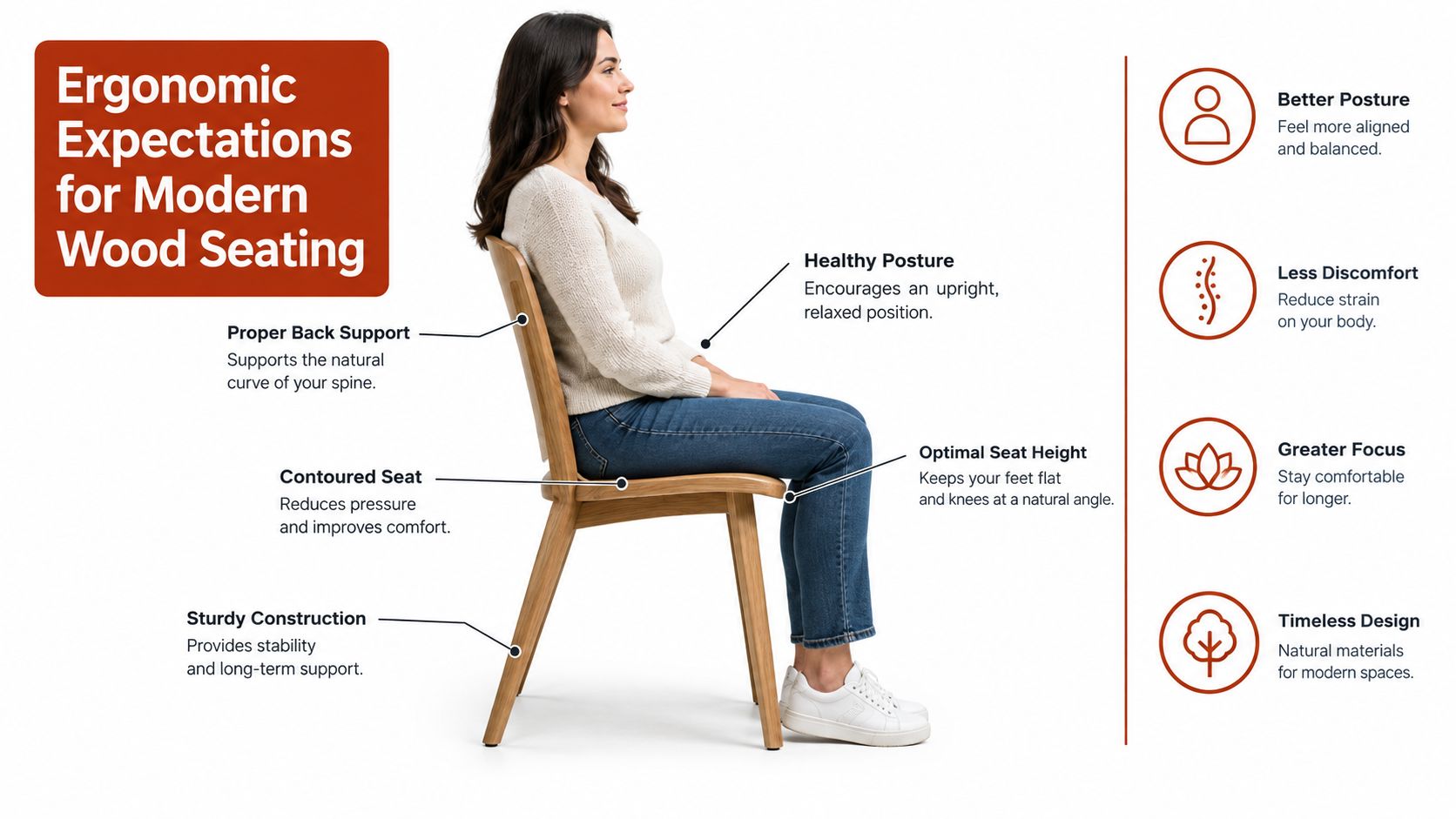
A white wood desk chair must earn its place through daily use, not finish alone. In a Florida home office, that means pairing coastal visual appeal with support that holds up through long work sessions, shifting posture, and active household routines. Ergonomics begins with fit and movement, not color.
Office seating sets a clear baseline. Height adjustment is standard in 95% of office chairs, while reclining functions appear in 70% of models, according to the office-chair design data. Treat height adjustment as required for a wood-framed chair, especially when several people share the desk. Recline is optional, but it should move smoothly and remain controlled when included. A fixed wood back cannot compensate for a seat that places your hips or arms at the wrong height.
Separate decorative seating from daily seating
Start with the seat height. Your feet should rest securely on the floor, your knees should remain comfortable, and your arms should reach the desk without lifted shoulders. If the chair has a height mechanism, adjust it while seated. That reveals whether the controls are practical or merely decorative.
Check the seat pitch, the angle running from the front edge toward the back. A sharply backward-sloping seat may suit conversation, but it restricts active computer work. A level or lightly supportive pitch gives you room to shift between typing, reading, and speaking.
Seat depth determines whether the chair supports your legs or pressures them. Your knees should stay clear of the front edge, while your feet remain grounded without forcing you to perch forward. A custom cushion can soften a wood seat, but it cannot correct an unsuitable shape.
Inspect the support points
Lumbar support may come from a shaped wood back, an upholstered panel, or an adjustment. In each case, it should meet your lower back without forcing a rigid posture. A reclining function should return with control and should never make the frame feel loose.
Armrests need the same scrutiny. Your elbows should sit near your sides while your shoulders stay relaxed. Check desk clearance, the distance required to pull in close, and the spacing against your frame.
Use this comfort, style, and function guidance to organize your checklist before visiting a showroom. Then sit in the chair. Your body should make the final decision.
Evaluating Finishes and Frame Durability
A white wood chair can look perfect under showroom lighting and fail quickly at a busy Florida desk. Moisture, strong sunlight, footwear, hands, and daily movement expose weak coatings and loose construction. Inspect the finish as carefully as the ergonomics.
Choose the frame first, then study its coating. Solid hardwood can be sanded and refinished over time, making it a repairable choice for a daily-use chair. Well-made solid hardwood pieces can last 20 to 50+ years, with some heirloom-quality furniture lasting 100 years or more, according to this guide to choosing the right hardwood for longevity and style.
Four checks for a dependable chair
Look at the grain and edges. White paint or finish may hide the grain or let it show through, but it should remain even and smooth. Run your hand across the arms, front rail, and corners. Rough transitions, thin coverage, or sudden changes in texture signal rushed workmanship.
Study the joints. Mortise-and-tenon construction joins frame members across broad contact surfaces, helping the chair resist pulling, twisting, and wobble. It suits the legs, rails, posts, and stretchers found in solid wood seating. Review the construction details in this guide to solid wood joinery.
Test for racking. Hold the chair steady and apply gentle opposing pressure to the frame. Check for movement, open gaps, and misalignment. Twisting can reveal a frame that depends too heavily on quick-assembly fasteners. Use these inspection points from this furniture durability guide.
Ask about the coating. Film-forming finishes limit moisture movement, staining, and abrasion. The coating determines how quickly a white chair develops scuffs, edge wear, or discoloration. Ask which cleaning products the manufacturer approves, especially if the chair will sit near a bright window or serve an active household.
Account for Florida's indoor climate
Wood responds to surrounding humidity. The accepted relative-humidity range for preserving wooden objects is 35% to 65%. Conditions outside that range increase the likelihood of swelling, shrinking, warping, and loose joints, according to this furniture climate guide.
Keep the chair away from concentrated sunlight when possible. Wipe spills promptly, follow the recommended cleaning method, and avoid abrasive objects on the arms. Lift the chair rather than dragging its base across the floor. Those simple habits protect the white finish while preserving the warmth and repairability of a well-built wood frame.
Matching Chair Configurations to Your Work Style
The right configuration depends on how you work, not just how you decorate. A fully upholstered chair offers a softer landing and can provide continuous support across the back. A wood-backed chair feels more architectural and may suit a writing desk, guest workspace, or room where the chair remains visible from the living area.
Performance fabric is a strong choice for active Florida homes. It brings a clean appearance, comfortable hand, and practical resistance to everyday use. Genuine leather offers a different experience, with a smooth surface, natural character, and a more formal sense of relaxed luxury. Both can work with white wood when the tones are coordinated rather than matched too exactly.
Chair Configuration Decision Matrix
| Configuration Style | Best For | Maintenance Level | Coastal Aesthetic Impact |
|---|---|---|---|
| Fully upholstered back and seat | Long work sessions and maximum softness | Moderate, with routine attention to the fabric | Softens the room and adds layered texture |
| Wood back with tailored cushion | Writing desks, lighter computer use, and visible open-plan offices | Low to moderate, depending on upholstery | Creates a crisp, architectural coastal profile |
| Upholstered seat with supportive arms | Focused work where arm position matters | Moderate | Feels polished and traditional without visual heaviness |
| Wood frame with performance upholstery | Shared offices and active households | Moderate, with easy-care fabric options | Balances natural craftsmanship with practical comfort |
| Compact armless configuration | Small rooms, flexible layouts, and occasional work | Low | Keeps the space open and visually light |
Let the room decide how much chair you need
A small office may benefit from an armless chair that tucks completely beneath the desk. A larger study can accommodate arms, a broader back, and a more substantial base. If the chair must move between a desk and a nearby table, casters may be useful, but they should roll smoothly without making the frame feel insubstantial.
For occasional seating outside the office, a folding or portable option serves a different purpose. A resource on portable seating for travelers is useful when mobility matters, but that category shouldn't be confused with a supportive daily workstation chair.
Custom wood finishes and upholstery make it easier to connect the office to adjoining rooms. Indian River Furniture offers home-office seating and desks, along with custom options involving performance fabrics, genuine leathers, and wood finishes. Its multifunctional home-office furniture guide is a useful reference for rooms that need to serve more than one purpose.
The Value of Hand-Testing in a Curated Showroom
A screen can show you a white finish. It can't tell you whether the back pushes you forward, whether the seat edge cuts into your legs, or whether the chair makes a faint shift when you recline. Those details become clear only when you sit, adjust, lean, turn, and stand.
That's why the showroom remains essential for an ergonomic purchase. In a carefully arranged room, you can also judge scale. A chair that looked delicate online may feel lost beside a generous desk. Another may have exactly the right visual weight to anchor a white oak workspace without making the room feel crowded.
Test the chair like you'll use it
Spend enough time to notice your natural posture. Place your hands where they would sit while typing. Reach for an imaginary notebook. Lean back, return upright, and check whether the movement feels controlled. If you feel pressure in one spot immediately, don't assume you'll just adapt.
Ownership at Indian River Furniture hand-tests every seat, sofa, and recliner for pitch and comfort before it reaches the 32,000-square-foot Rockledge showroom floor. The practice supports a straightforward principle: customers should encounter furniture that has already been evaluated for feel and structural integrity, not merely selected from a photograph.
A chair should feel settled beneath you before it looks settled in the room.
Use the room displays as design evidence
Curated coastal vignettes help you see the white wood desk chair in context. Notice how the white finish interacts with flooring, wall color, woven accents, metal hardware, and upholstery. Look for the difference between a bright room that feels serene and one that feels washed out. Warm wood tones, natural textiles, and layered lighting usually keep a pale office inviting.
A complimentary in-house interior design consultation can refine the decision further. Bring room measurements, desk dimensions, and photographs of nearby furnishings. The design team can help assess proportion, coordinate finishes, and determine whether an upholstered or wood-forward configuration supports the way your household uses the space.
Visit the Rockledge showroom ready to test, not just browse. Sit in more than one configuration, compare back angles, and ask direct questions about frame construction, finish care, and customization. That tactile process turns a pleasant-looking idea into a custom investment.
Protecting Your Investment with White-Glove Delivery
The purchase isn't complete when the chair leaves the showroom. White finishes can be marked by careless handling, and precision mechanisms can be stressed by rough transport or hurried assembly. A premium delivery experience protects the chair's appearance, function, and placement from the final mile onward.
Uniform, in-house white-glove delivery provides control at each stage. The team can unbox the chair carefully, inspect the finish and moving parts, place it in the intended room, and confirm that it sits correctly on the floor. That matters when the office has a delicate rug, narrow passage, stair access, or a desk that needs precise alignment.
Setup is part of the design
A chair placed too far from the desk can make the room feel disconnected. A chair positioned at the wrong height can undermine the ergonomic work you did in the showroom. Delivery specialists can help establish the intended relationship between chair, desk, rug, and surrounding circulation.
Indian River Furniture's delivery service includes in-house handling, unboxing, inspection, and room setup, with a standard $99 delivery fee within its service area. That service-first approach is especially useful for homeowners relocating to the Space Coast, furnishing a coastal residence, or coordinating several rooms at once.
Prepare the room before delivery
Clear the route from the entry to the office, remove fragile décor, and identify the chair's final position. Have the desk available if you want to check alignment immediately. Keep the room at a stable indoor climate, and avoid placing the chair in direct concentrated sunlight from the outset.
The result should feel quiet and complete. You see the white finish without packaging marks, feel the chair move as intended, and know that the furniture has been treated with the same care given to its craftsmanship. Established in 1939, Indian River Furniture has served Brevard County, the Space Coast, and Central Florida with a model built around quality, design guidance, and long-term customer care.
A white wood desk chair can be a beautiful coastal accent, but the right one is more than that. Visit the 32,000-square-foot Rockledge showroom, hand-test the available configurations, and speak with the in-house design team about your desk, room, and daily routine. Choose the chair that feels supportive now and remains worthy of your home as your office evolves.
Come to Indian River Furniture with your desk measurements and a few photos of your home office. Sit in the chairs, compare finishes and upholstery, and work with the design team to select a white wood desk chair that suits your comfort, coastal style, and Florida lifestyle.