Schedule your Complimentary Design Consultation


Best Upholstered Beds for Comfort, Craft, and Lasting Style

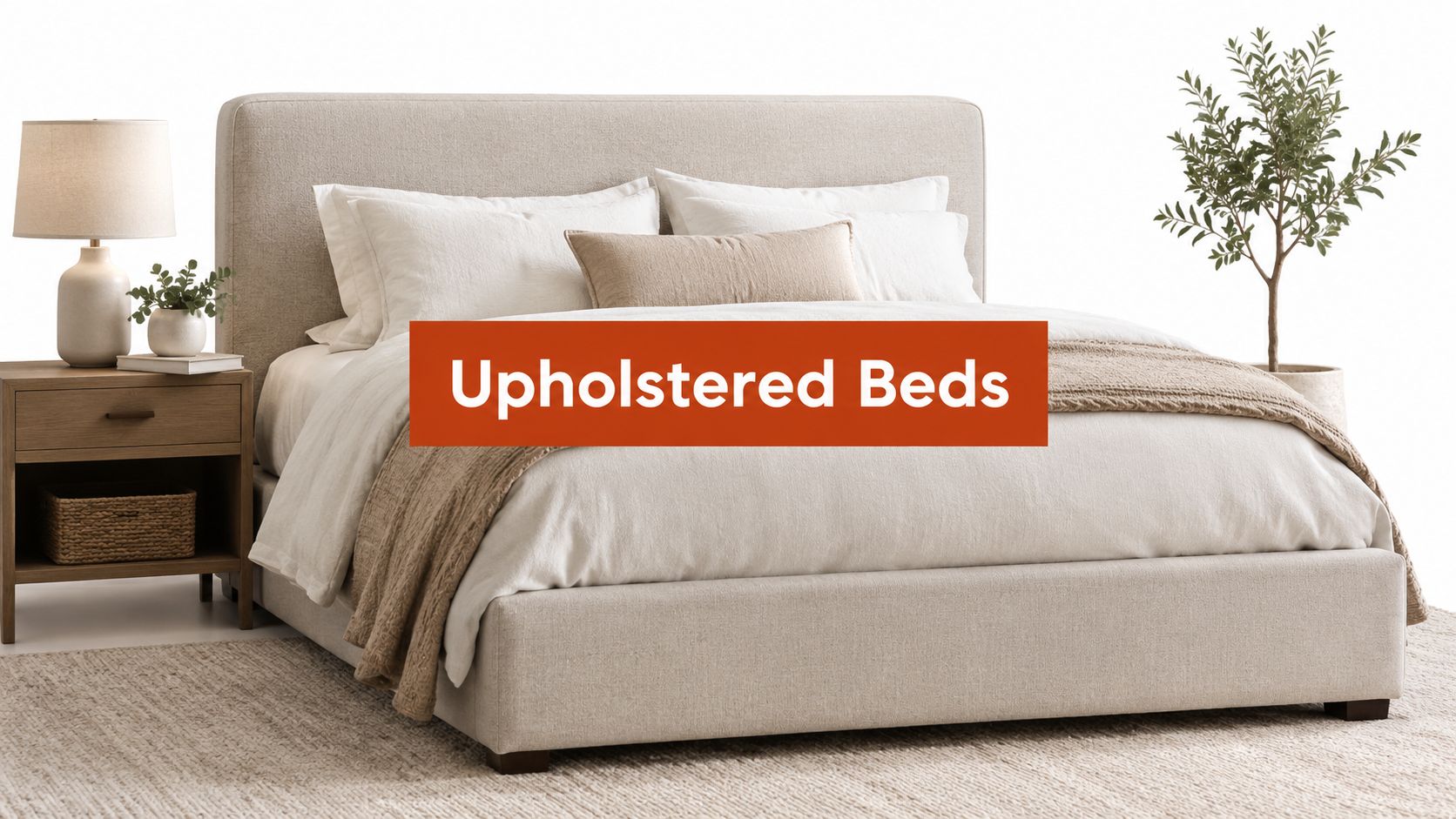
A homeowner in West Palm Beach stands beside a half-finished bedroom, one hand resting on a linen headboard and the other holding a paint swatch. The ceiling fan stirs warm air across the room. The question isn't whether the bed looks beautiful. It's whether that softness will still feel considered after years of Florida humidity, pets, guests, and ordinary life.
The best upholstered beds do more than frame a mattress. They shape the room's acoustics, soften hard architectural lines, and bring warmth to spaces that might otherwise feel overly polished. They can create a calm coastal retreat, a refined traditional suite, or a clean modern bedroom, but only when the construction, fabric, scale, and support system match the household.
| Style | Best for | Strength | Watch carefully |
|---|---|---|---|
| Channel-tufted platform | A polished primary suite | Vertical presence and comfortable support | Headboard scale and cleaning between channels |
| Wingback bed | Traditional or spacious rooms | A sheltered, tailored silhouette | Visual weight in smaller bedrooms |
| Arched or camelback bed | Relaxed luxury | Soft architectural character | Ceiling height and surrounding furniture |
| Low-profile platform | Coastal guest rooms and modern condos | Airy proportions | Reduced storage and airflow |
| Roll-arm or English-style bed | Classic homes | Heirloom character and softness | Larger footprint |
| Storage-upholstered bed | Downsizers and vacation rentals | Hidden organization | Mechanism quality and ventilation |
Why Upholstered Beds Are Worth a Closer Look
The homeowner in West Palm Beach presses her fingertips into the fabric again. The headboard has a gentle give, but the frame beneath it feels firm. That contrast is the appeal of a properly made upholstered bed: it offers softness where the body meets the furniture, while the structure supports the weight.
A wood or metal bed can be elegant, but it often leaves a bedroom feeling visually hard. Upholstery absorbs some of the room's sharpness. It introduces texture, color, and acoustic softness, turning the sleeping area into a room-defining centerpiece rather than a purely functional platform. The right bed can make a plaster wall feel warmer, a high ceiling feel more grounded, and a simple linen duvet look deliberately styled.
The category also has substantial momentum behind it. One market estimate valued global upholstered furniture at USD 68.88 billion in 2025, with beds and mattresses representing approximately 32% of that market, according to the upholstered bed market overview. The same source projects the broader upholstered furniture market to reach USD 122.45 billion by 2034, while a separate estimate places upholstered beds at USD 7.5 billion in 2024 and projects USD 11.2 billion by 2033. Those figures point to an established furnishings category, not a passing bedroom novelty.

The concerns worth taking seriously
Florida homeowners have sensible reservations. Fabric can collect dust, pets can catch a claw in a loose weave, and coastal moisture changes how a bedroom feels from season to season. A low bed may also sacrifice storage or restrict airflow beneath the mattress.
Those concerns don't disqualify upholstered beds. They make material selection and construction inspection essential. Breathable upholstery can help reduce moisture buildup in hotter, humid settings, while textured and performance fabrics can make everyday cleaning more manageable. A major design guide also cautions that fabric headboards need regular upkeep and that many upholstered beds have shorter service lives than wood or metal frames, although better materials can support a useful life of 10 to 15 years. See the perspective on upholstered bed care and longevity before choosing a delicate finish.
A good upholstered bed should feel soft to the hand, not soft in its structure.
A showroom conversation should cover the frame, slats, fabric, headboard pitch, and room proportions together. That philosophy of looking beyond appearance is also reflected in this discussion of quality furniture. The result is a more thoughtful investment, one that feels relaxed and coastal without becoming fragile.
What Makes an Upholstered Bed Truly Well Made
A decorative bed can look impressive in a photograph and still wobble, creak, or sag in daily use. Start underneath the fabric. Independent buying guidance recommends an internal solid-wood or steel structure, reinforced slats, and center support legs for larger beds because those elements improve stability and reduce long-term sag risk. This upholstered bed construction guide offers a useful inspection framework.
Start with the frame
Kiln-dried hardwood is my preferred foundation for a lasting upholstered bed. Properly dried wood is more stable than green or poorly seasoned timber, an important consideration in a coastal home where moisture levels fluctuate. A steel core can also be effective when it has been properly engineered and reinforced.
Be cautious with particleboard or thin, unsupported panels in the primary load-bearing areas. MDF and particleboard can serve limited purposes, but solid wood generally offers stronger long-term durability. The construction details discussed in this guide to hardwood furniture are useful when you want to understand what sits beneath a finished surface.
Joinery matters just as much as material. Mortise-and-tenon connections, corner blocking, and doweled joints create a more dependable frame than staples and glue used alone. Push gently against the headboard and side rail in a showroom. Movement should feel controlled, not springy or hollow.
Inspect the support system
The slat system determines how the mattress behaves. Look for closely spaced slats, a strong center rail, and center support legs that reach the floor. As a practical buying checkpoint, I prefer a slat gap of 3 inches or less, especially for modern foam and hybrid mattresses. Always confirm the mattress manufacturer's requirements before delivery.
A quality bed frame uses the mattress base to distribute weight evenly. That lowers stress on the frame and helps the sleep surface feel consistent from edge to edge. Some designs use a steel beam beneath the center rail, which can add useful reinforcement on larger sizes. This overview of fabric bed frames also emphasizes the importance of the hardwood or metal core and the slat foundation.
Look inside the headboard
A well-made headboard typically uses firm, resilient foam over a solid panel or carefully engineered internal frame. The padding should support your shoulders when you read, not collapse behind them. Press in several places. A consistent response is a better sign than a dramatically plush first impression.
The upholstery should be shaped rather than merely wrapped. Check for clean seams, aligned patterns, hidden zippers where applicable, and reinforced stitching at corners and other stress points. Channeling and tufting should remain even across the face of the headboard. These are small details, but they reveal whether the bed was built as an investment or finished as a visual prop.
The Most Popular Upholstered Bed Styles Explained
The right style depends on the room's architecture and the way you use the bed. A headboard isn't just decoration. It sets the visual weight of the entire bedroom and determines whether the space feels airy, sheltered, formal, or softly modern.
Channel-tufted platforms
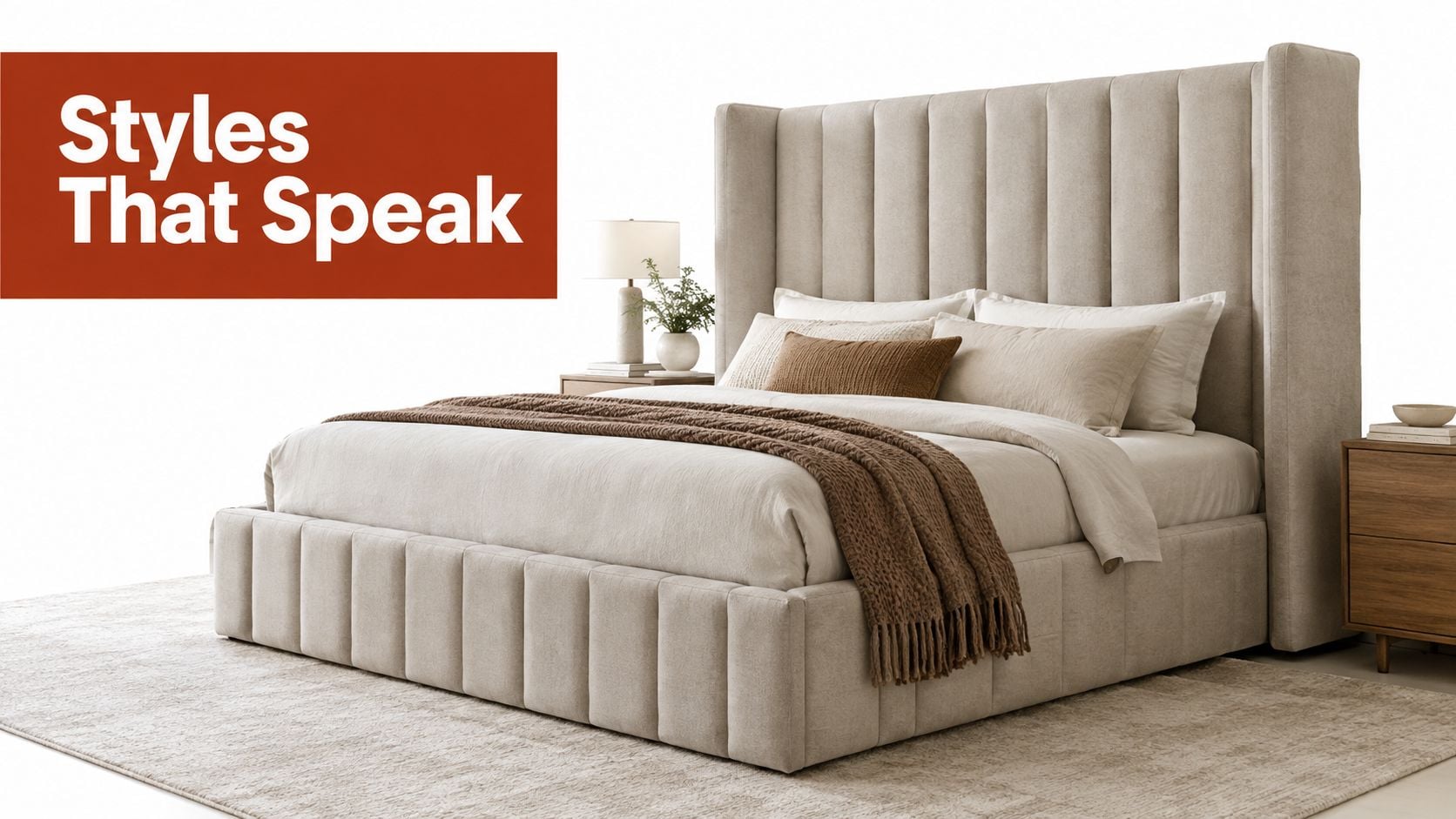
Vertical channeling gives a platform bed a polished, almost architectural presence. It draws the eye upward, making it a strong choice for a primary suite with generous wall space or a ceiling that can support visual height. In a bright coastal room, the channels create shadow and rhythm without relying on ornate decoration.
This style suits the homeowner who wants a refined focal point but prefers clean lines. Sit against the headboard and check whether the pitch supports your shoulders. A tall channel-tufted bed photographs beautifully, but it needs breathing room around the nightstands and lamps.
Wingback and deep-button designs
A wingback headboard wraps slightly around the sleeper, creating a sheltered, cocooning mood. It works especially well in traditional homes, larger bedrooms, and rooms with substantial trim. Deep buttons add classic formality, while a plain wing can feel more tailored and contemporary.
The style carries visual weight, so it isn't my first choice for a narrow room. In a spacious Winter Park home, however, a wingback bed can hold its own against architectural details and antique-inspired furnishings.
Arched, camelback, and roll-arm silhouettes
An arched or camelback headboard softens the geometry of a room. It feels gracious without being overly formal, particularly in warm neutral fabrics. Roll arms and English-style details add a relaxed luxury that suits traditional interiors and homeowners who want an heirloom atmosphere.
These beds need enough surrounding space for their curves to read clearly. They also reward tactile testing. Lean into the center and the sides. A beautiful outline can't compensate for an uncomfortable or poorly supported headboard.
Low-profile platforms
Low beds are excellent for modern condos, guest rooms, and spaces where lightness matters more than storage. Their reduced height keeps the eye moving across the room and works naturally with pale linen, boucle, or a tight performance weave. They suit the cool minimalist and the homeowner furnishing a bright Sarasota retreat.
Before choosing one, measure the desired mattress height and consider how easy it will be to stand up. Low profiles can also limit under-bed storage and airflow, which makes them less suitable for storage-starved rooms.
Storage-upholstered beds
Gas-lift ottoman beds and drawer models serve a practical household. They keep bedding, luggage, or seasonal items out of sight without adding another cabinet. For a downsizer or vacation rental owner, that flexibility can matter more than a dramatic headboard.
Storage mechanisms should lift smoothly and close securely. Examine the base for ventilation and ask how the system affects access to the mattress. For window planning around a tall headboard, a resource such as Houston window treatment advice can also help coordinate the bed's vertical scale with drapery and natural light.
Choosing the Right Fabric or Leather for Your Home
Fabric changes the bed's entire sensory character. A tightly woven performance textile feels practical and composed, while velvet absorbs light and creates a richer, more intimate mood. In Florida, the choice also affects moisture management, fading, cleaning, and how comfortable the headboard feels against bare skin.
Match the hand-feel to the household
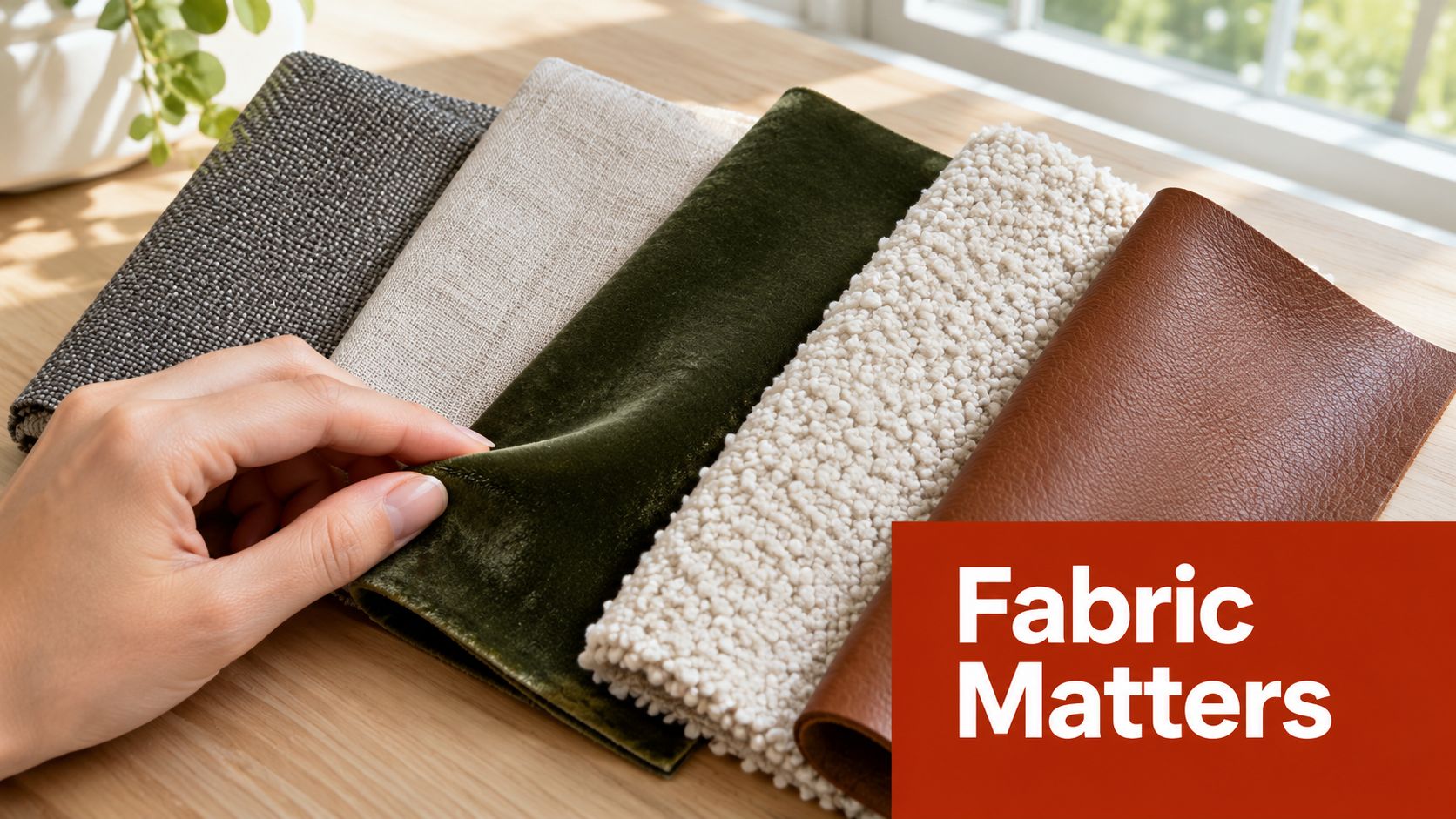
Performance weave is my first recommendation for families with children, pets, or frequent guests. Solution-dyed fibers can resist fading and typically clean with mild soap when the manufacturer's care instructions permit it. Tight construction also gives claws and crumbs fewer places to settle.
Linen and linen-look upholstery brings breathable, relaxed texture. It softens with use and develops deliberate wrinkles, which is part of its appeal in a coastal guest room. It still needs prompt attention to spills, and it isn't the right choice if you expect hard daily wear.
Velvet offers a luxurious hand and deep color. It can be wonderful in a primary suite, but the pile may show pressure marks or directional shading. Brush it gently as recommended, and don't treat a velvet headboard like an outdoor cushion.
Boucle adds appealing texture and visual warmth. Its loops can catch on jewelry, pet claws, or rough clothing, so I reserve it for lower-traffic rooms where the tactile finish can be enjoyed without constant abrasion.
Top-grain leather breathes well and develops character, making it a strong choice for a climate-controlled primary bedroom. It needs appropriate conditioning and should be kept away from harsh cleaners and prolonged direct sun. A practical leather sofa cleaning guide explains why leather and fabric require different care routines.
Test the material in person
A swatch tells you color. It doesn't tell you whether the fabric feels clammy, catches a ring, shows pressure, or makes the headboard pleasant to lean against. Rub the surface with your palm, press it with your knuckles, and view it under both bright and soft showroom lighting.
Breathable, mold-resistant textiles generally make more sense than thick, poorly ventilated synthetics in humid coastal homes. Material selection also has a safety dimension. The consumer safety guidance on upholstered furniture materials explains why fiber makeup, flame-retardant treatment, and ignition resistance deserve attention.
For a broader explanation of performance fabrics, leather, and upholstery care, use this upholstery materials guide.
Matching the Right Bed to the Right Room and Lifestyle
A bed should serve the room, not compete with it. The most successful choices respect ceiling height, walking space, mattress height, and the difference between a room used every night and one opened mainly for guests.
A primary suite with a broad wall and generous ceiling height can carry a tall channel-tufted headboard. Choose a calm neutral performance fabric if the room needs presence without visual noise. The vertical lines add structure behind layered bedding, and the headboard gives the room a refined focal point.
A coastal guest room usually benefits from a low-profile platform in a breathable linen-look fabric. Keep the palette light and allow the windows, artwork, and view to provide the drama. The lower silhouette makes the room feel open, but confirm that guests can rise comfortably and that the mattress base has adequate ventilation.
Vacation rentals require a different calculation. A storage ottoman bed can keep extra linens and luggage organized, while a wipeable performance fabric reduces anxiety around guest turnover. Choose durable construction over elaborate tufting, and avoid loose textures that can trap sand or catch on bags.
Room-specific recommendations
- Traditional Winter Park home: Choose a deep-button wingback or roll-arm bed in a fabric. Its visual weight will complement classic millwork and richer furnishings.
- Modern Sarasota condo: Choose a clean linen-wrapped platform with restrained proportions. It will preserve the room's lightness and pair well with pale woods.
- Gulf Coast rental: Choose a performance-fabric frame with a straightforward headboard and accessible cleaning instructions.
- Downsized bedroom: Choose drawers or gas-lift storage so the floor remains clear and additional case goods aren't required.
Measure the wall, ceiling, mattress height, stair turns, and doorway clearance before ordering. A headboard that looks perfectly proportioned on a showroom floor may feel overwhelming after it passes through a narrow hall. Also decide who uses the room nightly. A beautiful guest bed can tolerate more decorative delicacy than the primary bed that supports daily reading, lounging, and sleep.
A Side by Side Look at the Top Styles
No single upholstered bed wins every room. A sleigh silhouette may be perfect for a traditional suite but too heavy for a compact condo. A low platform can make a small room feel expansive, yet it won't solve a storage problem. Use the table as a starting point, then apply the architecture and household demands.
Upholstered Bed Styles at a Glance
| Style | Best Room Size | Storage | Maintenance | Ideal Sleeper |
|---|---|---|---|---|
| Sleigh | Medium to large | Usually limited | Moderate, curved surfaces need dusting | Traditionalist who wants a grounded silhouette |
| Wingback | Medium to large | Usually limited | Moderate, especially around deep details | Sleeper who reads or lounges against the headboard |
| Channel-tufted | Medium to large | Varies by base | Moderate, channels need careful vacuuming | Homeowner seeking tailored vertical presence |
| Low-profile platform | Small to medium | Often limited | Low with a tight weave | Cool minimalist or petite sleeper |
| Storage ottoman | Small to large | Strong | Moderate, mechanism and base need inspection | Downsizer or storage-starved household |
| Four-poster upholstered | Large or high-ceilinged | Varies | Moderate to high, more exposed fabric | Homeowner wanting a dramatic architectural centerpiece |
Apply the room test
Small rooms favor low profiles because they preserve sightlines. Tall ceilings invite vertical headboards, particularly channel-tufted, arched, or four-poster designs. Allergy-sensitive households generally do better with smooth, tight-backed weaves that are easier to vacuum than textured or loose-looped surfaces.
Rental owners should prioritize wipeable performance covers and simple profiles. Traditionalists may accept more maintenance for the depth and character of a sleigh or wingback bed. The right answer is the intersection of architecture, climate, storage, and personal comfort.
For a concrete example of how a finished panel bed can anchor a bedroom scheme, review the Newport Crystal Cove upholstered panel bed. Then visit a showroom and test two or three finalists. Sit upright, lean back, lie across the mattress, and check how the rail meets your legs. No chart can replace that physical answer.
Bringing Your Choice Home With Confidence
A confident purchase begins with physical testing, not a photograph. Sit against the headboard at your normal reading angle. Feel whether the pitch supports your shoulders. Rest your hand on the side rail and notice whether it feels rigid or hollow. Look at the legs beside the mattress height, because a heavy mattress can make delicate proportions appear unbalanced.
Ownership at Indian River Furniture hand-tests every seat, sofa, and recliner for pitch and comfort before it reaches the 32,000-square-foot Rockledge showroom. That no-blind-ordering standard is valuable in bedroom shopping too. A designer or sales advisor can help coordinate the bed's fabric, finish, mattress pairing, and surrounding case goods during one considered visit.
Let delivery protect the work
White-glove delivery should include careful inspection, room-of-choice placement, assembly, and removal of packaging. That matters with upholstered furniture because a corner dragged through a doorway can damage a seam, rail, or wall before the bed is ever used. The in-house uniform delivery service available through the Rockledge showroom offers that level of setup, with a $99 delivery fee within the service area.
Keep care simple and consistent. Vacuum with the appropriate upholstery attachment, address spills according to the fabric label, and avoid improvised solvents. A practical reference to top products for furniture care can help you assemble a sensible maintenance routine without over-treating the surface.
The bed is an investment in comfort and craftsmanship. Careful selection, professional delivery, and correct setup protect that investment far better than choosing by appearance alone. The showroom's complimentary in-house interior design consultations can also help you coordinate the bed with lighting, rugs, window treatments, and coastal accents. For finishing ideas, see this guide to accessorizing the bed.
Common Questions About Upholstered Beds
How durable is a well-made upholstered bed?
Durability starts with the frame beneath the fabric. Look for kiln-dried hardwood, reinforced corners, dependable joinery, and a center support system that reaches the floor. A bed can have beautiful upholstery and still fail if the base flexes or the slats are poorly supported.
Press the side rail and headboard in the showroom. You shouldn't feel excessive movement, twisting, or a hollow response. Ask what the internal frame is made from and whether the slat system is designed for your mattress.
How should I clean the upholstery?
Begin with the manufacturer's care code. For performance fabric, regular vacuuming and prompt spot treatment are usually the right starting points, with mild soap only when the care instructions allow it. Linen should be treated gently, velvet should be brushed or vacuumed in the recommended direction, and leather needs a cleaner and conditioner intended specifically for leather.
Avoid bleach, strong household solvents, abrasive brushes, and soaking the upholstery. Excess moisture can migrate into padding and structure, which is particularly undesirable in a humid climate.
Do I need a box spring?
Many upholstered beds use a platform slat system and don't require a traditional box spring. Others are designed for a foundation, adjustable base, or storage foundation. Confirm the required foundation before delivery, and check slat spacing against the mattress manufacturer's guidance.
A storage foundation makes sense when the room lacks a closet or when you want to keep extra bedding out of sight. It isn't automatically the best option if airflow, easy access, or a very low mattress height matters more.
What size and headboard height should I choose?
Queen, king, and California king upholstered beds are common choices, but the headboard often determines whether the scale feels right. In a standard eight-foot room, an exceptionally tall design can dominate the wall. Higher ceilings can accommodate a more vertical silhouette, especially when the bed is centered on a broad architectural plane.
Measure the mattress, foundation, bedding, nightstands, and walking paths together. Include doorway and hallway clearance before finalizing a custom order.
What should I ask about a custom order?
Ask for a fabric swatch, cleaning instructions, frame details, foundation requirements, warranty terms, and a realistic lead time. Confirm whether the displayed sample represents the final weave and color, since showroom lighting can change how a textile reads.
A thoughtful advisor should explain what happens if the fabric is discontinued, how service requests are handled, and what delivery includes. Those answers are part of the bed's long-term value.
Visit the Rockledge showroom to compare upholstered beds in person, feel the difference between performance fabric, linen-look weave, velvet, boucle, and genuine leather, and test the headboard pitch before deciding. Bring your room measurements, mattress details, and a few photographs of the space. Then work with the design team to choose a bed that suits your Florida climate, your daily routines, and the relaxed coastal character you want to live with for years.