Schedule your Complimentary Design Consultation

Bonded Leather vs Genuine Leather: Which Fits Your Home?

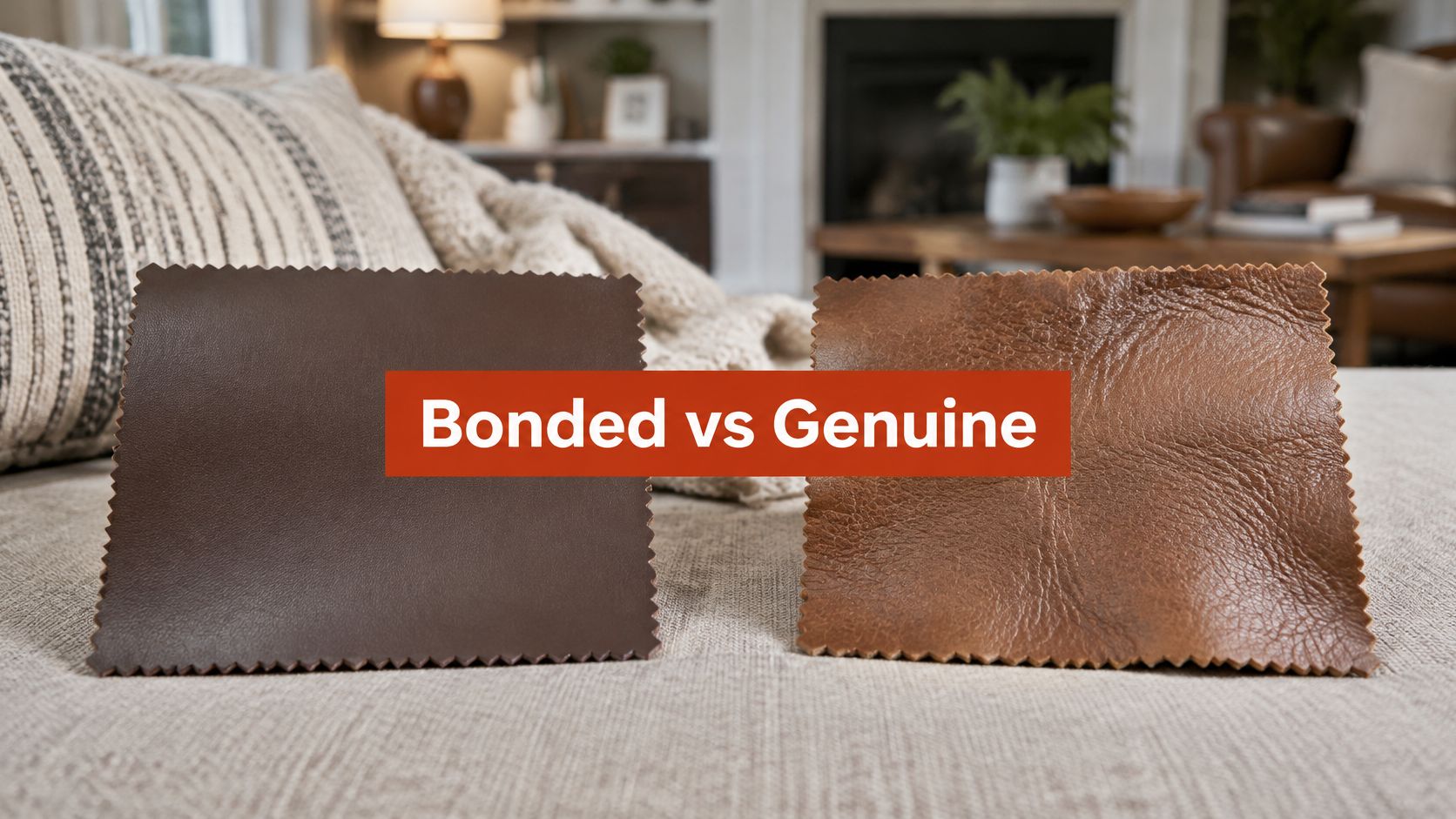
You've found a sofa in just the right shade of warm ivory. It suits the room, feels comfortable, and looks ready for relaxed evenings after a day on the water. Then you notice the upholstery description: bonded leather on one piece, genuine leather on another. They look remarkably similar, but will they feel the same after everyday use in a Florida home?
The useful question in bonded leather vs genuine leather isn't which looks more convincing today. It's how each surface responds to repeated sitting, afternoon light, moisture, and cleaning, and what you can do when wear appears. For homes across Brevard County and the Space Coast, those details matter as much as color and silhouette.
Bonded and Genuine Leather Side by Side
A straight-arm sofa can be upholstered in either material and look much the same from across the room. The construction beneath the finish is different: genuine leather is tanned animal hide, while bonded leather is shredded leather fibers mixed with a binder and applied to backing.
The Federal Trade Commission's leather labeling guidance says materials containing ground, pulverized, shredded, reconstituted, or bonded leather are not wholly animal hide and must not be represented as leather. Check the material description rather than relying on a convincing grain pattern.
Bonded vs genuine leather by construction and behavior
| Criterion | Bonded Leather | Genuine Leather |
|---|---|---|
| Source material | Shredded leather fibers bonded with polyurethane or latex binder over a backing | Tanned animal hide with its natural fiber structure |
| Labeling expectation | Composition must be disclosed, including leather fibers and non-leather substances | Described as leather only when wholly animal hide |
| Surface appearance | Uniform grain and color, embossed to a consistent pattern | Natural variation in grain, pores, and texture, sometimes moderated by finishing |
| Typical failure mode | Surface film cracks, flakes, or peels as the binder degrades | Surface wears, creases, and develops patina; finishes can also suffer damage |
| Repairability | Limited because a damaged layered surface is difficult to rebuild | More suited to professional restoration and touch-up |
| Best-fit setting | Low-contact accents and occasional-use pieces | Daily-use seating and pieces intended for long ownership |
How manufacturing changes the result
Bonded upholstery starts with leather remnants that manufacturers grind, pulverize, or shred. They mix the fibers with a binder, apply the mixture to backing, then add color and an embossed grain. This process produces a consistent-looking surface across a large piece of furniture.
Genuine leather keeps the hide as its structural foundation. Tanning preserves it; splitting, surface correction, pigmentation, embossing, and protective finishing shape its final appearance. A heavily finished hide can look quite uniform, so a natural-looking grain alone cannot confirm the material.
Full-grain leather retains the outer grain surface, including its pores and natural character. Top-grain leather may be lightly sanded or corrected for a more even finish. Both are hide-based materials, but the finish still affects the surface you see and feel.
Buying principle: A composition disclosure tells you more than a handsome grain pattern or an unqualified material name.
Compare the material description with the upholstery itself. Bonded leather tends to show a consistent embossed pattern; genuine hide can have variations in grain, pores, and texture, though finishing may reduce them. For context on other upholstery options, see this guide to upholstery materials. In the Rockledge showroom, feel leather samples and finished seating, then use the written specifications to confirm their composition.
How Long Each Material Holds Up to Daily Use
About 30,000 Wyzenbeek double rubs is a common heavy-duty upholstery reference, while about 100,000 indicates very-heavy-duty performance, according to the leather-testing guidance from Eurofins; the supplied specification range for bonded leather is around 30,000 to 100,000 double rubs, with possible binder or surface failure before that nominal count.
Those figures describe a controlled test, not a promise of years in your living room. A reclining seat introduces bending, body warmth, and repeated pressure that an abrasion number alone doesn't capture.
Abrasion reference points for upholstery leather
| Reference point | Double rubs or rub cycles | What it tells you |
|---|---|---|
| Heavy-duty upholstery threshold, Wyzenbeek | Heavy-duty reference described above | Common baseline for household seating |
| Very-heavy-duty performance, Wyzenbeek | Very-heavy-duty reference described above | Reference tier for demanding, high-traffic seating |
| Typical bonded leather specification | Specification range described above | Binder or surface can fail before the count is reached |
| Genuine leather | Product-specific tested count required | Hide grade, tanning, and finish affect results; request the test report |
| Martindale | Rub cycles, not interchangeable with double rubs | Compare only against other Martindale results |
Wyzenbeek measures back-and-forth abrasion as double rubs. Martindale uses a different movement and reports rub cycles. You can't swap the figures or assume that the larger number identifies the better upholstery.
Look beyond resistance to rubbing
There's no single useful abrasion figure for all genuine leather. The actual hide, tanning process, finish, and cover construction matter more than a broad category label.
Independent material-testing guidance recommends considering coating adhesion, flex resistance, tear strength, tensile strength, and moisture response alongside abrasion; it also identifies ISO 17076 for a leather Martindale approach and ISO 5470 for Taber abrasion. These checks address different ways upholstery can fail.
For a Florida home, finish adhesion and humidity-conditioning results deserve particular attention. A surface can resist rubbing yet respond poorly to moisture, repeated folding, or prolonged light exposure.
Ask these questions before treating a performance number as decisive:
- Which method was used? Get the named test, not an assurance that the material is durable.
- What count and failure criterion apply? Find out whether failure meant visible wear, coating damage, or another endpoint.
- Does the result cover this exact upholstery? A rating for another cover in the collection doesn't establish the performance of your selected material.
Caring for Each Material in Florida Sun and Humidity
A sofa beside a bright window can face a different test from one in a shaded, air-conditioned room. In bonded leather, heat and moisture can weaken the polyurethane component over time, leading to cracking, flaking, or separation. This process, called hydrolysis, differs from ordinary scuffing, so abrasion performance alone cannot predict how the surface will hold up.
Afternoon sun through lanai glass can warm upholstery, and humid conditions may linger in rooms that are not consistently conditioned. Salt residue from coastal air should be lifted gently rather than scrubbed into the finish.
A care routine for bonded upholstery
- Limit exposure. Keep the piece away from direct sunlight, heaters, and persistently damp areas. Window treatments help reduce direct sun.
- Clean lightly. Dust with a soft cloth. If the manufacturer permits, use a barely damp cloth and a mild approved cleaner.
- Skip unsuitable products. Solvents, abrasive pads, and oil-based preparations can harm the surface. Use hide conditioner only if the upholstery maker specifically approves it for bonded material.
A care routine for genuine hide
- Blot spills promptly. Press a clean, absorbent cloth against the spill instead of rubbing it across the seat.
- Condition as directed. Choose a product approved for the leather and finish, and follow the maker's recommended schedule. Some protected finishes need little conditioning.
- Reduce prolonged sun exposure. Keep leather out of direct sunlight for extended periods. Watch for drying, finish damage, or deep cracks, which differ from a gentle patina.
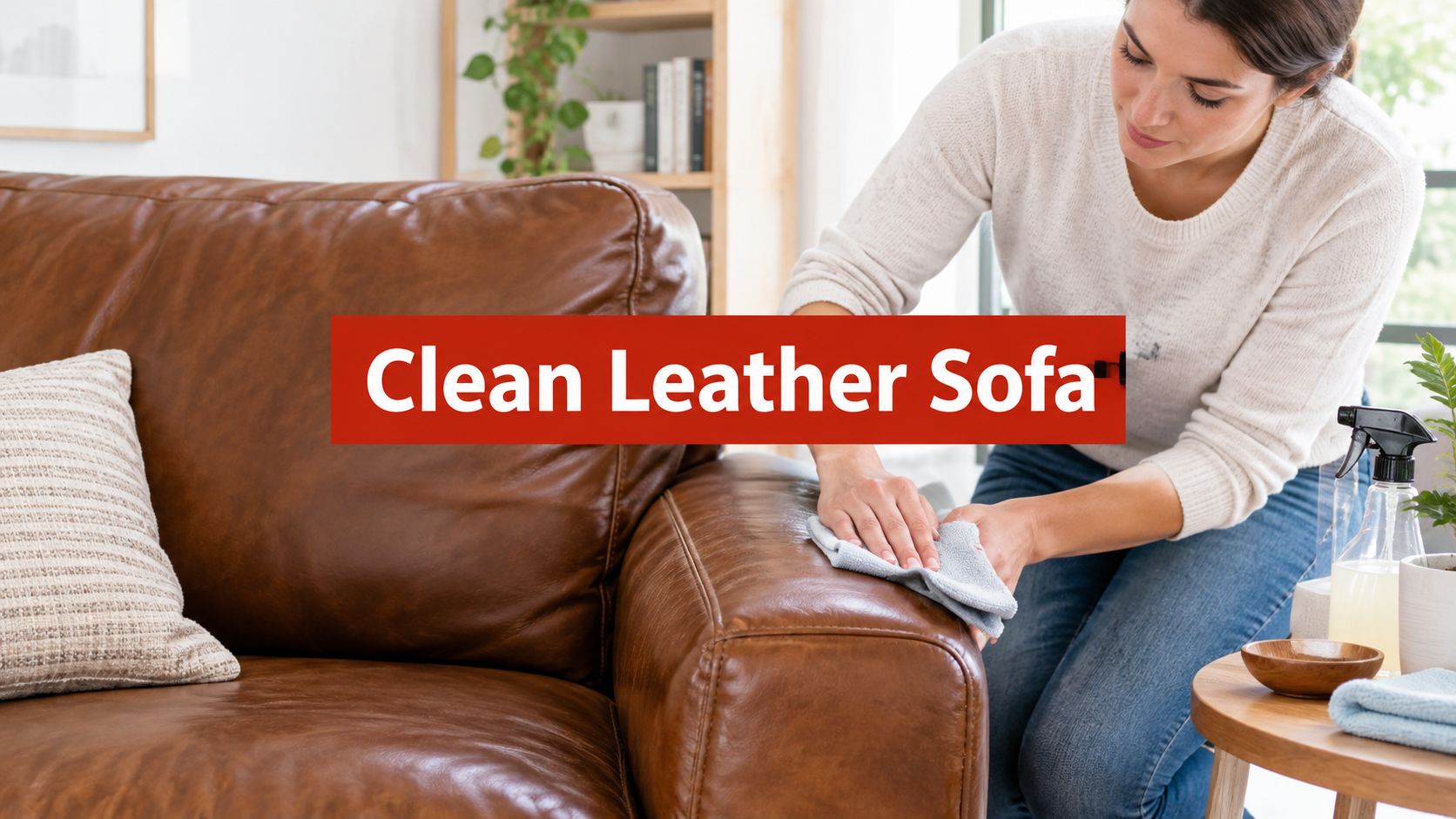
For care suited to the cover, follow this guide to cleaning a real-leather sofa. Indian River Furniture offers upholstery options selected for Florida sun and active coastal living, but placement and routine care still matter.
For adjoining outdoor spaces, compare teak, cedar, and white oak when choosing wood for its exposure conditions.
Check seat fronts, arm caps, and recliner folds regularly, especially after humid periods. Spotting hairline cracks early gives you a chance to adjust placement and care before everyday use makes them more noticeable.
How Each Material Looks and Feels to Sit On
A pale leather sofa can look inviting beside natural wood, yet its feel becomes clearer when you sit down. Bonded leather often has a smooth, even surface and consistent color. Genuine leather may feel more supple at the seat edge, with subtle differences in pores, texture, and softness. Those differences matter in Florida, where heat and humidity can make a surface feel warmer or stickier during everyday use.
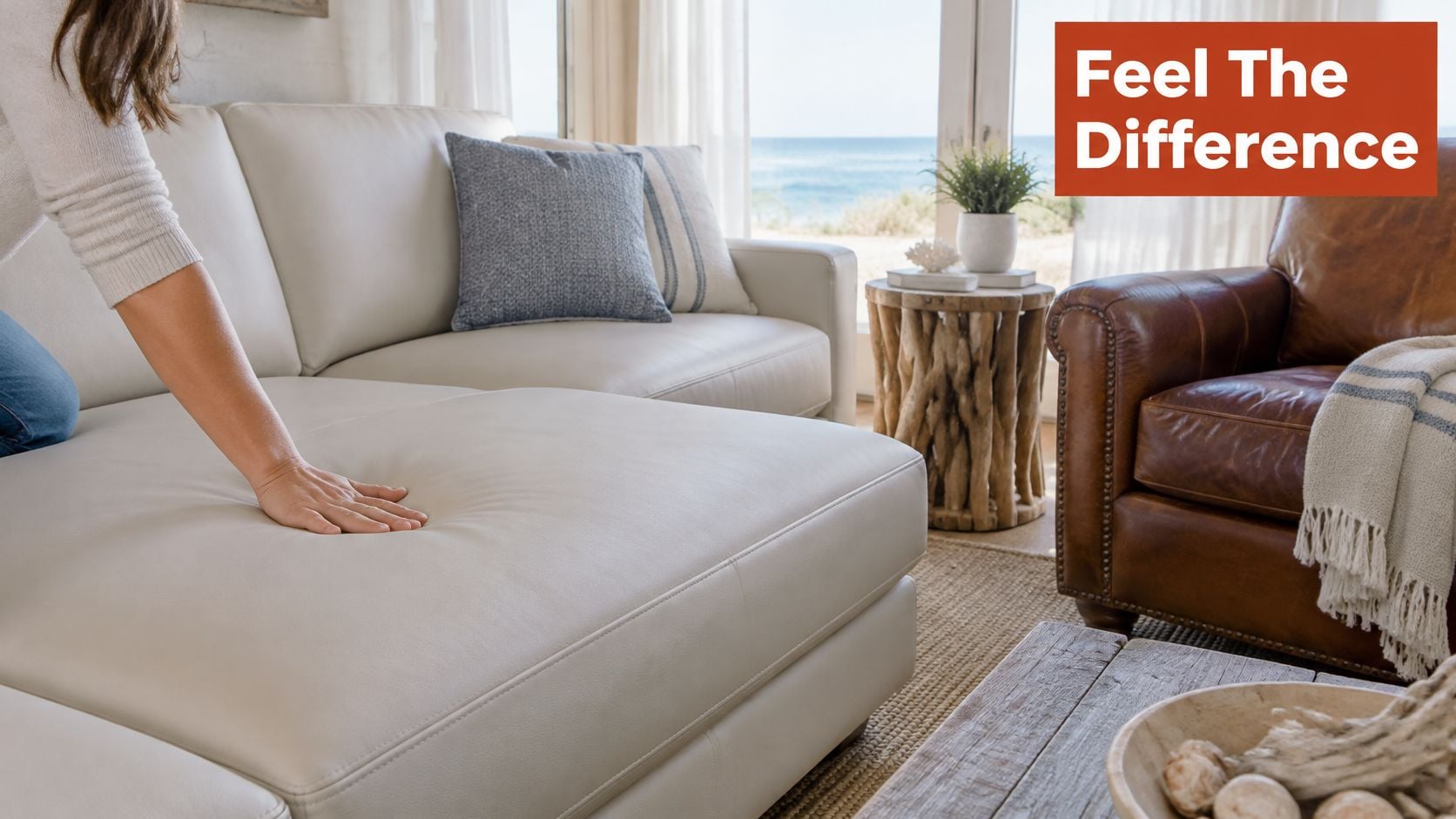
Let your hands assess the finish
Try a few checks before choosing:
- Sit naturally. Notice whether the cushion supports you comfortably or leaves you shifting to find a better position.
- Press the seat front. Feel how the cover bends and whether the cushion returns to shape.
- Run a palm along the arm. Notice surface drag, softness, and how the material responds to warmth.
Use these impressions to judge comfort, then confirm the material with the paperwork. A protective coating can make genuine leather feel firmer, while embossing can give a composite surface a more natural-looking grain.
A comfortable seat pairs a pleasing cover with suitable cushion firmness, supportive suspension, and ergonomic pitch.
For a broader comparison of hide and textiles, read this guide to choosing leather or fabric upholstery.
In the Rockledge showroom, shoppers can feel leathers, touch solid hardwoods, and compare cushion firmness. Those hands-on checks help reveal how a surface feels against the skin and how the seat supports the body.
Lifetime Value and Sustainability Trade-offs
A sofa's environmental cost depends on more than its cover. Genuine leather can stay in service longer, but animal agriculture, tanning, coatings, repairability, and end-of-life treatment also affect its footprint. Bonded leather uses recovered leather fibers, yet its layers can be difficult to separate or repair.
Faux leathers based on PVC or polyurethane contain plastic coatings. Check the full composition, including the backing and any non-leather panels, before judging a material's likely impact.
Judge the whole ownership cycle
Compare the expected service life with the work a piece will face. In Florida, direct sun, humidity, pets, air-conditioning habits, and frequent turnover in a vacation rental can all influence how long upholstery remains usable.
- Expected service life. Will the cover suit the room's actual contact, light, and moisture exposure?
- Cleanability. Can your household follow its care requirements without repeated aggressive treatment?
- Repairability. Can a professional restore likely damage, or would it require replacing the cover?
- Replacement frequency. Can the frame and cushions support the length of ownership you expect?
- Composition transparency. Are the hide, coating, binder, backing, and non-leather panels identified?
The FTC's leather-product guidance helps buyers check material representations. It does not certify environmental performance.
Recovered fibers do not settle what happens to bonded upholstery at the end of its service life. Its layered construction can make separation and repair difficult, so weigh that against the value of keeping a well-made piece in use.
Heirloom value comes from years of comfortable service, sound craftsmanship, and realistic restoration potential.
Genuine leather can be the greener choice when its service life and repairability justify the materials and processes used to make it. Compare those factors with the full composition and likely replacement cycle before deciding.
Matching the Material to Your Household
A family-room sectional and a guest-room chair do not share a workload. Match the cover to the person who drops into the seat after school, the dog who curls beside them, and the afternoon sun that lands on the arm. A showroom photo will not tell you which surface fails first in Florida heat and humidity.
Best-fit material by household and room
| Household or room | Better fit | Why it changes the choice |
|---|---|---|
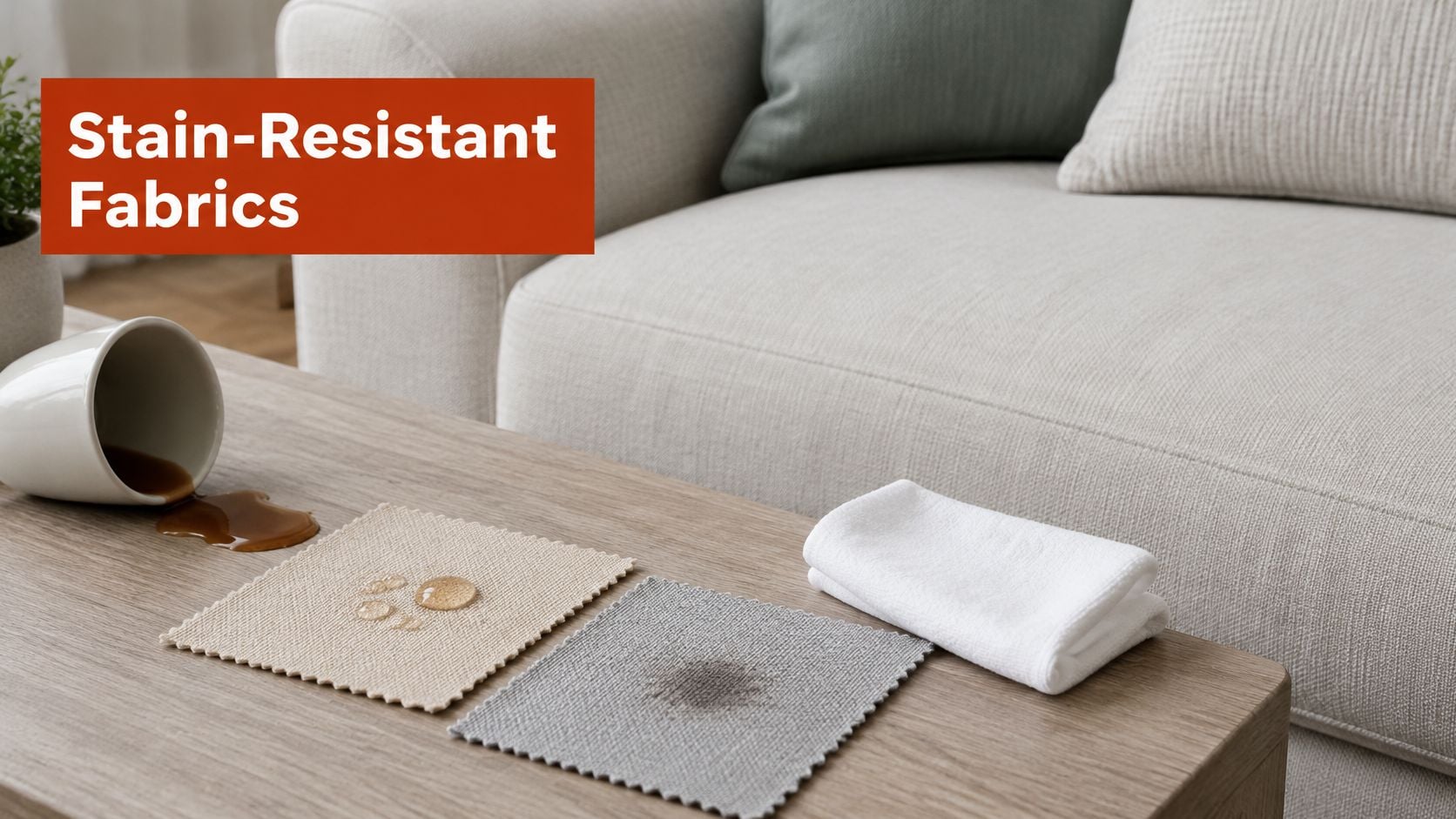
| Family with young children and pets | Genuine top-grain leather or performance fabric | A protected hide wipes clean of everyday spills; a suitable performance fabric offers stain resistance and a tight, resilient weave |
| Daily-use recliner or sofa seat | Genuine leather | Repeated contact and flexing make surface integrity especially important |
| Vacation rental with frequent turnover | Genuine leather or performance fabric | Appropriate finishes and documented care simplify upkeep between guests |
| Formal living room used a few evenings a week | Either, chosen for appearance | Lower contact can let bonded upholstery keep its look for years |
| Sunroom or lanai with heavy afternoon sun | Genuine leather or performance fabric rated for the exposure | Heat and sunlight make bonded surfaces less forgiving; use outdoor-rated upholstery for an open lanai, and treat indoor fabric as unsuitable there |
| Occasional-use guest room | Bonded leather is acceptable | Limited use reduces mechanical stress, though humidity and sun still matter |
For children and pets, separate stain resistance from damage resistance. An easy-clean weave is not claw-proof, and leather can scratch. A protected top-grain finish suits a wipe-clean household. A tightly woven performance fabric better matches someone who wants textile softness under bare legs.
Our kid-friendly and pet-friendly furniture guide connects those habits to a cover you can live with. Keep washable throws on favorite pet spots. Skip loosely textured upholstery where claws are likely to catch.
Plan for traffic and light together
A daily-use recliner needs more than an attractive cover. Check the moving folds, seat support, and how the cushion recovers under the person who sits there. In a vacation rental, straightforward cleaning instructions and clear maintenance records matter between guest stays.
A formal room can prioritize a uniform finish because hands and paws rarely land on it. A sunroom needs a stricter exposure check before you buy. Press the arm that will face the window and ask whether that exact finish is rated for strong afternoon sun, not only for indoor living-room light. Use outdoor-rated upholstery on an open lanai. Treat ordinary indoor fabric as the wrong cover there, even when it looks durable on the floor.
Bring room photographs and mark where direct light falls through the year. Note the wet-dog path from the door, the seat that stays occupied after dinner, and whether the air conditioning runs all day or only at night. Those three checks usually decide the material faster than color does. I would rather see a slightly quieter finish hold up through a humid summer than a handsome cover that stiffens, fades, or peels on the sun side of the room.
Confirm the Material Before You Buy
- Request the complete composition disclosure. The FTC's bonded-leather example reads “Bonded Leather Containing 60% Leather Fibers and 40% Non-leather Substances”; it's an example, not a required formula or universal minimum leather content.
- Get the performance details. Request the abrasion method, cycle count, and failure criterion so you're comparing equivalent evidence.
- Match the paperwork to the cover. Confirm which panels use which material, whether the rating applies to your selected upholstery, and whether the warranty addresses peeling or delamination.
- Test the complete seat. Press the seat fronts and arm caps, then assess lumbar support, cushion resiliency, and recliner pitch in your normal sitting position.
- Arrange a design consultation. Use our complimentary in-house service to match the upholstery to your room's light, traffic, and maintenance habits.
Keep the evidence with your selection
Our guide to reading furniture product descriptions with confidence helps you identify useful specifications. Keep the composition sheet, care instructions, and warranty together; Quote My Wall's guide to choosing a document holder for paperwork offers a practical way to organize those records.
Our No Blind Ordering promise begins before furniture reaches the 32,000-square-foot Rockledge showroom. Ownership personally hand-tests every seat, sofa, and recliner, evaluating sofa depth, cushion density, frame pitch, and comfort. Pieces with a sagging frame, leather that doesn't wear well under Florida sun, or a spring assembly that compromises posture don't pass our selection standards.
Established in 1939, we've maintained our commitment to Brevard County, the Space Coast, and Central Florida. Our custom library offers over 1,000 performance upholstery options, genuine top-grain leathers, and hand-finished wood swatches, allowing comfort and craftsmanship to guide the selection.
Visit Indian River Furniture in Rockledge with your room photographs and upholstery questions. Hand-test the seating, explore the curated coastal displays, and collaborate with our design team on a material your household can comfortably maintain. When your selection is ready, our premium, uniform, in-house white-glove delivery team handles inspection and room setup, bringing that considered showroom choice home.