Schedule your Complimentary Design Consultation


How to Clean Real Leather Sofa

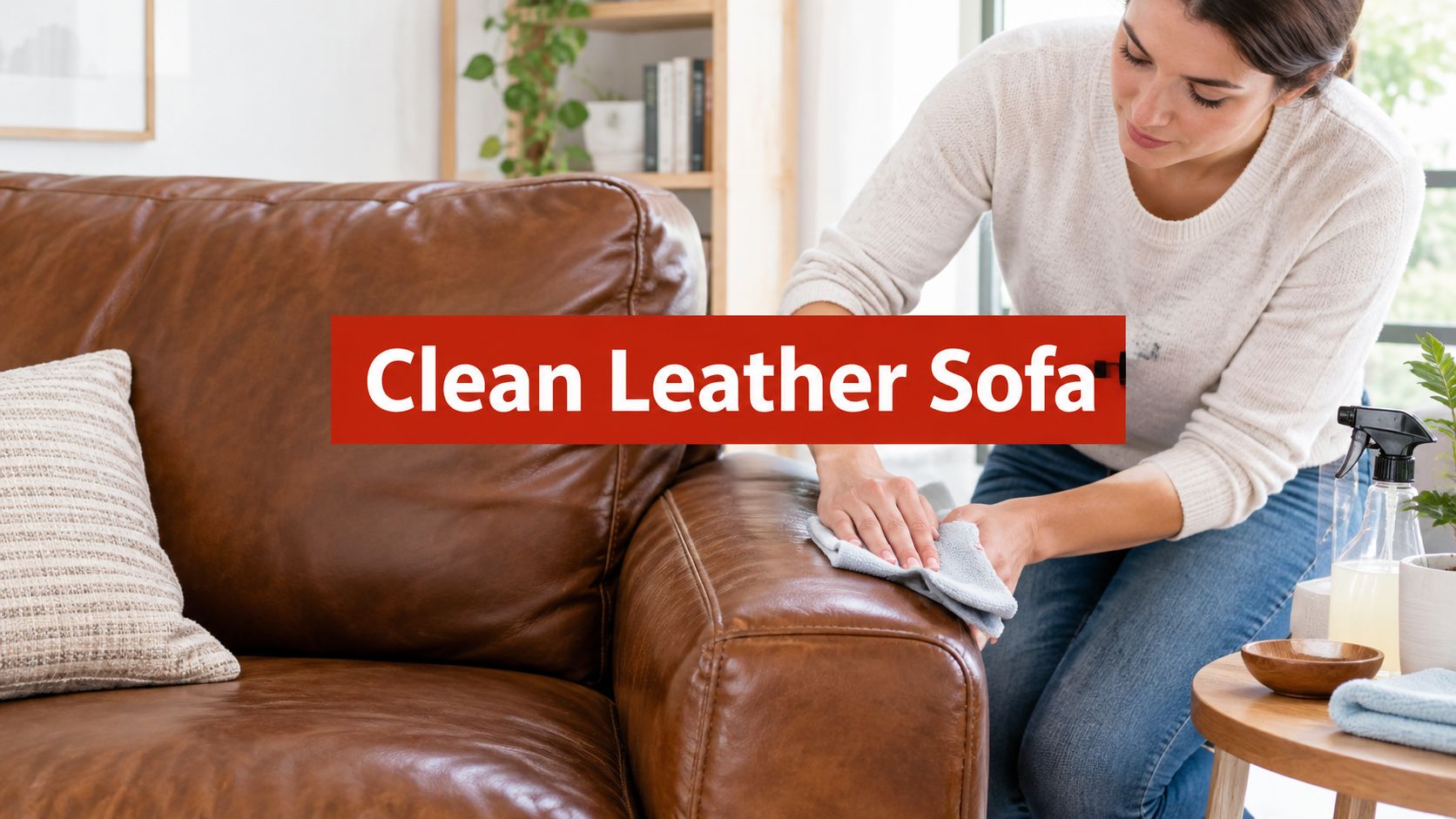
A Saturday morning coffee sits beside the sofa, your dog has claimed the best cushion, and there's a faint smudge near the armrest that wasn't there yesterday. Real leather makes these everyday moments look elegant, but it still needs the right care. The wrong spray, a soaked cloth, or vigorous scrubbing can leave a finish dull, sticky, darker, or permanently marked.
The right answer to how to clean a real leather sofa is controlled maintenance. Start dry, use as little moisture as possible, identify the finish before choosing a product, and treat Florida's humidity and sunlight as part of the cleaning problem. Quality leather rewards that restraint with a softer hand, richer character, and years of comfortable service.
A Living Room First Approach to Leather Care
Real leather care begins before you reach for a cleaner. Grit, pet hair, crumbs, and sand work into seams and tufting, where they can rub against the surface every time someone sits down. Use a soft upholstery brush and low suction along the cushions, piping, crevices, and the space beneath removable cushions. For delicate areas, place gauze over the vacuum nozzle so loose soil is lifted without dragging it across the finish, a method supported by leather-care guidance from the Canadian Conservation Institute.

Three moves come before any cleaner
Vacuum the grit. Work slowly across seams and tufts. Sand and household dust may feel harmless, but repeated friction can wear the topcoat and leave high-contact areas looking prematurely polished.
Blot a fresh spill. Put a dry, absorbent microfiber cloth over the liquid and press gently. Don't rub, spread, or force moisture into the grain. Blotting gives a protected finish the best chance of keeping a small accident from becoming a dark tide mark.
Identify the finish. “Real leather” describes the material, not one universal surface. Aniline, semi-aniline, protected leather, nubuck, and suede-like finishes respond differently to water, soap, pressure, and conditioning products.
Practical rule: If you can't identify the finish, don't start with the visible panel. Start with the care label, manufacturer documentation, or a hidden section beneath a cushion.
A barely damp cloth may be sensible for light soil on a protected sofa, but direct exposure to water can shrink or stiffen some leather and may move tannins to the surface, creating staining or embrittlement. That's why a living room sofa buying guide should be followed by a care plan that matches the upholstery, frame, and daily habits in your home.
These first moves protect the surface before cleaning begins. The finish determines what happens next, and that decision matters more than the strength of any product in your cabinet.
Know Your Leather Before You Clean It
A sofa that looks smooth, evenly colored, and lightly glossy is usually pigmented or protected leather. Its topcoat handles ordinary marks and often keeps a water droplet on the surface instead of allowing it to soak straight into the hide. That makes it the most forgiving choice for a busy family room, including homes where Florida humidity keeps moisture in the air. It still needs measured care. Strong chemicals and excess water can damage the finish.
Aniline leather has color throughout the hide but little substantial surface protection. It feels natural, shows visible variation, and absorbs water readily. A droplet can darken the leather within seconds. Semi-aniline leather has a light protective layer, giving the color a more even appearance while preserving much of the soft, natural feel.
Nubuck and suede-like leather require a separate approach. Their velvety texture comes from altered surface fibers, so a cleaner made for smooth protected leather can flatten the nap, leave a dark patch, or change the feel unevenly. A material guide notes that aniline's protective surface can be less than 0.01 mm thick. That thin barrier explains why a product that seems gentle on protected leather can be too aggressive for an absorbent finish. This upholstery-material reference explains why finish identification belongs before any patch test. For a broader comparison of upholstery types, use our upholstery-materials reference.
Two simple checks at home
Start with the manufacturer's tag. Find the model number, upholstery description, and care instructions. If the tag is gone, inspect an inconspicuous area, such as the underside of a cushion. In a humid home, this step matters even more because moisture can linger in leather and cushion areas after a careless cleaning.
A tiny water-drop test can help identify a protected finish. Place one small bead on a hidden section and watch it closely. If the bead stays rounded without darkening the leather, the surface is likely protected. If the water sinks in or creates an immediate dark spot, stop there and avoid liquid cleaner.
Use almost no pressure for a fingernail test on a concealed area. Protected leather usually resists a light mark or shows only a faint surface line. Aniline leather often remains visually subtle because its surface is more absorbent and less coated. Neither test replaces manufacturer confirmation, but either can prevent a damaging first application.
| Finish | Look and Feel | Water-Drop Test | Fingernail Test | Match This Section |
|---|---|---|---|---|
| Aniline | Soft, natural, with visible hide variation | Absorbs or darkens quickly | Barely marks the surface | Specialist care |
| Semi-aniline | Soft with more even color and light protection | May sit briefly, then darken | May show a light line | Specialist or approved finish-specific care |
| Pigmented or protected | Consistent color with a smooth protective surface | Usually sits without immediate darkening | May show a faint line | The low-moisture method below |
| Nubuck or suede | Brushed, velvety, and textured | Often absorbs or changes the nap | Can alter the surface fibers | Specialist care only |
Let the finish decide the routine. Protected leather can usually tolerate careful, low-moisture cleaning. Aniline, semi-aniline, nubuck, and suede-like surfaces need approved finish-specific treatment, especially where humid indoor conditions make excess moisture harder to remove. Never assume an expensive, naturally soft hide is more resistant. Softness often signals less surface protection.
The Core Cleaning Method for Protected Leather
Protected leather responds best to a low-moisture, finish-specific routine. The objective isn't to make the sofa wet enough to feel scrubbed clean. It's to lift soil from the coating while keeping moisture away from seams, cushion fill, and the leather beneath the finish.
Begin with the dry work. Use a soft brush attachment across the cushions, then use a crevice tool on seams and folds with low suction. Move slowly around buttons, welt cords, and reclining joints. Grit trapped in those areas creates the fine friction that makes frequently used leather look tired first.
Keep the cloth barely damp
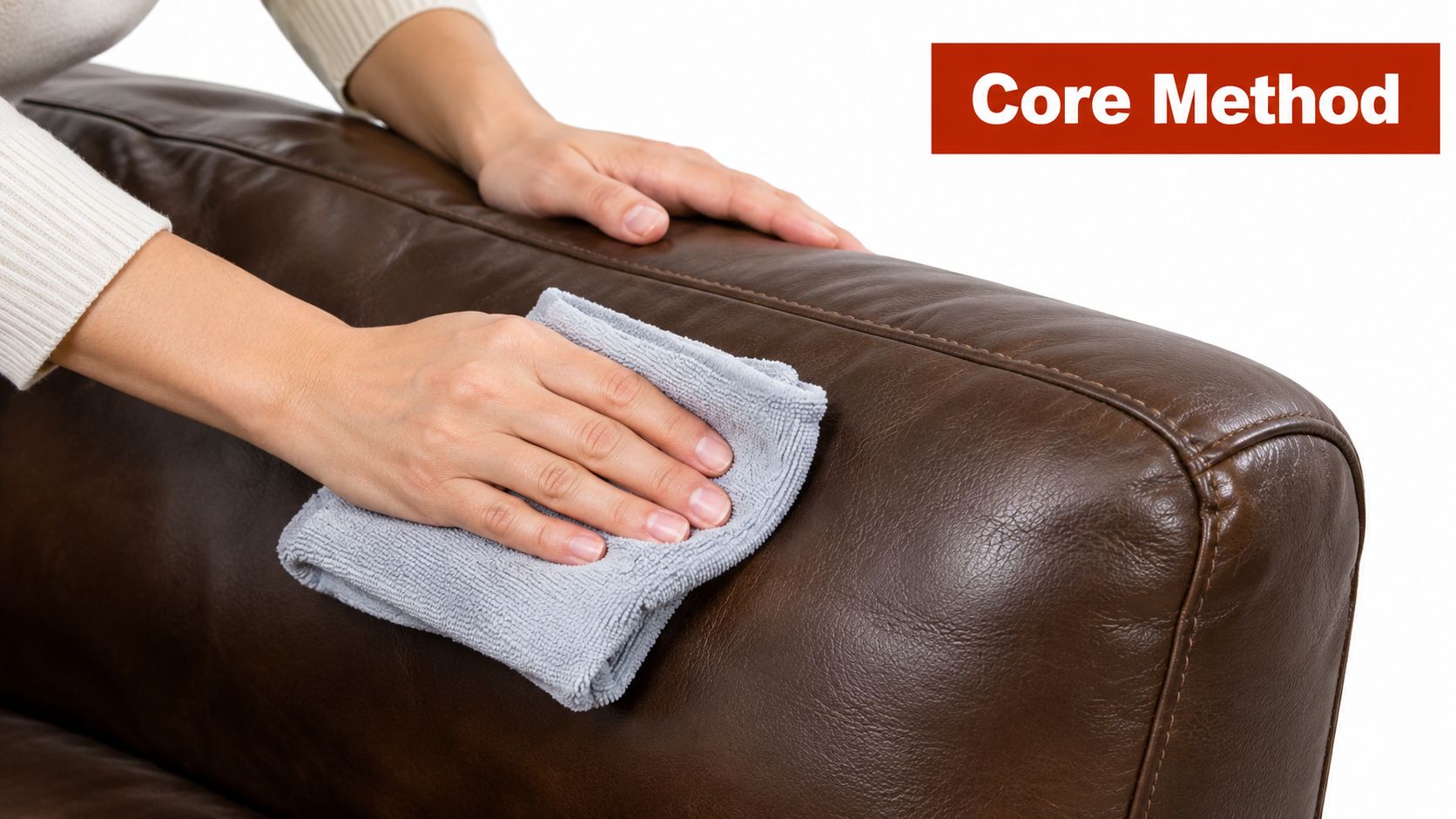
Choose a pH-neutral leather cleaner approved for protected leather. Apply it to a microfiber cloth, never directly to the sofa. A cloth that feels damp is useful. A cloth that feels wet is already carrying too much moisture toward the seams. IICRC upholstery guidance notes that many manufacturers recommend pH-neutral solutions for basic leather cleaning, which is why a neutral product is a safer starting point than an alkaline household detergent. The upholstery standard also supports matching the method to the leather type.
Test the exact product, cloth, pressure, and working time on a hidden section. Let it dry completely before judging the result. Then work across one small panel at a time with light, overlapping strokes. Don't chase a single mark by increasing pressure. Flip the cloth as it collects soil so you're not redistributing grime.
Follow immediately with a second cloth that is only slightly damp, using it to lift residue. Blot excess moisture rather than wiping it toward the seams. A controlled two-cloth process leaves less product behind and reduces the risk of stickiness, darkening, or uneven drying.
Inspect before you condition
When the surface is clean, step back and view it under angled or raking light. That reveals missed soil, streaks, and areas where residue has collected along piping. Leave the sofa to dry naturally away from direct sun, radiators, heat vents, and concentrated airflow. High heat can dry one area faster than another, leaving the leather stiff or unevenly colored.
Condition only when the product is approved for the identified finish. Protected leather generally needs restraint, not repeated applications that leave an oily film. Absorbent aniline, nubuck, suede-like, cracked, peeling, sticky, or heavily worn leather should go to a qualified specialist instead of receiving a stronger home treatment.
For related upholstery-care principles involving outdoor seating, you can also review this practical guide on how to remove stains from boat seats. The surfaces differ, but the useful lesson is the same: remove loose soil first, control moisture, and avoid escalating pressure or chemicals when the first gentle pass hasn't worked.
A protected leather sectional can make this process easier when its construction gives you access to individual cushions and panels. See how a green leather sectional can bring a cohesive color story into a living room while still requiring finish-specific care.
Products Worth Using and Products to Keep Away
The strongest cleaner isn't the smartest cleaner. Real leather is chemically sensitive, and a product that cuts through kitchen grease on a countertop may strip or soften the finish on a sofa. Choose the mildest product that can do the job, and test it in a hidden seam before the first visible wipe.
A practical care kit can stay simple:
- Distilled water: Useful when a manufacturer-approved method calls for minimal moisture.
- pH-balanced leather cleaner: Choose one labeled for the specific finish, especially protected leather.
- Microfiber cloths: Keep separate cloths for cleaning, residue removal, and drying.
- Soft-bristle brush: Use it for dry dusting and seams, not aggressive scrubbing.
- Finish-matched conditioner: Apply sparingly and only when the leather manufacturer approves it.
What belongs outside the living room
All-purpose sprays, bleach, ammonia, household degreasers, acetone, alcohol, abrasive sponges, and strong solvents have no place in routine leather care. They can discolor the topcoat, remove protective components, or create a shiny burnished patch where the surface has been overworked. Straight vinegar is also a poor default because acidity doesn't make an unknown leather finish safer.
Baby wipes can contain detergents, preservatives, or conditioning agents that leave a film. Saddle soap may be inappropriate for protected upholstery, and oil-based conditioners can darken or flatten nubuck and suede. Don't use furniture polish, dish detergent, or a heavily wet cloth just because those products are nearby.
| Approved for Real Leather | Keep Away From Real Leather | Why It Matters |
|---|---|---|
| Finish-approved pH-neutral cleaner | Bleach, ammonia, and solvents | Strong chemicals can damage or strip the finish |
| Barely damp microfiber cloth | Soaked cloths and direct spraying | Moisture can migrate into seams and padding |
| Soft brush attachment | Abrasive sponges and hard brushes | Friction can burnish or scratch the surface |
| Conditioner approved for the finish | Oils on nubuck or suede | Oils can darken, flatten, or stain the nap |
| Distilled water when approved | All-purpose household sprays | Unknown ingredients may leave residue or discoloration |
The leather upholstery guidance from Indian River Furniture reinforces a broader furnishing principle: the right material and finish should match the way your household lives. If children, pets, sandy feet, or frequent entertaining are part of the picture, ask about cleanability before choosing the hide, not after the first stain.
Spot Treatment for the Stains That Worry You Most
The universal rule is simple: blot, never rub. Get to a spill within minutes when you can, but don't let urgency push you into using an untested solvent. A small mark is easier to manage than a chemically altered panel.
Ink from a leaking pen
Lift the pen and place a clean, dry cloth over the mark. If the surface is protected, use a barely damp microfiber cloth and then a small amount of finish-approved leather cleaner. Work around the outside of the mark and move inward with light dabs.
Don't reach for alcohol as a first response. It can affect the finish, and it isn't suitable for absorbent leather. If the ink has spread, the dye has transferred, or the patch remains visible after a gentle pass, stop rather than widening the damage.
Grease from food or lotion
Grease behaves differently from a water-based spill. Don't flood it with water, because moisture can spread the oil through the surface. Lift any solid residue with the edge of a soft cloth, then use an absorbent dry powder suitable for leather-care guidance only if the manufacturer approves that approach. Remove it gently and reassess before applying cleaner.
A greasy halo that remains after the first controlled attempt is a specialist case. Repeated rubbing can drive the mark deeper and leave a larger dull area than the original spill.
Dye transfer from denim or cushions
Fresh dye transfer often tempts people into using a magic eraser or abrasive pad. Don't. Use a leather-safe cleaner on a cloth and make light passes, repeating only if the leather shows no darkening, stickiness, or color change.
The same restraint applies to dark throw pillows and clothing. If the dye has migrated into the finish, a professional may be able to reduce the appearance without destroying the surrounding color. There's no reliable universal success rate for stain removal because finish, dye, age, and wear all change the outcome.
Mystery sticky residue
Start dry. Press and lift with a clean microfiber cloth, changing to a fresh section as the residue transfers. If the mark remains, move to a barely damp cloth, then stop if the leather becomes tacky, darker, or unusually shiny.
A specialty spot-removal product may be suitable for some non-leather surfaces, but it shouldn't automatically be used on a sofa. For general stain-removal ideas and product context, you can review the Wow Stick from Fillaree, then confirm that any treatment is explicitly approved for your leather finish before applying it.
Persistent odor, peeling, cracking, absorbency, recurring spotting, or mold beneath a cushion calls for professional assessment. A sofa that has entered restoration territory won't be rescued by adding more product.
Why Florida Homes Need a Climate-Smart Routine
In Brevard County, a sofa can look clean and still be heading toward mildew, drying, or finish damage. Warm, damp air, shaded rooms, poor circulation, air-conditioning cycles, and condensation create trouble around exterior walls, sliders, and closed-up vacation homes. Your cleaning routine must manage moisture at the same time.
Start with the room, then adjust the cleaning method to the finish. Keep the sofa several inches from an exterior wall, with open space beneath and behind it. During humid weather, inspect cushion undersides, back panels, folds, and seams. Conservation guidance identifies 45% to 55% relative humidity and 18°C to 20°C as stable targets. Humidity above 65% encourages mold growth and fiber degradation, while levels below 30% can contribute to drying and embrittlement. The Canadian Conservation Institute's leather-care guidance presents these as conservation conditions, not mandatory household settings, but the ranges show why prolonged dampness deserves attention.

Airflow matters after every wipe
A damp cloth can leave moisture trapped along piping, beneath cushions, or inside tight folds. Let cleaned leather dry naturally. Keep high heat away from the surface. A steady HVAC setting, sensible dehumidification, and clear airflow behind the sofa work better than vinegar, bleach, alcohol, or all-purpose spray.
One Florida care resource notes that mold can develop within days when relative humidity stays above 60% and airflow is poor. Other furniture guidance places indoor humidity around 40% to 55%. This Florida leather-care resource helps explain why recurring odor or spotting calls for moisture control, not another surface wipe.
Sunlight creates a separate finish problem. Direct rays through a west-facing slider can fade and dry leather, especially absorbent aniline leather. Use light-filtering window treatments, move the sofa when practical, and keep it away from concentrated heat. Protected leather may tolerate more exposure, but every finish benefits from shade.
For coastal rooms and motion seating, inspect a leather reclining sectional around mechanisms, seams, and restricted spaces where air cannot circulate freely. Florida-friendly care starts with matching the leather finish to the cleaning method, then continues with ventilation, shade, and measured moisture control throughout the year.
Building a Long-Term Care Rhythm That Lasts
A leather sofa stays beautiful through repetition, not rescue projects. Build care into the household rhythm so dust, spills, sunlight, and humidity never get the chance to become a single overwhelming problem.
Use a simple recurring schedule
Weekly, dry-dust the surface and vacuum seams, crevices, and the area beneath removable cushions. This is maintenance rather than deep cleaning, and it removes the grit that causes gradual surface wear.
Monthly, inspect the headrests, armrests, seat fronts, and favorite sitting positions. Look for a change in sheen, dye transfer, dryness, stickiness, cracking, or a seam that no longer sits flat. Early signs are easier to address than a worn panel.
Quarterly, use the controlled low-moisture method for protected leather if the sofa needs it. Don't clean on a calendar just because the date arrived. Clean when soil is present, and keep the process gentle enough that the finish remains even.
Biannually, condition only with a product matched to the identified finish and approved by the manufacturer. Florida's humidity doesn't justify coating the leather in oil. It makes finish identification, ventilation, and measured conditioning more important.
Protect the sofa between cleanings
Rotate movable cushions and vary the favorite seat when the design allows it. Pull the sofa approximately six inches from the wall to improve circulation, especially along an exterior wall. Keep direct sun off the leather, and inspect closed-up vacation homes before guests arrive.
A good leather sofa shouldn't need dramatic treatment every time it looks lived in. It needs small, correct decisions made consistently.
When the leather is absorbent, peeling, badly cracked, persistently odorous, or affected by mold beneath the surface, home care has reached its limit. A qualified restoration professional can assess the structure and finish without asking you to gamble on stronger chemicals.
The same care philosophy should guide the original purchase. Since 1939, Indian River Furniture has served Brevard County, the Space Coast, and Central Florida with furniture selected for comfort, craftsmanship, and everyday living. At the 32,000-square-foot Rockledge showroom, the ownership team hand-tests every seat, sofa, and recliner for pitch, ergonomic support, and comfort before it reaches the floor. That No Blind Ordering promise matters because a leather sofa is an investment in how your home feels, not only how it looks.
Visit the showroom to hand-test genuine leathers, performance fabrics, solid hardwood frames, and curated coastal vignettes. The in-house design team provides complementary interior design consultations, and the uniform white-glove delivery service completes the experience with careful room setup. Bring your room dimensions, photos, and details on how your household uses its seating, then work with the team to choose an heirloom-quality piece and a finish you can care for confidently.