Schedule your Complimentary Design Consultation


Green Leather Sectional Guide: Color, Care, and Comfort

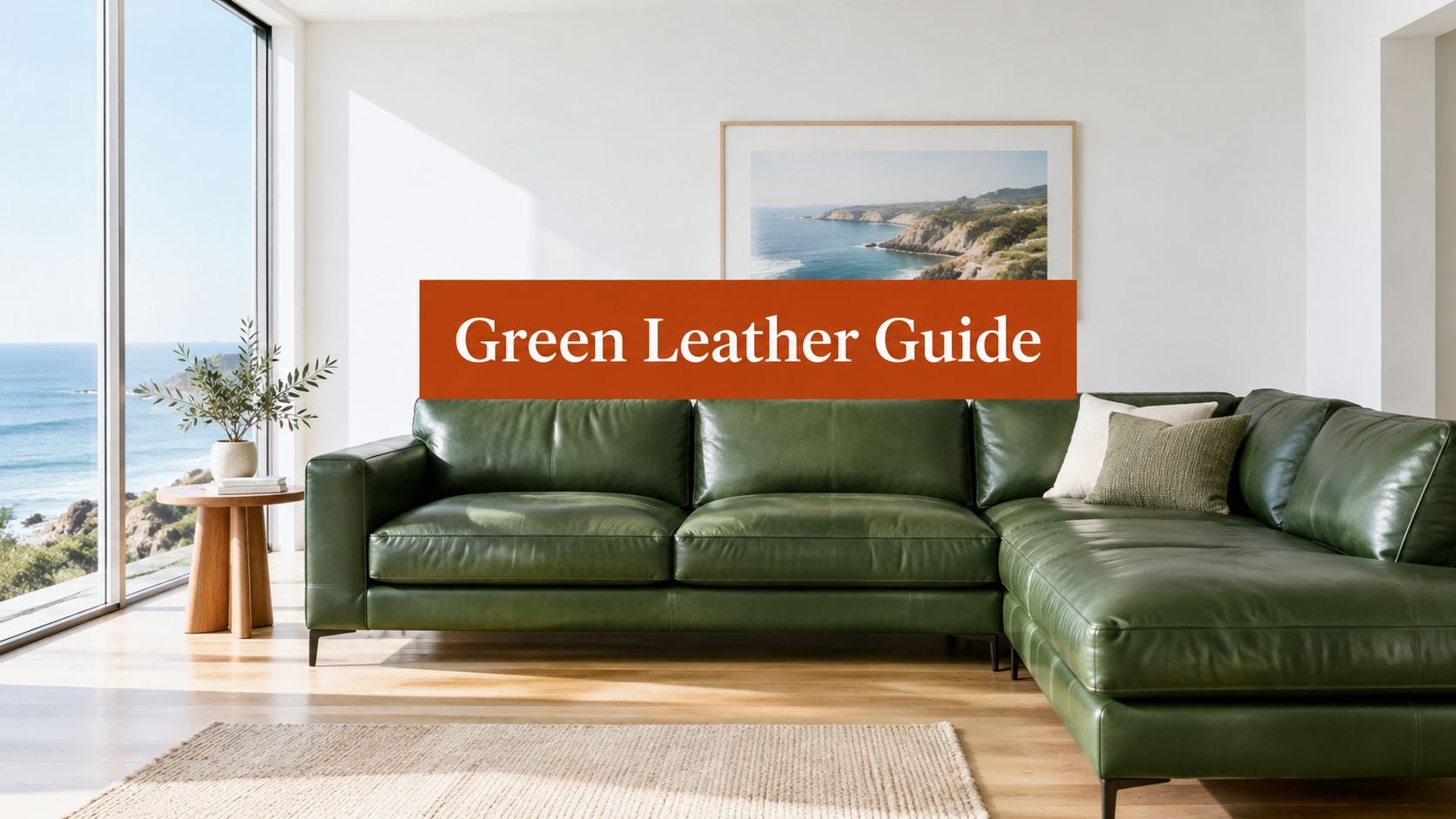
You may be looking at a living room that feels almost finished, yet somehow lacks a focal point. In a sunlit Central Florida home, a green leather sectional can solve that problem with unusual grace. It brings the grounded comfort of leather, the generous scale of sectional seating, and a color that feels connected to palms, sea grass, garden foliage, and the relaxed rhythm of coastal living.
The right piece isn't chosen by color alone. Shade, finish, frame construction, seat pitch, leather type, sunlight, humidity, and daily habits all shape how the sectional will feel and perform. A thoughtful selection becomes more than furniture. It becomes an investment in comfortable gatherings, quiet mornings, and lasting craftsmanship.
Setting the Scene for Your Green Leather Sectional
The room is bright without feeling stark. Soft coastal white walls reflect the afternoon sun, warm wood floors add a gentle amber note, and linen curtains move slightly with the air conditioning. At the center, a deep green leather sectional gives the room its visual weight. The leather feels substantial beneath your hand, smooth in some places and lightly textured in others, with a finish that catches the light rather than shining under it.
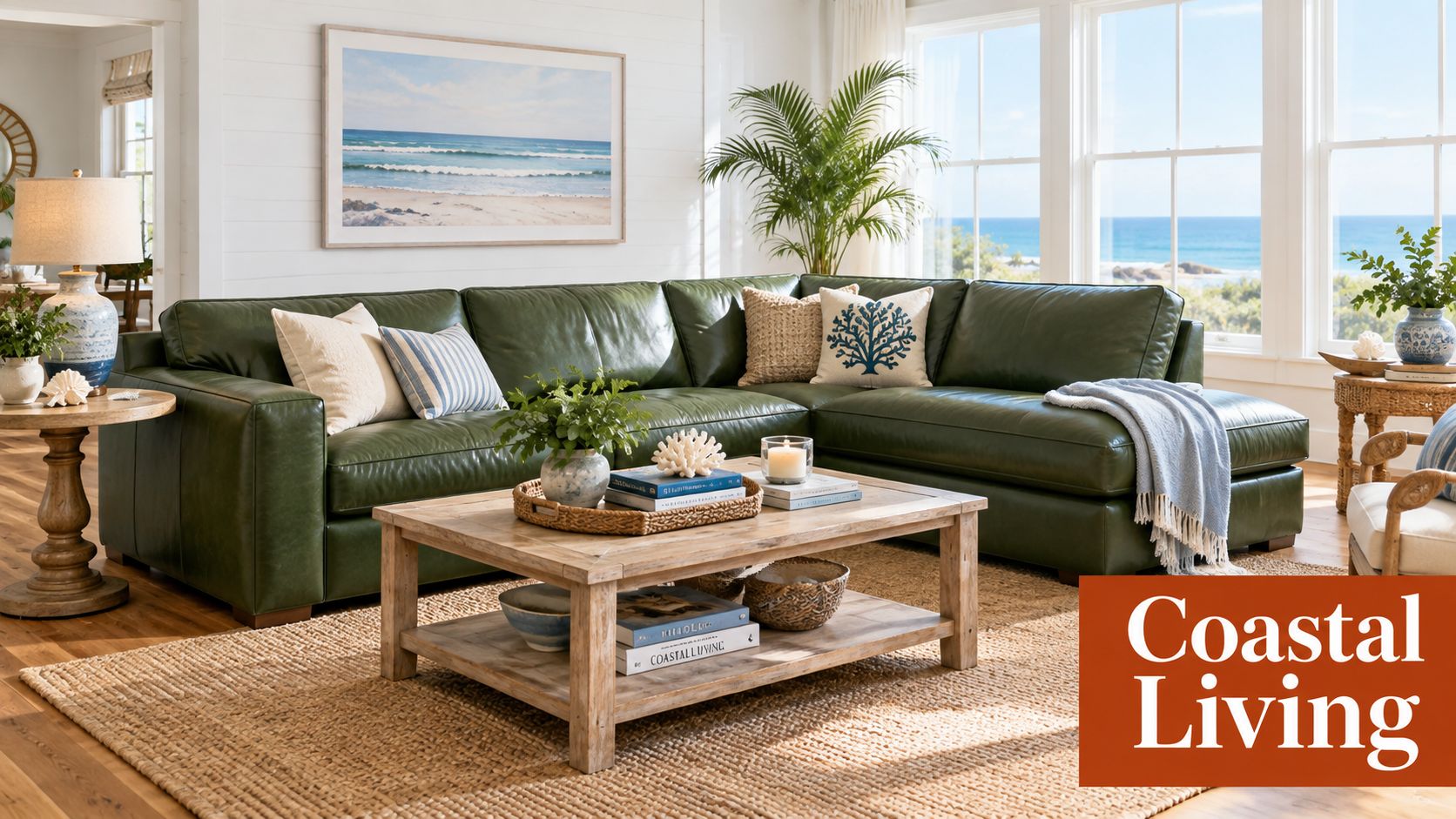
That scene works because the sectional does several jobs at once. It defines the seating zone, accommodates family and visitors, and introduces color without requiring the entire room to follow a theme. Green leather can feel architectural in a formal Space Coast residence, or softened with woven accents and relaxed cushions in a beach cottage.
The broader furniture category gives this choice meaningful context. One 2025 estimate values the global sectional sofa market at US$23.4 billion and projects US$38.7 billion by 2034, with a 5.8% CAGR; L-shaped sectionals represented 38.2% of product demand, while leather represented about 29.7% of 2025 revenue. A green finish sits within that valuable premium segment, not outside it.
What quality feels like
A well-made sectional has a reassuring weight when you sit down. The seat should support your hips without forcing your shoulders forward, and the back should meet you at a useful angle rather than making you perch or collapse. Those details are ergonomic, but they're also sensory. Comfort feels balanced, quiet, and immediately usable.
Indian River Furniture has served Brevard County, the Space Coast, and Central Florida since 1939. Its ownership hand-tests every seat, sofa, and recliner for pitch and comfort before the piece reaches the 32,000-square-foot Rockledge showroom floor. That No Blind Ordering philosophy matters because a photograph can't tell you whether a sectional welcomes your posture.
Practical rule: Sit as you live. Lean back, place your feet where they naturally fall, and stay long enough to notice whether the seat supports you or simply feels soft at first.
A green leather sectional should look beautiful on delivery day, but the better test is whether its craftsmanship, proportions, and climate suitability still make sense after years of Florida life.
Understanding Green Leather Shades and Finishes
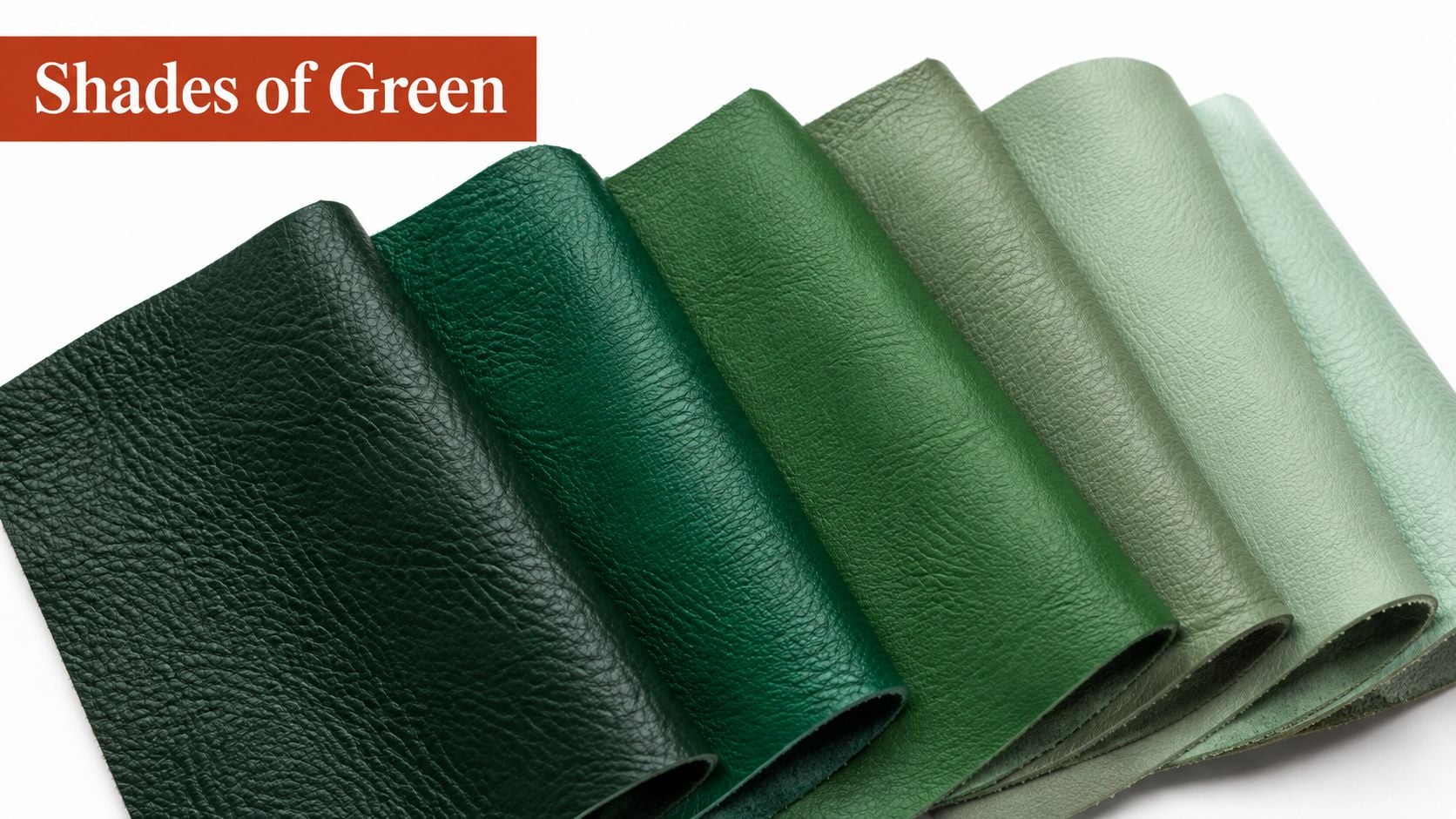
Green changes character with depth, undertone, and surface treatment. A forest or hunter green creates a composed, library-like feeling, especially against pale walls and natural wood. Emerald feels richer and more expressive, while olive brings warmth that pairs comfortably with woven fibers, rattan, and aged brass. Sage and seafoam move in an airier coastal direction, although very pale greens can appear cooler in shaded rooms.
Sunlight also changes the reading of the color. Morning light may make a blue-leaning green feel crisp, while late afternoon warmth can pull an olive or moss tone toward brown. Before choosing, view leather samples near your flooring, wall color, window treatments, and existing wood. The green that looks refined under showroom lighting may feel too intense beside a cool white wall at home.
Finish determines the personality
A smooth finished leather gives a green sectional a more refined, polished presence. A lightly distressed surface introduces variation, visible grain, and a sense of relaxed history. Those marks aren't defects when they're part of the intended finish. They help the sectional sit naturally among reclaimed wood, woven baskets, textured rugs, and other coastal materials.
Natural leather can develop a patina as it responds to touch, light, and use. That change is part of the material's character, but direct sunlight and nearby heat can accelerate fading and drying. A sectional placed beside a bright window needs thoughtful positioning and regular observation, particularly in a home with large glass doors.
For a useful explanation of how upholstery materials differ in texture, maintenance, and everyday performance, review this upholstery materials guide. The same principle applies to green leather: evaluate the surface as a working material, not just as a color chip.
Match the shade to the room's purpose
A darker green usually anchors an open-plan living area with confidence. It can define the lounge without requiring a wall or architectural divider. In a smaller room, sage, muted olive, or a softened jade may keep the sectional from feeling visually heavy.
Use the finish to balance the color. A distressed green can make a substantial sectional feel more casual, while a refined semi-matte surface supports a more polished interior. Neither choice is universally right. The practical question is whether the shade and finish suit your light, architecture, and tolerance for visible variation.
Evaluating Craftsmanship and Comfort Features
A beautiful exterior can't compensate for a weak frame or an uncomfortable seat. Start underneath the upholstery, because the frame determines how the sectional handles repeated sitting, shifting, and everyday movement.
Inspect the frame before admiring the color
Look for solid hardwood and joinery that connects the frame rather than relying only on simpler fastening methods. Mortise-and-tenon construction helps resist racking, the twisting force that gradually loosens furniture during regular use (furniture joinery guidance). Corner blocking adds reinforcement at the points where the frame absorbs movement.
A construction guide identifies solid hardwood, double-doweled joinery, and corner blocking as structural details that help upholstered furniture withstand long-term regular use (frame and upholstery construction guide). You won't always see every joint through finished upholstery, but a knowledgeable design associate should be able to explain the frame specification.
Test comfort with a repeatable routine
Don't judge a sectional by the first ten seconds. Use the same checks for every piece:
- Check the pitch. Your back should rest naturally against the cushion without making you lean forward or slide down.
- Check the seat depth. Your knees should feel supported, and your feet should reach the floor in a relaxed posture.
- Check the back height. A low back can look elegant but may not provide the upper-body support you want for long evenings.
- Shift positions. Sit upright, recline, turn slightly, and settle into the corner. The sectional should remain supportive in more than one posture.
- Listen and feel. Movement shouldn't produce alarming creaks, excessive flex, or a sensation that the frame is twisting.
Cushion fill creates another important trade-off. High-resilience foam generally offers structured support and shape retention. A down blend feels softer and more relaxed, but it may require more attention to maintain its appearance. Performance cushioning sits between those priorities, depending on its construction and density.
A sectional should accommodate your body, not train your body to tolerate it.
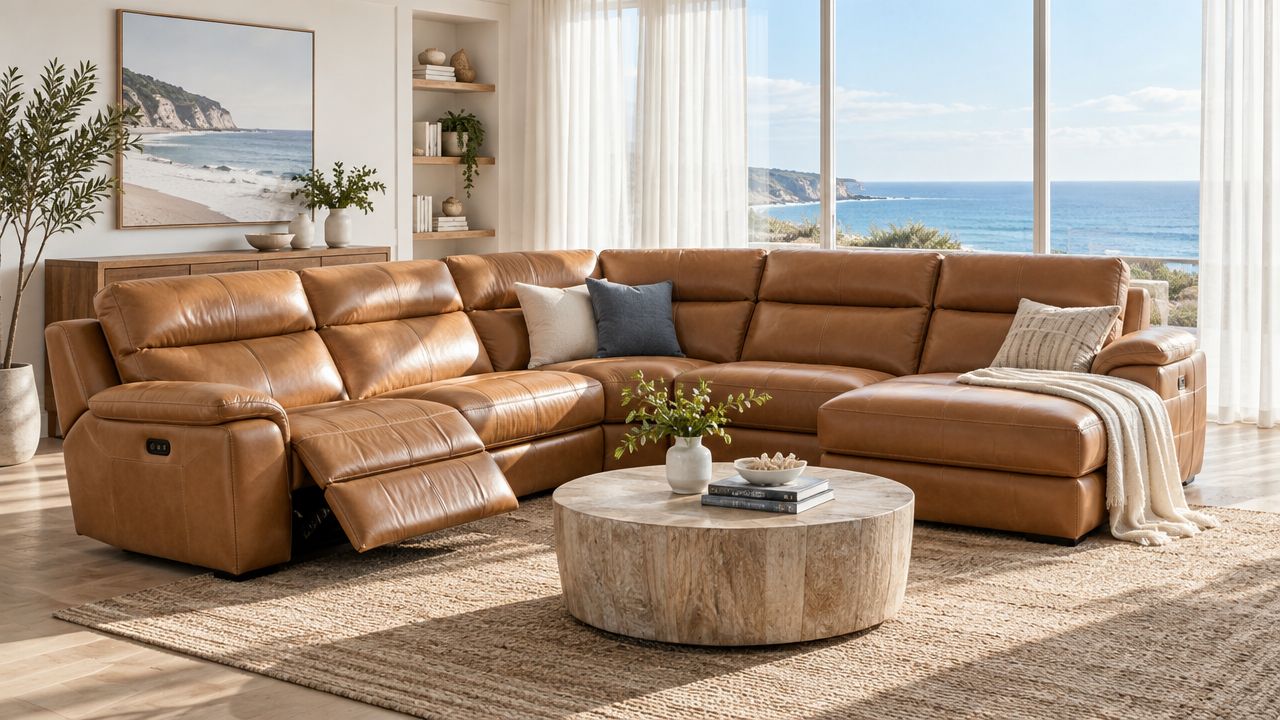
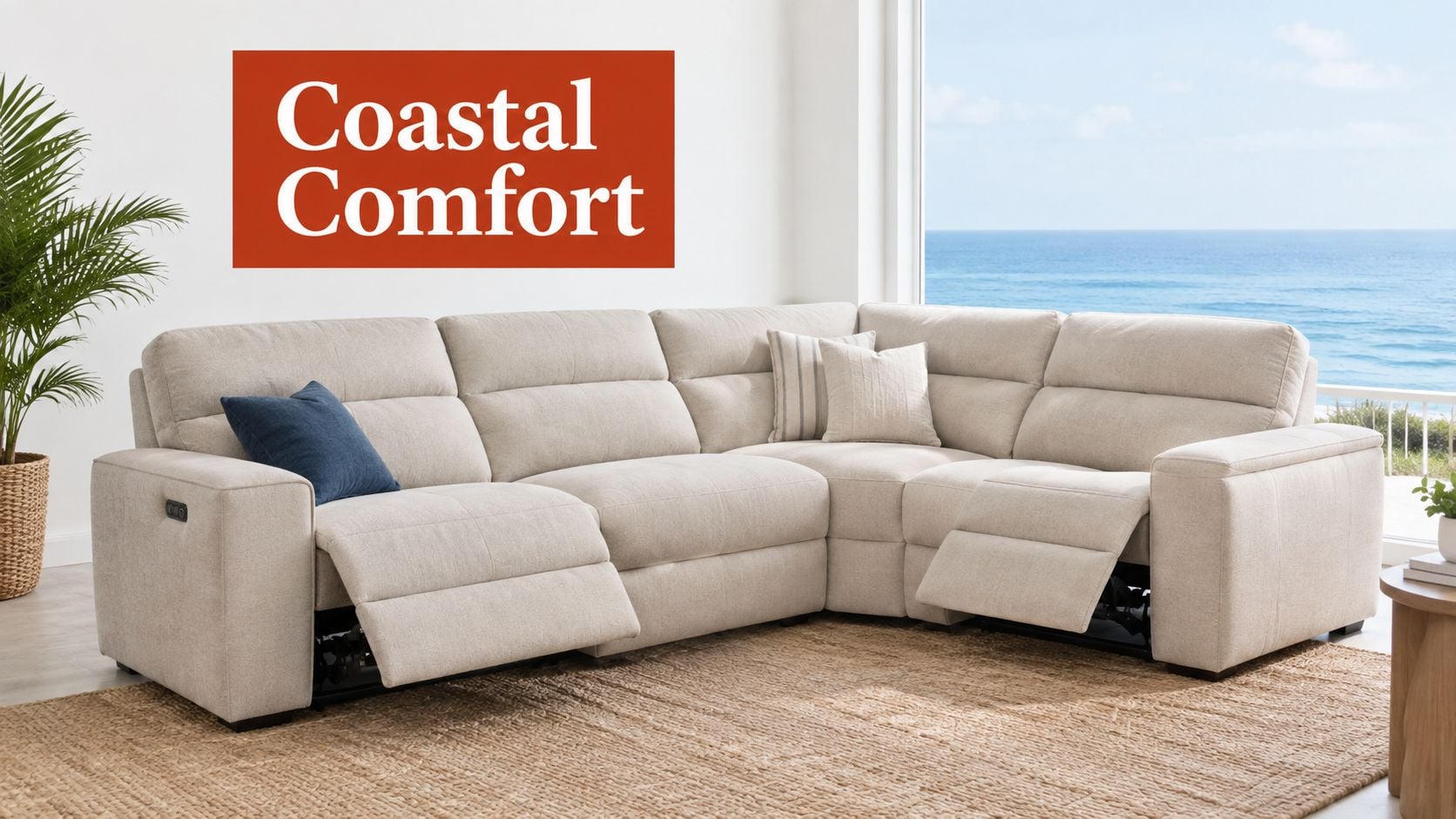
For homes where individual motion and back support are priorities, a power reclining sectional option can be evaluated by the same standards. Test the footrest, head support, controls, and fully reclined position before making a decision.
Indian River Furniture's No Blind Ordering promise applies to every sofa and recliner placed on its showroom floor. Ownership tests pitch, comfort, and structural integrity before customers encounter the piece, which gives shoppers a practical starting point for comparison.
Building a Coastal Color Palette Around Green Leather
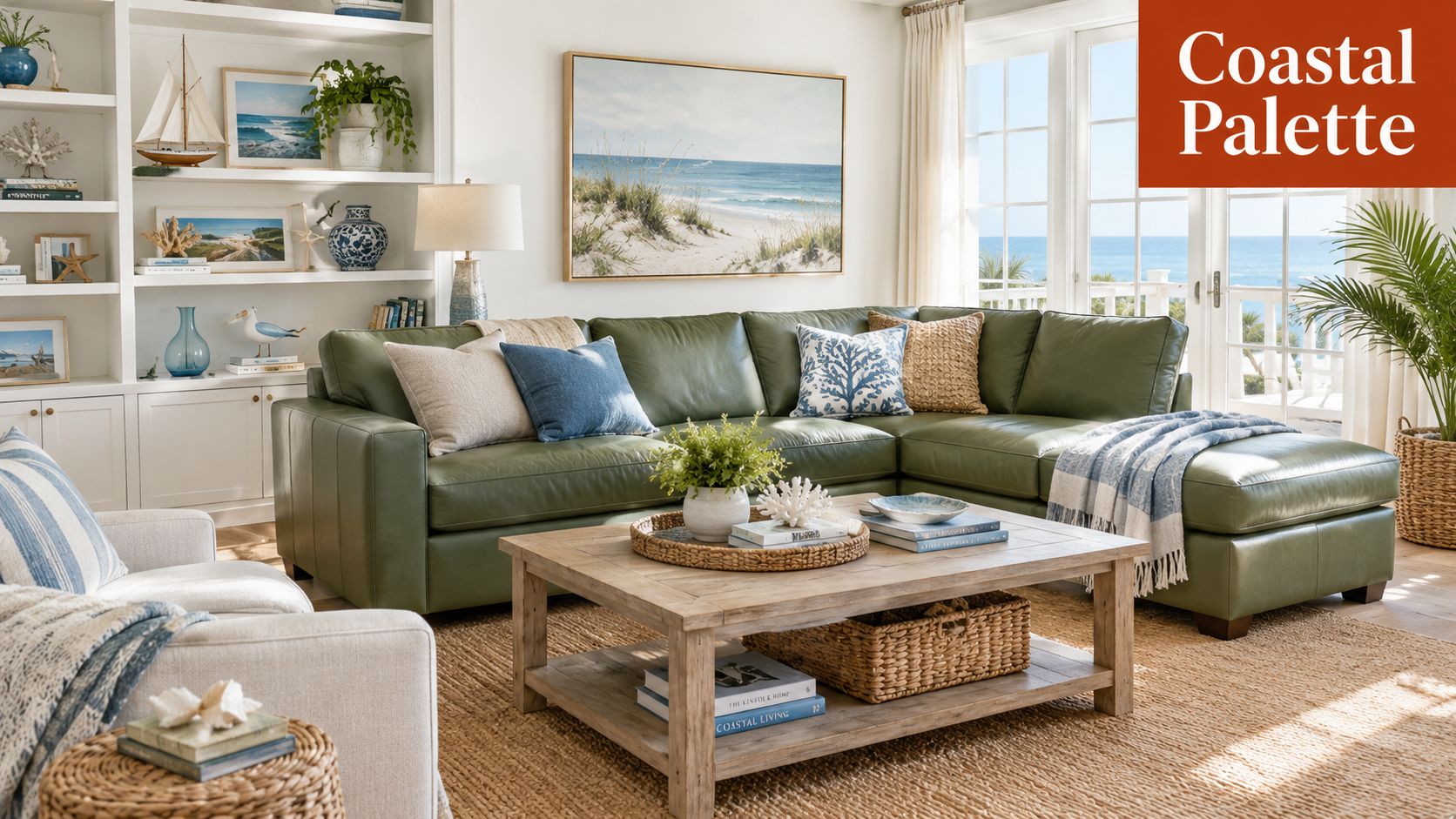
Green leather needs companions that respect its depth. The easiest palette begins with shoreline neutrals: sand, shell, driftwood, warm white, and pale mushroom. These colors let the sectional remain the anchor while keeping the room open and breathable.
A room with a deep forest sectional benefits from lighter surrounding surfaces. Try a warm white rug, a pale wood coffee table, and cushions in oat, flax, and faded blue. The result feels coastal without relying on obvious nautical motifs. If the green is closer to sage, introduce darker accents such as navy or charcoal to give the softer color enough definition.
Layer contrast through material
Color alone can make a room feel flat. Texture gives the palette dimension:
- Use woven pillows to soften the visual authority of leather.
- Add a nubby or natural-fiber rug beneath the sectional to create a tactile transition from floor to seating.
- Choose warm wood for tables or accent furniture when the green has a cool blue undertone.
- Introduce terracotta carefully through ceramics or art when the green leans olive or moss.
- Bring in brass or aged metal for a small note of warmth rather than a shiny, coordinated set.
Natural light changes the room throughout the day. A sectional that appears blue-green in the morning may look warmer and more subdued in late afternoon. Position it so windows illuminate the room without placing the leather in unfiltered direct sun for long periods.
Build a vignette with restraint
For a casual coastal home, pair a muted green sectional with driftwood tones, ivory textiles, a woven pendant, and artwork that includes sand or pale aqua. For a more refined residence, use emerald leather with crisp architectural lighting, window panels with refined lines, restrained brass, and a rug with a quiet geometric pattern.
Scent can support the atmosphere without competing visually. A thoughtfully selected Australian coastal home fragrance can add a clean, ocean-inspired note to a room already layered with leather, wood, and woven texture.
The broader design principle is explained in this guide to coastal design style. Coastal elegance isn't a collection of blue accessories. It's a balance of light, natural materials, comfortable proportions, and colors that feel at home near water.
Choosing the Right Leather for Florida Living
A green leather sectional in a Florida home faces more than everyday wear. Humidity, intense sun, air conditioning, sand, pets, children, and vacation-rental turnover all affect the upholstery decision. Genuine leather can suit a carefully maintained living room, while treated leather or an alternative material may work better for a busy household.
Market demand gives useful context, but it should not decide the purchase. One 2025 estimate values the global market at US$28.5 billion and projects US$42.8 billion by 2034 at a 5.2% CAGR; leather sofas represented an estimated 58.3% of the market and about US$16.6 billion in 2025 revenue. Those figures describe the category, not the right upholstery for a humid coastal room.
A practical material comparison
| Material direction | What it does well | Trade-off to consider |
|---|---|---|
| Genuine leather | Provides natural grain, some breathability, a substantial hand feel, and a patina that can become more distinctive with use. | Needs consistent care and protection from harsh light, heat, and unstable indoor conditions. |
| Performance-treated leather | Adds practical resistance for active households that want an authentic leather appearance with more controlled upkeep. | Treatments differ, so confirm the approved cleaning and conditioning process before purchase. |
| Alternative leather materials | Can support sourcing priorities and offer a consistent surface for family rooms or rental properties. | Breathability, aging, repairability, and environmental impact depend on the specific formulation. |
Sustainability requires specific questions rather than a broad label. Market projections cited in the same report place sustainable sectional sofas at a 9.2% CAGR versus 5.2% for the broader category, while bio-based synthetic leather is projected at an 8.4% CAGR through 2034. Growth rates describe market direction. They do not prove that an alternative material will perform better in Florida, where heat, moisture, cleaning routines, and direct light shape daily wear.
Decide according to use
Choose genuine leather when tactile quality, natural variation, and long-term patina matter most. Select a performance treatment for frequent guests, pets, or active family use, then request the care instructions in writing. Explore alternatives when sourcing and lifecycle priorities lead the decision, and ask about indoor air quality, compatible cleaners, repair options, and expected aging.
Finish samples deserve close inspection. Check the grain, coating, seam work, cushion support, and color under both daylight and warm indoor light. A green surface can look calm in a showroom yet feel much stronger beside Florida's bright windows. The same attention to material detail applies to specialized custom leather label products, where grain, finish, and application must suit the intended use. For furniture, upholstery is a technical specification as much as a decorative choice.
Maintaining Your Green Leather Sectional in Coastal Climates
A green leather sectional near a bright Florida window faces more than everyday wear. Heat, humidity, salt air, and inconsistent ventilation can affect its finish, texture, and color. Stable indoor conditions give the leather a better chance to age well. Recommended conditions are roughly 40% to 60% relative humidity and 60°F to 77°F (leather furniture care guidance). Low humidity can dry the material and encourage brittleness, while high humidity raises moisture and mold concerns in coastal homes, air-conditioned rooms, and vacation properties.
You do not need to treat the living room like a laboratory. Watch for rooms that feel persistently damp, improve air circulation, use climate control consistently, and leave space between the sectional and a cold or poorly ventilated wall.
A simple care rhythm
1. Remove dust gently. Use a vacuum with an upholstery attachment and light pressure around seams and creases. Grit can become abrasive as people sit, shift, and settle into the cushions.
2. Respond to spills immediately. Blot with a clean, absorbent cloth. Rubbing can spread liquid and push it deeper into the grain.
3. Skip household cleaners. Common cleaners may strip protective finishes or natural oils. Choose a leather-care product suited to the specific finish, and test unfamiliar products in a discreet area first.
4. Condition when the surface needs it. A dry feel, lighter appearance, or increasing stiffness can indicate that the leather needs conditioning. Periodic conditioning replenishes oils and helps reduce stiffness and surface cracking over time (leather cleaning and conditioning guidance).
5. Manage sunlight and heat. Position the sectional away from direct sun and heat sources whenever possible. This helps slow fading and premature drying, especially on exposed arms and seat fronts.
Coastal ownership rewards consistency. A few careful habits protect the finish more effectively than occasional aggressive cleaning.
Mold prevention matters in humid parts of Florida. Keep air moving around the furniture, address dampness promptly, and inspect shaded areas where moisture may linger. For broader guidance on Florida households, shedding, spills, and performance materials, see this guide to summer-proofing your furniture.
Making Your Final Selection with Confidence
A green leather sectional earns its place when its beauty and practical demands agree. Before choosing, confirm five things:
- Shade: Does the green suit your natural light, wall color, flooring, and desired mood?
- Construction: Are the frame, joinery, blocking, suspension, and cushions explained clearly?
- Comfort: Does the pitch, seat depth, back height, and corner support fit the people who'll use it?
- Climate: Can you protect the leather from direct sun, heat, excessive moisture, and poor circulation?
- Room plan: Will the configuration support conversation, television viewing, traffic flow, and future flexibility?
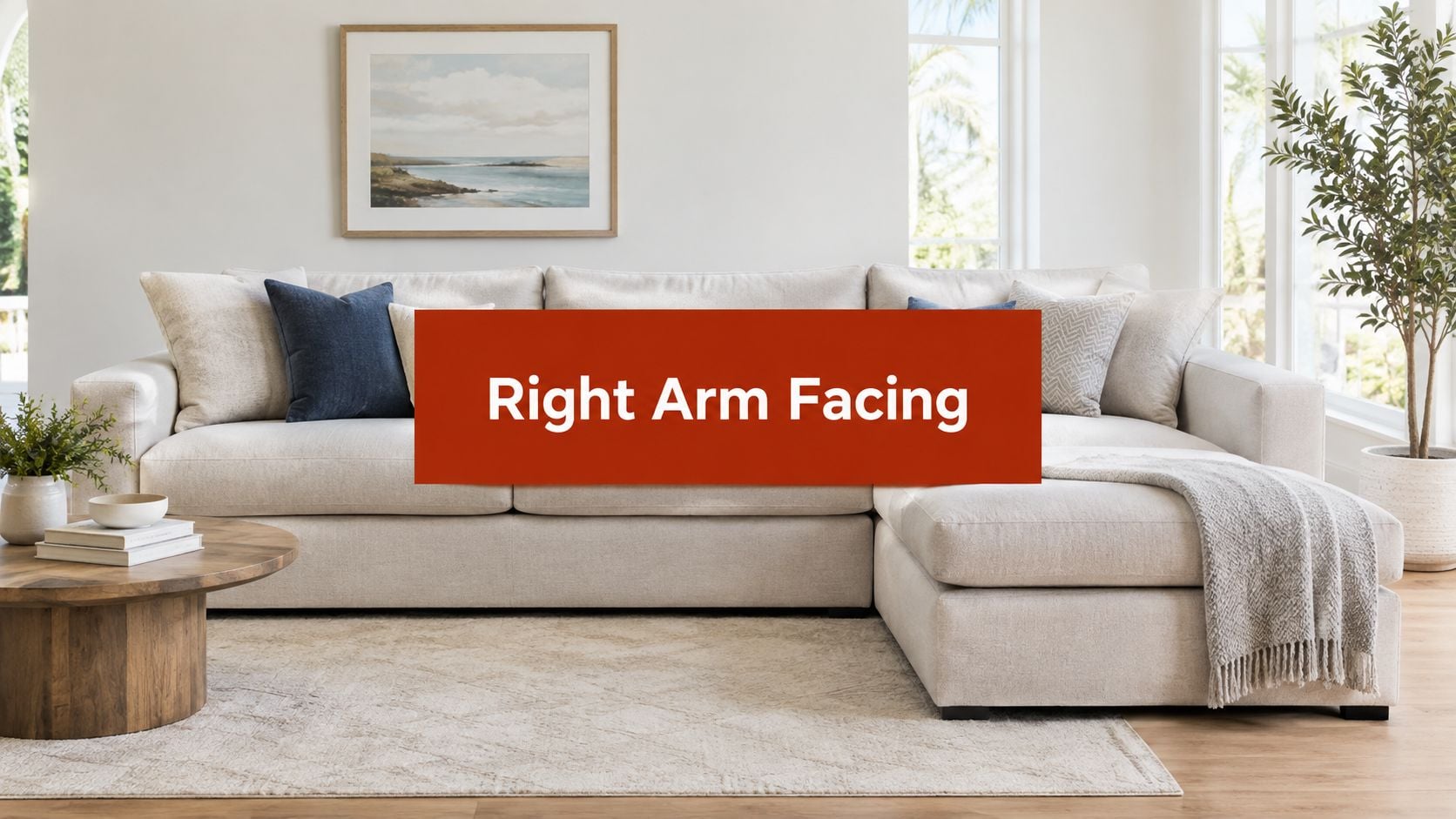
Measure the entry route, not just the living room. Confirm door widths, turns, stair access, wall clearance, and the sectional's orientation before ordering. A right-arm-facing configuration may be the correct fit for one room and entirely wrong for another, so review the right-arm-facing sectional only after mapping the space.
Indian River Furniture offers complementary in-house interior design consultations, curated coastal vignettes, and premium uniform white-glove delivery. The in-house team handles unboxing, inspection, and room setup, with a standard $99 delivery fee within its service area.
Visit the 32,000-square-foot Rockledge showroom to hand-test sectionals, compare green shades in person, and work through your room plan with the design team. Indian River Furniture's long service to Brevard County, the Space Coast, and Central Florida makes the visit part of a larger, service-first ownership experience.
A green leather sectional can become an heirloom when you choose its craftsmanship as carefully as its color and care for it as thoughtfully as its comfort deserves.
Bring your room measurements, a few photographs, and your preferred green palette to Indian River Furniture in Rockledge. Schedule a complimentary interior design consultation, hand-test the available sectionals, and let the design team help you select a piece suited to your coastal home and everyday life.