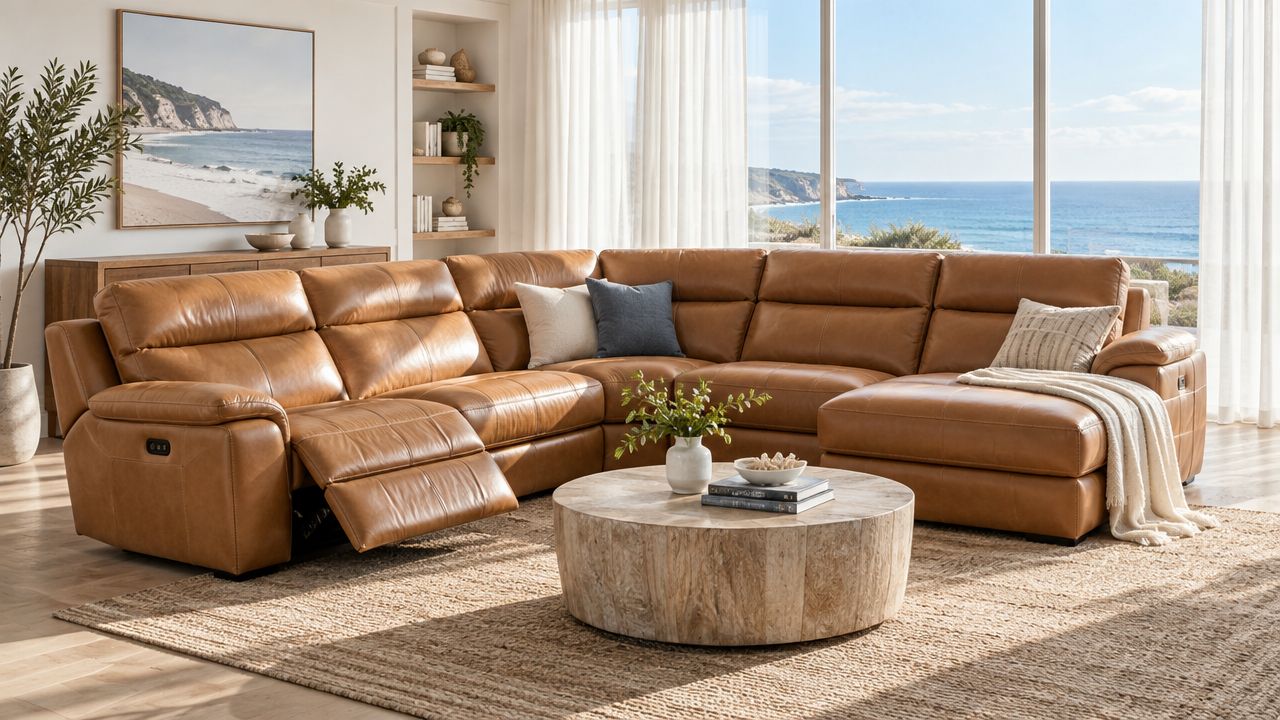
Schedule your Complimentary Design Consultation


Wall Hugger Recliners Leather: A Space-Savvy Guide

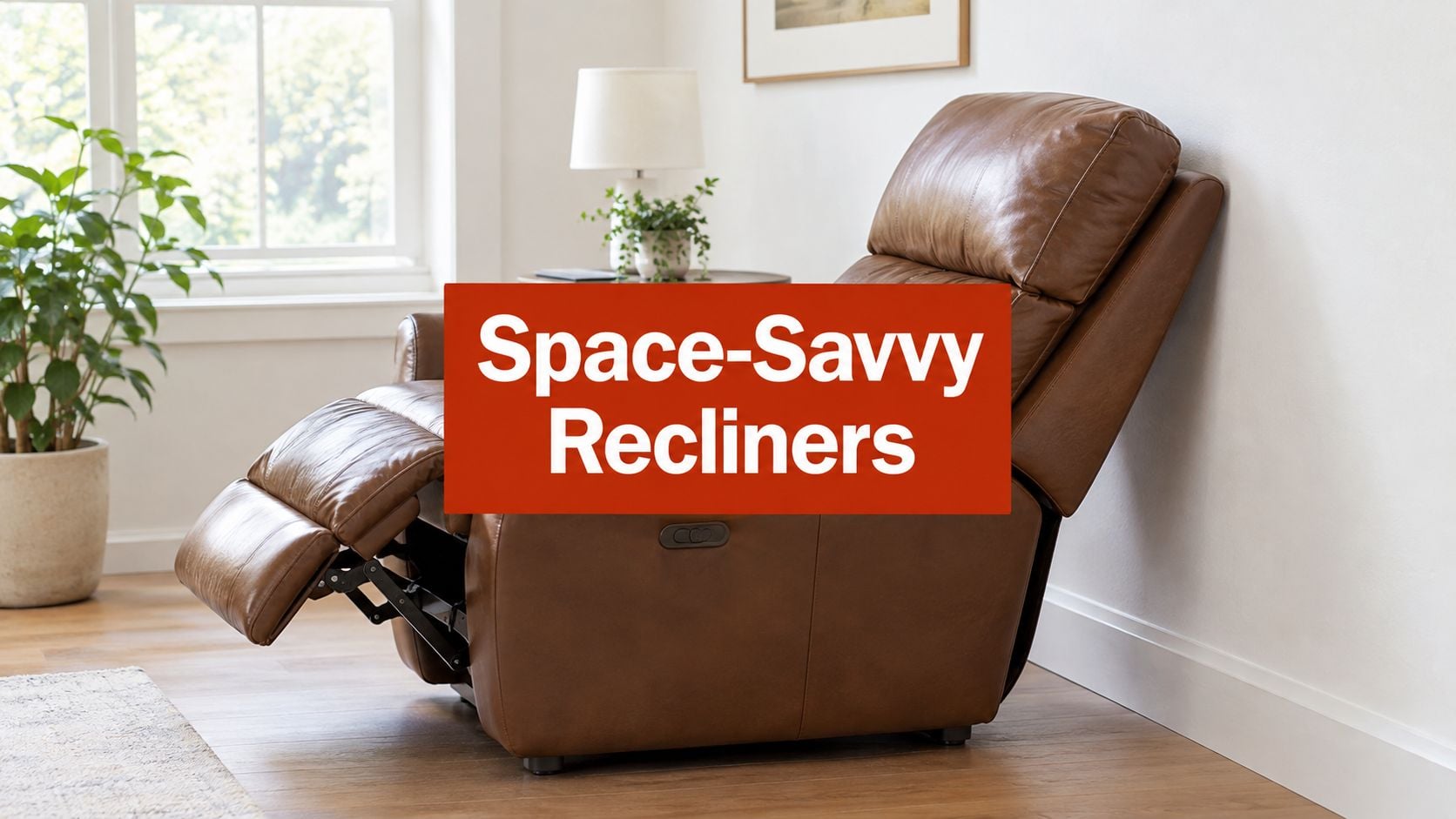
You've found the right leather recliner, but the room keeps objecting. The sofa sits close to the wall, the walkway is already narrow, and a traditional recliner appears to need more space behind it than your living room can spare. In a Brevard County home, that familiar tension between comfort, scale, and coastal practicality is where a wall-hugger recliner earns its place.
A leather wall-hugger recliner isn't a smaller chair. It combines a forward-glide mechanism with upholstery that must flex, breathe, and hold up through daily use, Florida sunlight, humidity, pets, and the occasional vacation-home shutdown. The right choice should feel fitted to your room and your body, not selected from a photograph.
Since 1939, Indian River Furniture has helped Space Coast homeowners make these decisions with a hands-on approach. Ownership personally tests every seat, sofa, and recliner for pitch, structure, and comfort before it reaches the 32,000-square-foot Rockledge showroom. That no-blind-ordering promise matters because the chair that looks elegant online may feel too upright, too deep, too firm, or poorly balanced once you sit in it.
When the Wall Stops Being the Enemy of the Recliner
A homeowner recently described the problem perfectly: she wanted the soft, custom look of leather and the raised leg support of a recliner, but every layout sketch left the chair crowding the sofa or interrupting the path to the lanai. Her room wasn't unusually small. It had to perform several jobs at once, as many Central Florida living rooms do.
A wall-hugger design addresses that problem through movement direction. Instead of sending the backrest deep toward the wall, the chair shifts its seat forward as it reclines. You still need room in front for the footrest and moving seat, but you reclaim valuable space behind the chair. That distinction makes the category useful in condos, bedrooms, apartments, compact living rooms, and vacation properties where every inch affects how the room feels.
The same principle applies to larger seating plans. A well-scaled recliner can give a coastal living room a more relaxed, layered character without forcing the rest of the furniture into a narrow corridor. Our guidance on sectional sofa layout rules for tight living rooms follows the same philosophy, measure the room around real movement, not just stationary furniture footprints.
Local showroom rule: A recliner should feel natural in the room when it's closed and usable when it's fully open.
Why leather changes the decision
Leather adds warmth, visual depth, and a tactile quality that fabric can't duplicate. A good hide feels supple under the hand, develops character gradually, and brings the quiet luxury of an heirloom piece rather than the temporary look of an accessory.
But the upholstery is only one part of the investment. The frame, joinery, cushion support, mechanism, seam placement, and footrest action all determine whether the chair remains satisfying after years of use. A genuine leather label alone doesn't answer those questions.
That's why this decision should happen in person. Sit upright, recline fully, close the footrest, and repeat the motion. Notice whether your head stays supported, whether your lower back remains comfortably engaged, and whether the leather bunches or pulls at the moving joints.
The useful buying sequence is straightforward: understand the mechanism, identify the leather category, measure the room in every operating position, account for Florida moisture and light, then establish a care routine. The result should be a comfortable, ergonomic, climate-aware investment, not a gamble based on appearance alone.
How a Wall Hugger Recliner Works
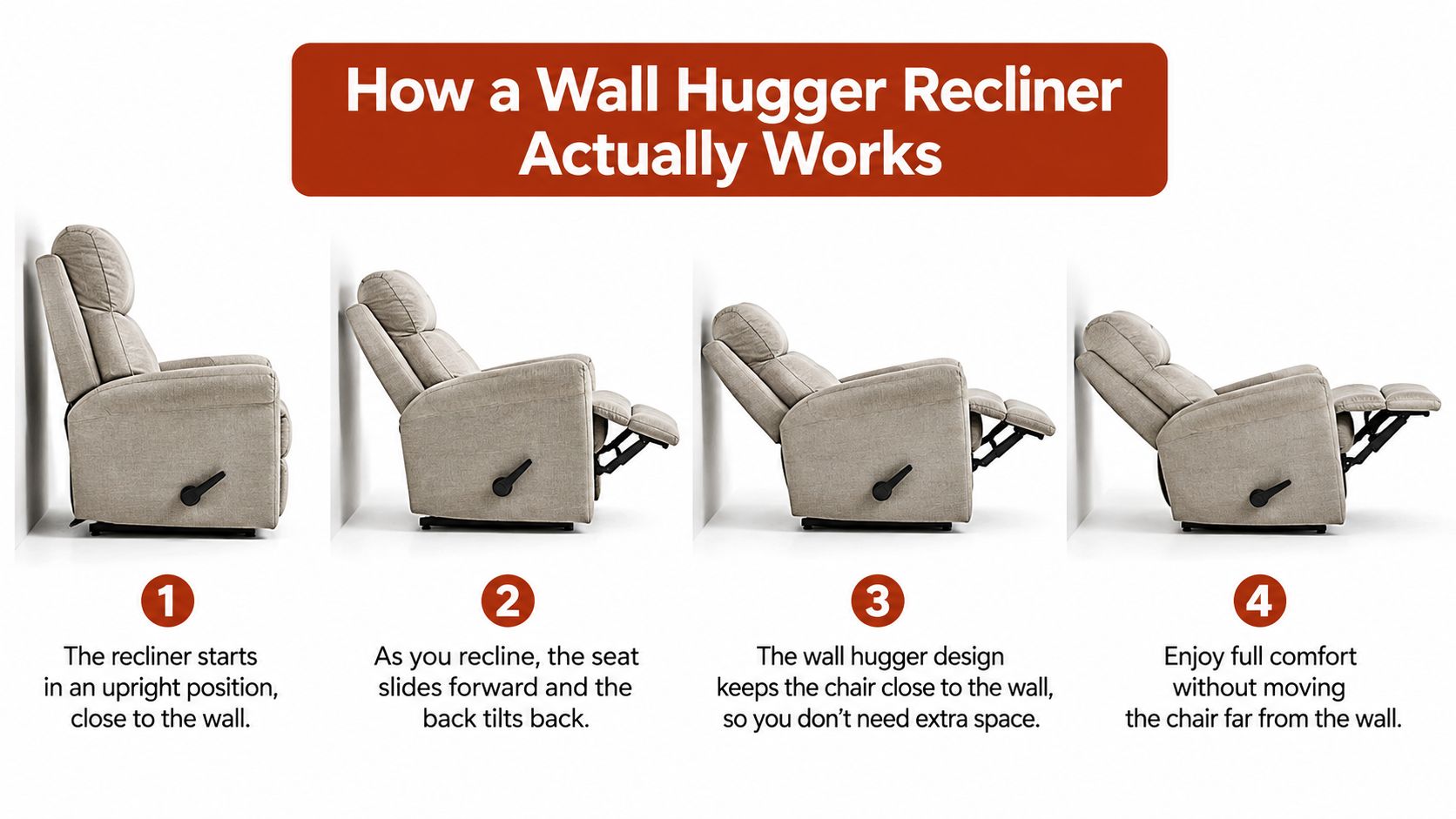
A wall-hugger recliner changes position in two directions at once. As the backrest reclines and the footrest rises, the seat glides forward instead of sending the full backrest toward the wall. That coordinated movement creates a smaller rear gap while preserving a comfortable reclining angle.
A conventional recliner uses more space behind the chair. A wall hugger redirects that movement through a linked track and pivot system beneath the seat. The back stays relatively close to the wall, while the seat advances and the footrest extends into the room. The clearance advantage comes from that forward travel, not from a smaller operating footprint.
The measurements that define the design
Typical wall-hugger models require approximately 3 to 6 inches of rear clearance, while many conventional recliners need roughly 12 to 18 inches. Those figures describe the chair's placement near the wall, not its full operating footprint. Use the selected model's specification as the final authority. Wall-hugger recliner planning guidance explains why both rear clearance and open depth must be checked.
Once fully open, a wall hugger can occupy approximately 48 to 56 inches of front-to-back depth, with some models reaching 60 to 68 inches. That forward movement can still affect a coffee table, walkway, or wall-mounted screen, even when the rear gap looks correct. Measure from the wall to the chair's furthest point with the footrest extended.
Manual and power models follow the same basic spatial logic. A manual chair starts through a lever or body pressure. A power chair uses a motor to coordinate the forward glide and recline, with controls that allow smaller adjustments to the backrest and footrest. Compare power reclining seating to see how control layouts and movement options vary.
In a Florida room, test the complete motion beside the furniture that will surround it. Humidity, bright sunlight, and coastal air make leather care important, but they do not change the mechanical requirement: the chair needs clear space in front and dependable support through every position. A Rockledge showroom that hand-tests each chair can reveal rubbing, hesitation, or awkward head support before delivery.
A long-running design with a smaller footprint
The reclining chair developed from late-1920s furniture making in Michigan and later evolved into upholstered motion seating. Wall-hugger construction applies that same basic purpose to tighter rooms: provide a usable resting position without requiring a large permanent gap behind the backrest.
The mechanism is only successful when it works in your room. Sit upright, recline fully, raise and lower the footrest, then close the chair. Hand-testing the movement and confirming white-glove delivery access are practical ways to determine whether the design will work in a Brevard County home.
Choosing Leather That Will Age Well
“Leather” identifies a material category, not a quality level. The hide's grain, surface treatment, location on the chair, stitching, and care requirements determine how it performs in daily use. For a wall-hugger recliner in Florida, inspect those details alongside the chair's movement, because repeated flexing and strong sunlight test the upholstery in different ways.
Full-grain leather retains the hide's natural grain structure and usually develops the most distinctive character with age. Top-grain leather also comes from the upper portion of the hide, but its surface may receive more correction for a consistent appearance. Corrected-grain leather uses sanding or pigmentation to reduce visible variation, creating a more uniform finish.
Split leather comes from a lower layer of the hide and may receive coating or embossing. A leather-match construction places leather on primary contact areas while using a coated or synthetic material on other panels. That can be a sensible choice, provided you know where each material appears. Check the sides, rear, footrest, and panels that flex as the recliner opens and closes.
Ask what the surface has been tested to endure
Published testing shows full-grain leather reaching roughly 20,000 to 30,000 Martindale cycles, a comparison figure rather than a service-life guarantee. Ask the manufacturer for the Martindale cycle result and the test method in writing. Results from different abrasion methods cannot be treated as interchangeable.
Before choosing a color, ask:
- What leather category is used? Full-grain, top-grain, corrected-grain, split, or a combination?
- What finish protects the surface? A pigmented or coated finish can provide a uniform appearance, while a less corrected surface shows more natural variation.
- What does the abrasion result measure? Request the method and result together, not an isolated number.
- Are all contact surfaces genuine leather? Check the seat, arms, footrest, back cushion, and side panels.
- What does the warranty exclude? Confirm how it treats sunlight, cleaning products, pets, seams, and mechanism wear.
Florida homes add practical stressors. Body oils, perspiration, sunscreen, pet contact, clothing friction, bright daylight, humidity, and coastal air can affect finishes differently from one room to another. Ask the showroom to open and close the chair repeatedly. Watch the seams, welt cords, and transitions around the footrest. The leather should flex without pinching, rubbing, or pulling sharply against the stitching.
A hand test reveals more than a quick glance. Run your palm across the broad panels, then inspect the sections that bend during operation. Uneven tension, rough transitions, or loose-looking stitching deserve an explanation before purchase.
Choose leather that can change gracefully, not upholstery that promises to remain untouched. Good material should retain comfort and sound workmanship while developing the patina associated with a well-used chair. For a broader comparison of leather versus fabric upholstery, relate the material choice to your room, routine, pets, sunlight, and coastal conditions. A Rockledge showroom that hand-tests the chair and provides white-glove delivery can confirm whether the leather and mechanism suit your Brevard County home before it arrives.
Measuring Your Room the Right Way
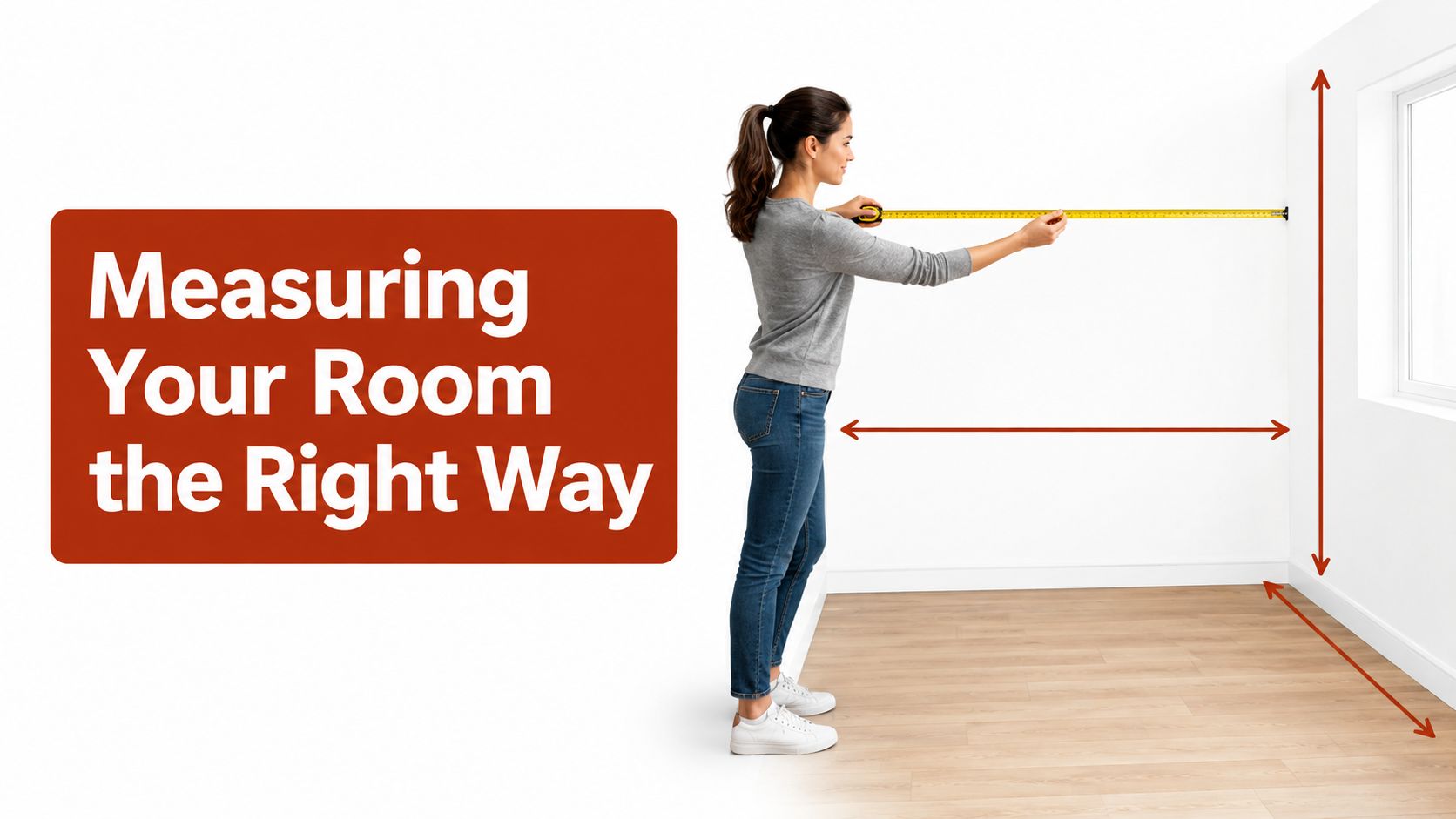
A wall-hugger can fit close to the wall and still crowd the room when it reclines. Measure the chair in three positions before you trust the floor plan. An upright measurement shows the starting footprint, not the space required for resting.
Mark the wall, baseboard, outlets, window trim, door swings, and nearby furniture. Record the chair's dimensions upright, fully reclined, and with the footrest extended. Rear clearance may be approximately 3 to 6 inches. From the wall to the front edge, a deployed chair may use approximately 48 to 56 inches, while some models reach 60 to 68 inches. Treat those ranges as planning examples, then follow the exact specifications for the model you choose. The furniture measuring guide helps organize the measurements before you visit a showroom.
Use the three-position test
- Upright position. Check the back, arms, and seat within the intended zone. Measure from the actual wall, including baseboards and projections.
- Fully reclined position. Mark the rearmost point of the back and the front edge of the footrest. This footprint determines whether the chair blocks the room.
- Footrest extended. Check the gap between the footrest and a coffee table, ottoman, media console, or walkway. A chair that fits neatly upright can obstruct the main route once open.
Test the side approach too. Someone using a walker, wheelchair, or another mobility aid may need a clear entry zone, reachable controls, and enough room to transfer from the side. The U.S. Access Board identifies 30 by 48 inches as a standard clear-floor-space dimension and limits reach depth to 25 inches at obstructed elements. These figures do not certify a residential recliner as ADA-compliant, but they provide useful planning benchmarks. Clear floor and reach-space guidance explains the dimensions.
Bring the room to the showroom
Photograph each corner, note ceiling features and wall-mounted screens, and bring the measured distance from the wall to the nearest walkway. Compare the specification sheet with the actual chair, especially near a sliding door, narrow corridor, or bright window.
Paper plans can hide circulation problems. Open the footrest and walk around it. Indian River Furniture offers complimentary in-house interior design consultations, helping Brevard County homeowners review placement, scale, upholstery, and traffic flow together. At the Rockledge showroom, hand-testing the recliner and arranging white-glove delivery provide a practical check that the chair will work in the room before it arrives.
What Florida Humidity Really Does to Leather
Genuine leather isn't a climate-control system. In Florida, the room's moisture level, airflow, cleaning method, and sunlight exposure can influence the chair's condition as much as the leather category itself.
The U.S. Environmental Protection Agency recommends keeping indoor relative humidity below 60%, ideally between 30% and 50%, because excess moisture supports mold growth. The agency also advises drying wet furnishings quickly, with wet materials generally dried within 24 to 48 hours to reduce mold risk. EPA guidance on mold, moisture, and the home provides the practical standard.
The vulnerable places aren't always obvious
A spill may soak into a seam, underside panel, cushion edge, or area behind the chair without announcing itself on the broad seat. A wall hugger's close rear placement makes airflow especially important, even though the design saves space. Leave the model's required operating clearance, avoid trapping the chair against a damp exterior wall, and inspect behind and beneath it after a leak, flooding event, or saturated cleaning.
Direct sun creates a separate problem. Strong light and heat can dry, fade, or discolor leather, particularly near west-facing windows and glass doors. Use curtains, shades, or thoughtful placement rather than assuming a protective finish makes the chair immune to the coastal environment.
Vacation homes need a more deliberate plan. A closed property may lose the daily ventilation and climate consistency that a primary residence receives. Before leaving for an extended period, confirm that air conditioning or dehumidification can maintain a stable indoor environment, and avoid leaving damp cloths, wet cleaning residue, or moisture against the chair.
For a broader explanation of indoor comfort and ways to save on cooling with right humidity, look for guidance that connects humidity control with both comfort and furniture care. The important point is simple: leather can be durable and still suffer when moisture remains trapped.
A Practical Care Routine for Coastal Living
A leather wall-hugger near a beach-facing door faces a steady mix of dust, sunscreen, body oils, and salty air. Small, regular cleanups protect the finish better than occasional aggressive treatment, especially in a busy Florida home.
Keep indoor humidity within the EPA's recommended 30% to 50% range, and condition the leather two to four times a year when the upholstery maker's care code allows it. Use only products intended for leather. For furniture-specific instructions, follow Indian River Furniture's real leather cleaning guidance rather than relying on a generic household cleaner.

Keep the weekly routine gentle
- Remove dust first. Vacuum seams and crevices with a soft attachment, then wipe broad surfaces with a lightly damp cotton cloth.
- Treat spills promptly. Blot instead of scrubbing. Use a damp cloth or distilled water only when the care code permits it, then let the area dry naturally.
- Condition with restraint. Apply a leather-specific product according to the maker's directions. Extra product can leave residue without improving protection.
- Protect the placement. Limit direct afternoon sun and keep air moving around the chair wherever its mechanism allows.
- Inspect movement areas. Open and close the recliner while checking for tackiness, cracking, rubbing, or pinched leather.
Central Florida's seasons call for small adjustments. Summer adds humidity and perspiration. Air-conditioned rooms can feel drier during cooler months, while a closed vacation home may sit unused for longer periods. After a storm or plumbing problem, inspect the rear, underside, seams, and floor contact points.
Avoid household solvents, shoe creams, polishing waxes, and saturated cleaning. A guide on how to clean and condition leather pieces supports the same practical rule: use material-specific products and handle the surface gently.
Stop experimenting if the leather stays tacky, develops a persistent odor, shows spreading discoloration, or becomes stiff despite appropriate care. Arrange professional upholstery attention, and keep the chair's care code available for whoever cleans or maintains it.
Making the Decision in a Showroom You Can Trust
The right wall-hugger recliner brings four decisions together: mechanism geometry, leather performance, room clearance, and climate care. You shouldn't have to guess whether those pieces will work together from a product photograph.
At Indian River Furniture's Rockledge showroom, the ownership team hand-tests every seat, sofa, and recliner before it reaches the floor. In the 32,000-square-foot showroom, you can compare pitch, lumbar support, footrest geometry, seat depth, control placement, and leather hand in one visit. That is the practical value of no blind ordering. The chair has been evaluated as furniture, not just listed as merchandise.
Sit upright first. Check whether your feet meet the floor comfortably and whether the seat supports your legs without pressing behind the knees. Then recline fully, listen for smooth movement, feel for even support, and look at the leather where the seams flex. If the chair will serve an older adult, someone using mobility aids, or a vacation rental, test access and controls with the same seriousness as comfort.
The in-house design team can also help resolve placement, scale, and upholstery decisions through a complementary interior design consultation. The uniform white-glove delivery team handles unboxing, inspection, and room setup, which is especially useful when a substantial recliner must pass through Florida doors, elevators, tight turns, or condo corridors. Delivery within the service area is available for a standard $99 fee, according to the business information provided by the retailer.
Visit the Rockledge showroom with your room measurements and photographs. Sit in several leather wall-hugger recliners, test each operating position, discuss humidity and sunlight, and let the design team help you choose a chair that feels suited to your home. That is how a recliner becomes an enduring coastal investment rather than an attractive piece that never quite works.
Bring your measurements to Indian River Furniture in Rockledge and experience the chairs in person. Ask the design team to compare leather categories, test the fully reclined footprint, and plan the delivery path before you commit.