Schedule your Complimentary Design Consultation


Custom Dining Room Chairs: A Practical Order Guide

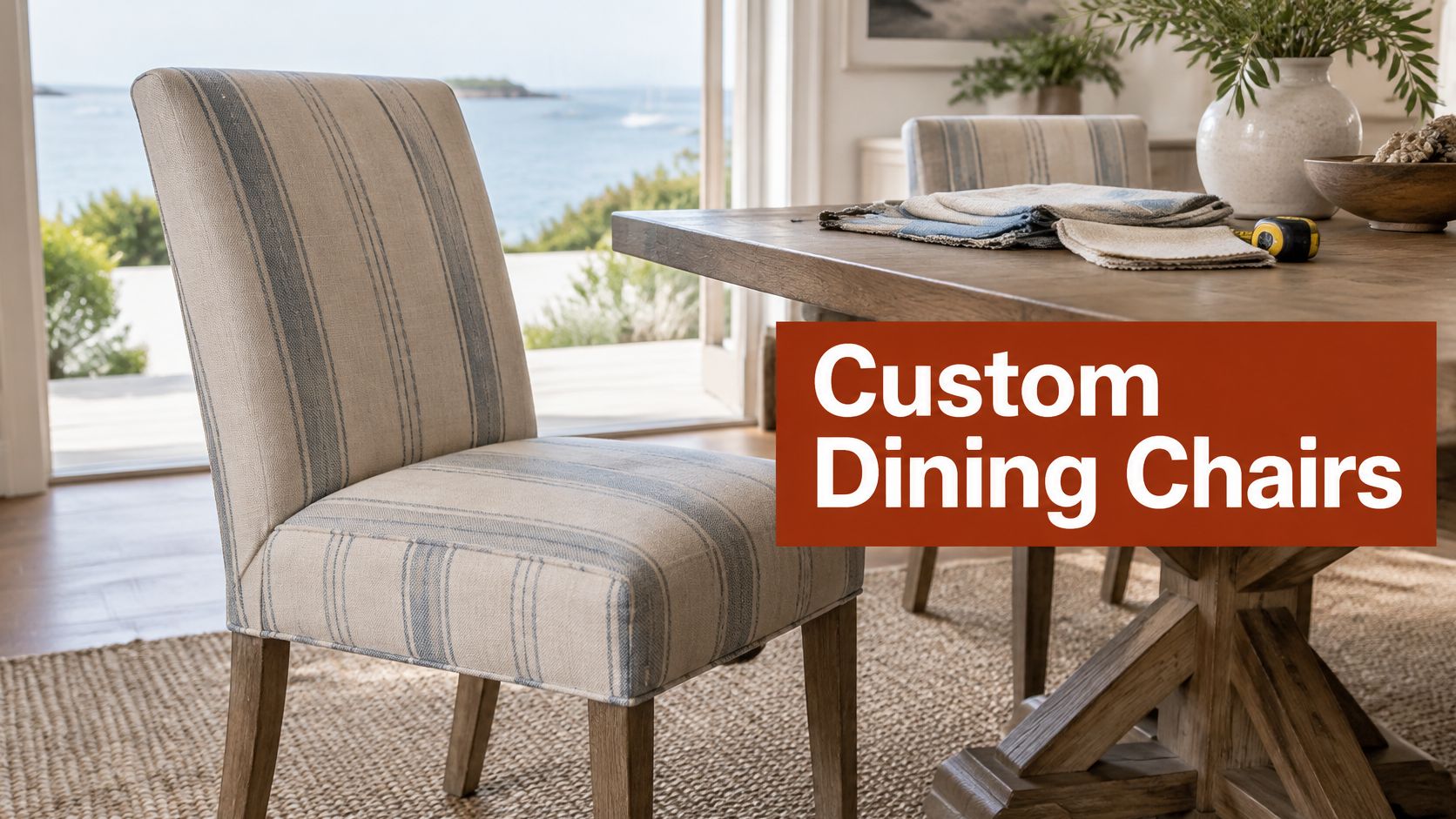
Dinner's on the table, the windows catch the last Space Coast light, and someone has to turn sideways to squeeze into a chair. Another guest sits forward because the cushion is too deep, while an armrest catches beneath the table apron. The room looks inviting, but the seating doesn't quite work. Custom dining room chairs should solve those everyday frustrations, not just introduce another fabric choice.
Start With How the Chairs Will Be Used
A dining table that handles Tuesday homework and Saturday seafood suppers needs chairs suited to both. Regular meals call for support that stays comfortable over time, while occasional holiday seating may prioritize easy storage or matching a set. Vacation-rental owners also need chairs that welcome unfamiliar guests and are straightforward to inspect and maintain between stays.
Customization works best as a set of connected choices: scale, support, construction, finish, and covering. The Furniture Today/Strategic Insights survey distinguishes interest in custom ordering from completed purchases. The practical takeaway is that customization should offer concrete decisions, such as how the chair supports a sitter and how its frame and covering suit daily use.
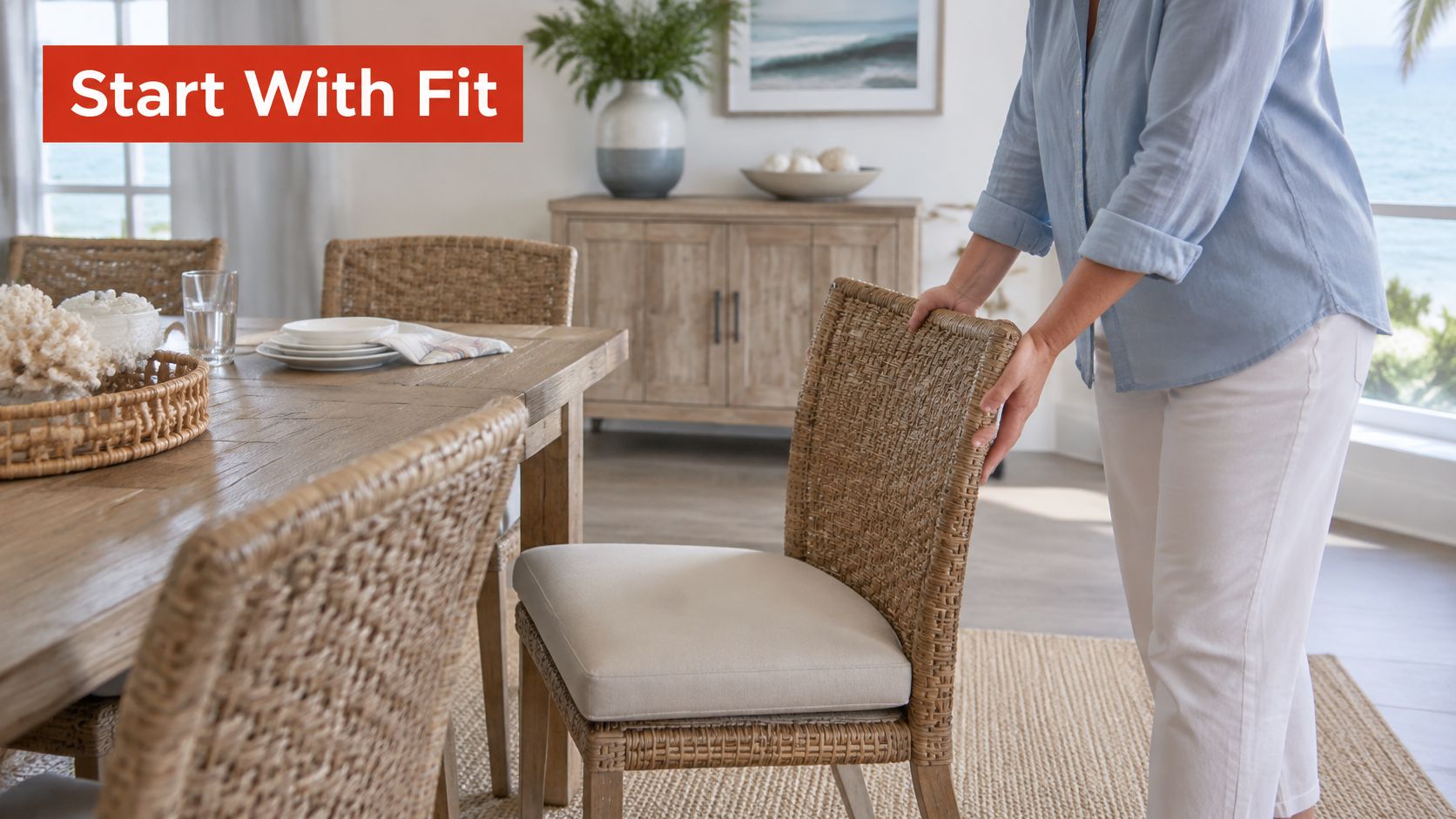
Give the order a practical starting point
Start with the people and routines the chairs must serve. Then connect those needs to the chair's structure and materials:
- Set the use case. Note whether the chairs serve daily meals, guests, or rental turnover.
- Choose construction for that use. Consider the frame, joinery, finish, and upholstery as parts of one specification.
- Clarify the maker's process. Ask what approvals are needed and how production is handled.
- Check comfort before production. Confirm the seat's pitch and support in person.
Explore coastal dining room furniture with those practical requirements in mind. A room photograph can suggest a style, but the chair still needs to suit its sitters and everyday care. A glued-and-pinned mortise-and-tenon joint, for example, gives you a specific construction detail to ask about when discussing durability.
Measure the Table and the People Who Sit
Measure before choosing a style. Use a tape measure, a notepad, and photographs taken from the side and underneath the table. Record the dimensions of the furniture you own rather than assuming a dining chair will fit because its description says standard height.
Dining chair fit measures
The dimensional references below come from an academic evaluation of dining furniture published in Koridor, which reports seat-height references of about 40–45 cm, including a 43–46 cm comparison, seat-depth references extending from 40–48 cm, seat widths of 42–50 cm, and backrest references spanning 38–50 cm.
| Fit point | Reference range | What goes wrong | Check before ordering |
|---|---|---|---|
| Seat height | About 40–45 cm; one comparison 43–46 cm | Feet dangle or knees meet the apron | Sit with feet flat and check knee angle against the apron |
| Seat depth | About 40–45 cm; some references 40–48 cm | Shallow seats lose thigh support; deep seats force a slouch | Leave a small gap behind the calf when sitting upright |
| Seat width | About 42–50 cm | Narrow seats crowd hips through a long meal | Test place settings and chair movement; a hypothetical layout might start with about 24 in of table edge per place |
| Backrest height | About 38–50 cm | An unsuitable back leaves the sitter unsupported or contacts the table when moved | Sit upright and check the top rail against the tabletop |
| Rear clearance | Enough for an occupied chair and the intended walking route | Pulled-out chairs block the room | Measure the chair pulled out, not tucked in |
These are reference ranges, not a universal ergonomic prescription. Cushion compression, posture, mobility, and the table itself all affect the result.
Measure the table's working space
Record tabletop height from the floor, then measure separately to the underside of the apron. The apron is the rail beneath the tabletop, and it may be the first obstruction your knees or chair arms encounter.
Next, measure each usable seating edge between legs or other obstructions. A long tabletop doesn't necessarily provide an equally long run of usable chair space if substantial legs occupy the corners.
Pull an existing chair out as though someone were leaving the table. Mark its rear position with painter's tape, then walk the route to the kitchen, patio door, or adjoining room. Measure that working footprint, not just the tidy arrangement with every chair tucked in.
For example, a hypothetical room might allow 36 inches behind a seating edge, then need 42–48 inches along the route people use behind occupied chairs. Those are layout assumptions to test in that room, not a substitute for checking the actual chair and walking path.
Use the guide to dining table heights to distinguish table categories before coordinating a new seat.
Fit the person rather than the average
The relevant body measurements sound technical, but their purpose is simple. Popliteal height relates to the distance beneath the knee, thigh length helps establish usable seat depth, hip breadth informs seat width, and seated elbow height helps evaluate the relationship between arms and tabletop.
Say a household has a 30-inch table and a shorter adult who prefers sitting upright. A generously deep chair may look proportionate beside that table, yet force the sitter to choose between back support and feet resting comfortably on the floor. Changing the upholstery won't correct that mismatch.
Practical rule: Test the chair with your back supported and your feet settled. Don't judge fit while perched on the front edge.
Armchairs can work particularly well at the table ends, provided their arms clear the apron and their outside width fits between the table legs. Don't assume matching host and side chairs have identical usable seat dimensions.
The same measure-before-ordering discipline applies elsewhere in a home. For households also planning guest accommodations, the Florida Bunk Beds measurement guide is a useful companion resource for thinking carefully about furniture dimensions and surrounding space.
Bring this short record to the showroom:
- Table measurements: Top height, apron clearance, leg positions, and usable seating edges.
- Movement space: The chair's pulled-out depth and the route behind it.
- Regular sitters: The tallest and shortest people who use the table often.
- Access needs: Whether anyone needs arm support or an easier sit-to-stand pitch.
How to Specify a Custom Dining Chair
A useful order describes what the maker must build, not just how the finished room should feel. Keep your choices on a single specification sheet so a finish sample, upholstery selection, and chair drawing can be checked against the same record.
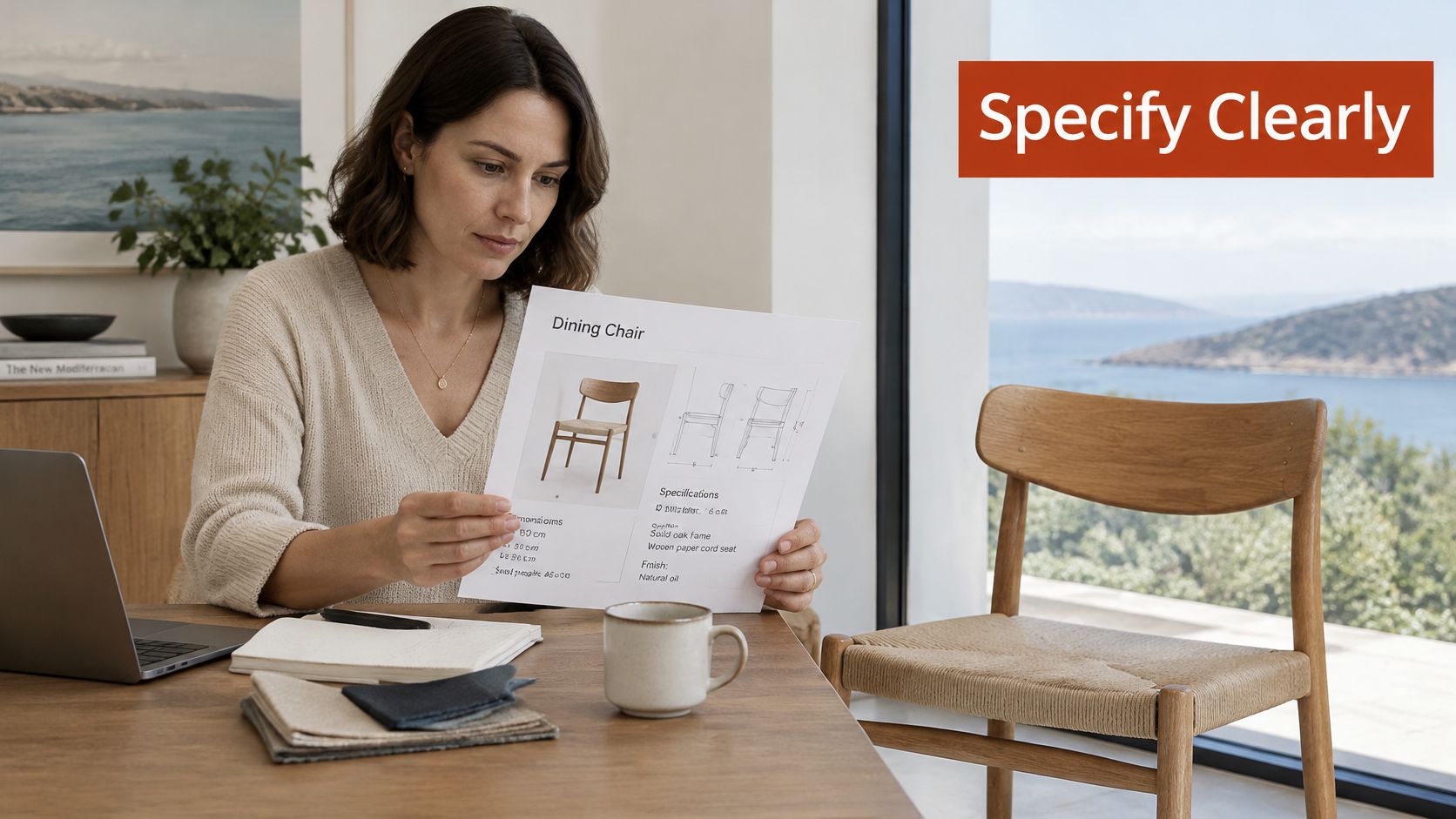
Establish the form and structure
Describe the household and frequency of use.
Write down whether the chairs will serve a family table, a formal room, or a vacation-rental dining space. Include habits that affect construction and maintenance, such as children climbing into seats, guests moving chairs between rooms, or frequent gatherings. A maker can respond more usefully to those details than to a request for something durable.Name the room's existing character.
Coastal can mean softly textured upholstery and pale wood, but it can also include deeper timber tones, fitted leather, or traditional turned details. Note the table's visual weight, nearby cabinetry, and the view from adjoining rooms. A substantial upholstered back can feel welcoming around a large table yet visually crowd a compact dining area.Lock the fit dimensions and chair types.
Record the approved seat height, usable depth, width, back height, and arm or armless configuration. Ask which dimensions the chosen model allows you to change. Customizable doesn't always mean made to any dimension, and an upholstery choice shouldn't be mistaken for a fully bespoke frame.Identify the frame and its demanding details.
Specify a solid hardwood frame where appropriate to the selected design, then identify components that deserve closer scrutiny. Slender legs, stretchers, swivel mechanisms, and upholstered seat attachments each create different construction questions. Ask how those parts are joined, supported, and serviced rather than treating wood species alone as proof of quality.
Make the surface choices traceable
Choose the finish as a complete surface system.
Look beyond stain color to grain visibility, sheen, edge treatment, and the approved cleaning routine. Examine a physical finish sample beside your table or a representative photograph in natural light. Record the finish code so a verbal description such as warm driftwood doesn't become the production instruction.Select the covering for actual contact.
Compare performance fabric and genuine leather for texture, breathability, food exposure, sunlight, and care. Touch the material with your forearm as well as your hand, especially if the chair has upholstered arms. Record the fabric cleaning code or leather-specific care instructions and ask whether the proposed cleaner is approved for that exact covering.Approve a physical sample and document the sit-test.
A memo sample can establish color and texture, but it can't confirm seat pitch. Sit in the intended model where available, and ask what differs if the showroom version uses another cushion or covering. Attach a clear approval slip before the order is released.Sample approval record
Approval item What to record Chair model Exact model and arm or side-chair version Seat height Approved dimension and whether measured loaded or unloaded Seat depth Approved usable depth Finish code Manufacturer's identifying code Fabric cleaning code Code for the selected textile, or the leather care specification Sample sitter Name of the person who sat in the approved sample Approved differences Any documented changes between sample and production chair Confirm the build sequence in writing.
Establish who authorizes samples, when the order enters production, and how in-home placement will be scheduled. Use the custom-order starting guide to prepare questions before the consultation. Any unresolved choice should remain visibly open on the specification rather than being left to assumption.
Apply the specification to a real room
For a hypothetical Cocoa Beach condo, a household might choose two host armchairs and four side chairs. The host chairs could introduce a more enveloping back, while the side chairs preserve easier movement along the balcony route. Coordinated finishes would connect the group without requiring every silhouette to match.
A family furnishing for long Sunday meals might instead select a slightly firmer seat after discovering that a plush sample encourages them to sink too far from the table. Neither choice is more luxurious. The right choice supports the people and the room.
The maker builds from the specification sheet, not the mood photograph.
Choose Frames Finishes and Coastal Fabrics
After a humid summer or a meal with sunscreen on your hands, a dining chair's finish and covering need to suit the care you can realistically provide. Choose materials by how the chairs will be used, then check their care instructions before settling on appearance.
Solid hardwood responds to indoor humidity. Ask where the chairs should be placed and keep the indoor environment consistent. For coastal rooms, placement and steady indoor conditions help account for seasonal humidity changes.
Performance fabric duty for dining chairs
The Fabric-Fabric upholstery guide gives approximate Wyzenbeek abrasion bands of 25,000–30,000 double rubs for residential use, 30,000–50,000 for heavy family use, and more than 100,000 for commercial or contract settings.
| Duty | Double rubs | Best dining use | Still verify |
|---|---|---|---|
| Everyday home | About 25,000–30,000 | Light daily meals | Cleaning code and colorfastness |
| Active household | About 30,000–50,000 | Children, pets, and frequent gatherings | Stain and snag performance |
| High-traffic or rental | More than 100,000 | Vacation homes and frequent turnover | Fading, approved cleaners, and weave |
Use the high-traffic row as the minimum target for a rental with frequent turnover. Abrasion rating measures rub durability; check stain, fade, and snag performance separately. A high rub rating alone does not describe how a textile handles spills, sunlight, or pulled threads.
A tightly woven performance textile can have a soft, textured feel, and may simplify spill cleanup when its treatment and care instructions support that use. Genuine leather has a different feel and can develop patina, with leather-specific care. The upholstery materials guide can help you compare these covering types.
- Feel it: Rub the sample between your fingers to assess its texture.
- Test the care plan: Consider how you would handle spilled iced tea.
- Match the duty: Choose a covering for the room's daily use and care routine.
Questions Worth Asking Before You Order
Begin with the approval timeline rather than a promised arrival date. Ask for the current sequence in writing: design consultation, sample and finish approval, production, delivery scheduling, and placement. Confirm what pauses progress, including an unavailable covering or a late approval.
A useful timeline names the person responsible for each decision. It should also explain how you'll hear about changes, rather than leaving you to discover that an unresolved finish sample has held the order.
Ask what connects the frame
Craftsmanship is easiest to discuss when you can identify the connection between the leg and rail. A BioResources study of beech-wood furniture frames reported average bending-moment capacities of 204.29 Nm for glued mortise-and-tenon joints and 153.53 Nm for dowel joints, with a reported 99.99% reliability figure for the tested mortise-and-tenon frames.
A separate BioResources experiment on T-type furniture joints found approximately four times the withdrawal-force capacity for mortise-and-tenon connections compared with dowel joints under its test conditions, attributing the difference to the larger bonding surface.
Those findings support specific questions, not a guarantee for every chair. Wood species, joint geometry, adhesive, fit, and loading direction still matter. A familiar joint name doesn't excuse poor execution.
Show me the joint, not only the finish.
Ask the maker or design consultant:
- Leg-to-rail connection: Is it a fitted mortise and tenon with close-fitting shoulders, or does it rely principally on dowels and hardware?
- Material system: What wood, adhesive, and finish are used together?
- Repair pathway: What happens if a connection loosens after extended use?
- Upholstery maintenance: Can cushions be refreshed, and are replacement coverings available?
- Moving components: How are swivel bases, slender legs, and seat attachments evaluated for the intended setting?
If you're also commissioning a custom hardwood dining table, request compatible care guidance for both pieces. Similar-looking finishes don't necessarily accept the same cleaning products.
Separate strength from repeated-use durability
A static weight claim doesn't tell you how a chair will respond to repeated sitting, shifting, or leaning. The ISO 7173 seating-test standard includes static loading and cyclic durability methods, making it a useful reference when asking what testing supports a chair's intended use.
Request documentation identifying the tested model, configuration, and use category. Where a proposed custom change affects the structure, ask whether the available results cover that change or whether a prototype evaluation is needed.
Vacation-rental owners should make the operational requirements explicit:
- High-use suitability: Confirm that the intended use category fits frequent guest turnover.
- Replaceable parts: Identify available glides, cushions, hardware, and mechanism components.
- Guest care note: Provide brief, covering-specific instructions for spills and routine handling.
Finally, request a written quote that matches the approved sample. The scope includes frame construction, fabric grade or leather selection, finish complexity, dimensions, and chair quantity. Treat that document as another record of the build, with substitutions requiring your approval rather than being assumed.
Confirm Comfort at the Rockledge Showroom
A chair can look right beside the table and still feel wrong after a full meal. At Indian River Furniture in Rockledge, bring your table measurements, a room photograph, and a clear idea of how the chairs will be used. Established in 1939, the store serves Brevard County, the Space Coast, and Central Florida from a 32,000-square-foot showroom arranged in curated coastal vignettes.
In person, you can judge the whole chair, not just its fabric. Notice how an upholstered back occupies space, feel where the rail meets the covering, and compare a refined side chair with a roomier host armchair.

Make your own sit-test the final approval
The no-blind-ordering promise starts with showroom selection. The ownership team hand-tests every chair, sofa, and recliner for pitch, structural integrity, and comfort before it reaches the floor. Use that screening as a starting point, then check how the chair fits your body and table.
Sit as you would during dinner, with your back supported and hands forward as if reaching for a place setting. Notice whether the seat lets you stay relaxed and upright. Test these details:
- Compare chair roles: Try a side chair and host armchair in the same finish to see how their proportions work together.
- Stay seated: Spend several minutes in each chair and check whether its pitch continues to feel comfortable.
- Check transitions: Stand and sit again, then see whether the arms help you rise and leave enough room at the table.
- Match the approved build: Use the earlier specification table to confirm the model and selected materials before approval.
Use design help to resolve the whole room
A complimentary in-house interior design consultation can help relate chair scale to the table, nearby storage, and other finishes in the room. Bring a flooring sample or photographs of adjacent surfaces. Comparing wood tones, performance fabrics, and genuine leathers side by side makes it easier to judge how they work together.
Ask to see the proposed materials together. A woven neutral can look crisp beside one finish and muted beside another; leather can add a smooth surface among textured coastal elements. Consider the room's everyday use as well as its appearance, so the chosen materials and chair shape suit regular meals.
For orders ready to be delivered, the uniform, in-house white-glove delivery team serves the store's service area for a flat $99. Delivery includes unboxing, inspection, and placement in the dining room. Confirm access arrangements and the final chair positions when scheduling.
Approve the chair only after it clears the table apron, supports your back at dinner pace, and fits the room's daily use.