Schedule your Complimentary Design Consultation


Rocker Sofa Chair Guide: Motion, Materials and Fit


You've found a chair that looks right beside the sofa, but you're still wondering how it will feel after an evening of reading. Will the rocking motion stay gentle? Will the upholstery feel comfortable during a humid Florida afternoon? And can everyone in the household sit down and stand up comfortably?
A rocker sofa chair deserves the same attention as any long-term furniture investment. Its proportions, moving parts, upholstery and placement all matter. The right choice brings relaxed comfort to the room without making daily movement, cleaning or furniture arrangement more complicated.
What a Rocker Sofa Chair Is and Where It Came From
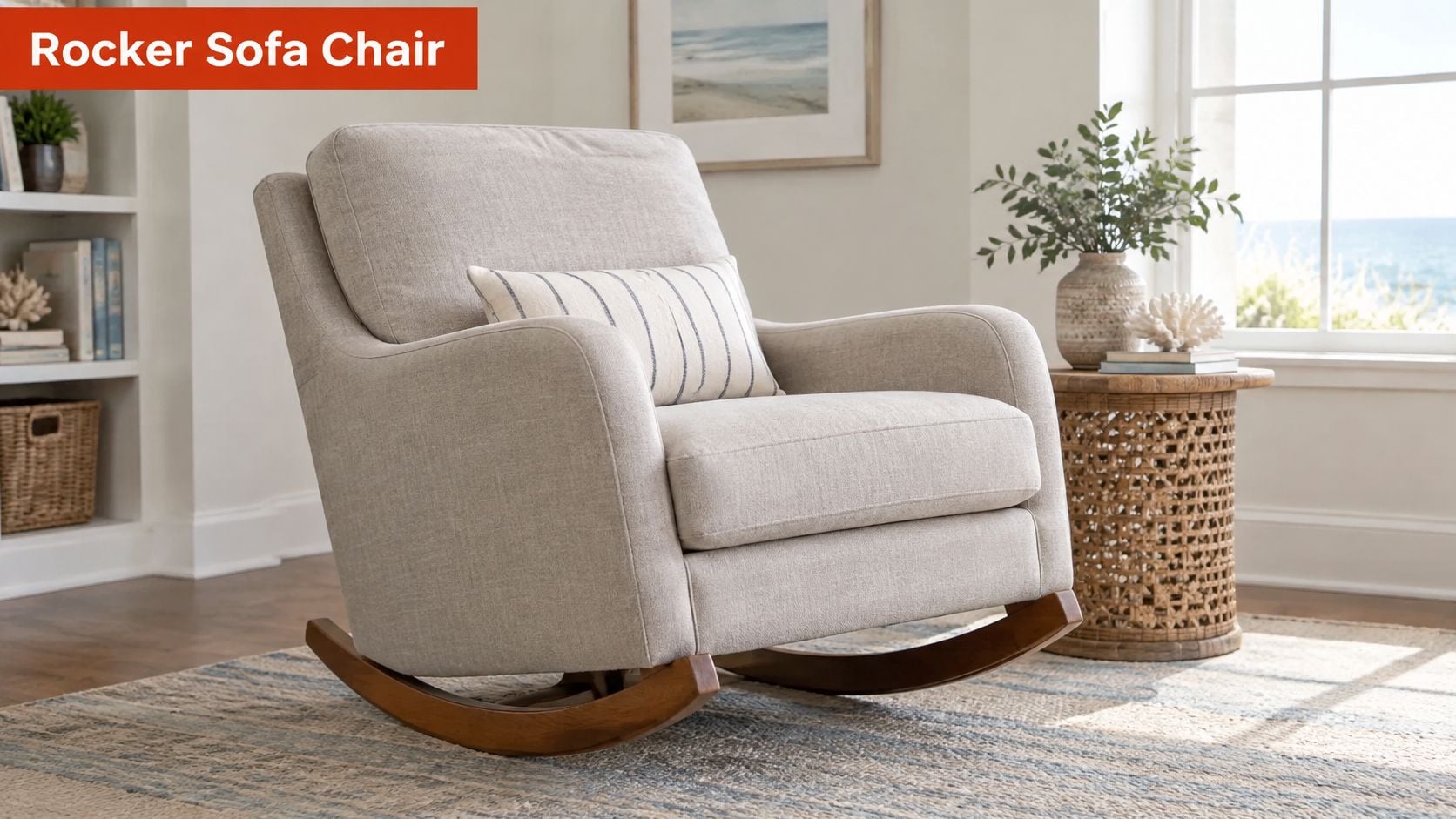
A rocker sofa chair is an upholstered seat with the silhouette of a sofa or lounge chair and a base that allows rocking. Some use curved runners; others conceal the motion within a pivoting frame. Many models also recline or swivel, though those functions aren't part of every design.
Think of a traditional porch rocker with the cushioned seat, upholstered arms and supportive back of a living-room chair. Beside a sofa, it offers a personal place to settle in while keeping the familiar, gentle rhythm of rocking.
From Wooden Runners to Upholstered Comfort
The history of the rocking chair traces its origins generally to early eighteenth-century North America, where makers attached curved rockers to ordinary chairs; arms became more common by the early nineteenth century, and the Boston rocker dominated American production from approximately 1830 to 1890, with many examples mass-produced after 1840. Today's upholstered motion seating preserves that basic relationship between balance, support and movement.
That lineage matters when you shop. A generous cushion can feel inviting immediately, but it can't compensate for awkward rocking geometry or a poorly supported back. Look for craftsmanship that brings the motion and upholstery together rather than treating them as separate attractions.
Indian River Furniture was established in 1939 in Rockledge, Florida. Our long-standing commitment to Brevard County and Central Florida shapes a practical approach to furniture: appreciate its character, then make sure it works for the people who'll use it.
How Rocker Sofa Chairs Compare to Recliners and Sofas
Pull a recliner and a rocker sofa chair into the same corner and the difference shows in seconds: one tilts its back and legs, the other sways forward and back on its base. Upholstered silhouettes can disguise that difference, and plenty of models combine both mechanisms in a single frame.
Rocker sofa chair, recliner and standard sofa compared
| Feature | Rocker sofa chair | Recliner | Standard sofa |
|---|---|---|---|
| Motion | Gentle fore-and-aft rocking, often with swivel | Reclining, manual or power | None |
| Footrest | Usually none or a fixed step on a non-reclining rocker; rocker recliners add an extending footrest | Extending footrest | None |
| Typical mechanism | Curved base or pivot frame | Lever or power reclining mechanism | None |
| Clearance needs | Manufacturer-specified rocking path behind and beside | Space for full recline plus footrest arc | Standard placement against the wall, subject to trim and upholstery protection |
| Best for | Calm repeated rocking for reading, feeding or unwinding | Full leg support and relaxed reclining | Shared seating and conversation |
Decide Which Movement You Need
A rocker isn't automatically a recliner with another feature added. Check whether the model has a footrest, whether rocking stops when it reclines, and whether the swivel operates in every position. These details affect how naturally you can change from reading to conversation.
The fit question runs deeper than features. Rocking is self-directed: the chair moves because you move, and it settles when you settle. For older users or anyone who likes to control the pace of motion, that responsiveness matters. A power recliner changes position on a motor's schedule and holds it, which suits tired legs better but demands more from the user getting in and out. In humid Florida seasons, a simpler mechanism also means fewer moving parts exposed to coastal air.
Swivel can be particularly useful when a chair serves more than one view. A seat beside the main sofa might turn toward the television, then toward guests without needing to be dragged across the floor. That convenience still requires an unobstructed turning area.
For a broader look at proportions and silhouettes, Enky Journal offers a way to explore sofa and armchair designs. Keep the visual comparison separate from the mechanical one: a chair fitted to the body can contain substantial motion hardware, while a richly cushioned chair may be entirely stationary.
Match the Chair to Your Routine
Choose rocking when you enjoy repeated, self-directed movement. Choose reclining when supporting your lower legs is the priority. Choose a standard sofa when shared seating, stretching out together and conversation matter most.
Our rocking recliner and loveseat guide can help clarify overlapping motion-seating terms before your visit. Confirm the exact mechanism and manufacturer-specified operating space rather than making assumptions from the product name.
Practical rule: Buy the motion you enjoy using, not the longest list of functions.
Where a Rocker Sofa Chair Suits Your Home
In a nursery, quiet movement matters more than an elaborate mechanism. In a living room, the same chair needs to relate comfortably to the sofa, nearby tables and television. A coastal cottage calls for an airy appearance, but that relaxed mood shouldn't come at the expense of practical care.
Matching a rocker sofa chair to the setting
| Setting | Motion priority | Features to check | Placement note |
|---|---|---|---|
| Nursery | Gentle, steady rocking | Stable base, smooth glide, washable covers | Keep the rocking path clear of the crib and cords |
| Living room | Relaxed reclining and rocking | Seat depth, arm support, cushion firmness | Plan around walkways and the television |
| Coastal cottage | Relaxed rocking with an airy feel | Breathable fabric, sun resistance, moisture-tolerant frame | Keep away from direct sun and damp walls |
| Older adult or limited mobility | Controlled, easily stopped motion | Easy controls, stable footrest, standing support | Allow transfer clearance and seek professional advice |
| Vacation rental | Durable, frequent use | Reinforced joints, easy-clean fabric, documented warranty | Protect controls from spills and overloading |
Make Accessibility Personal
Power operation doesn't automatically make a chair accessible. IndexBox's U.S. living-room recliner market reporting links demand for powered seating with easier operation, adjustable support and aging demographics, but individual fit still needs a hands-on assessment.
Ask whether the occupant can operate controls one-handed without gripping tightly, rise securely and stop the rocking easily. A rocker recliner isn't a lift chair: reclining adjusts lounging position, while a lift function assists the transition toward standing. Seek professional medical advice when mobility or balance limitations have been diagnosed.
Give the Chair a Useful Place
For open rooms, our furniture arrangement guidance helps you consider seating groups without interrupting traffic. Pair that layout with comfortable illumination; Golden Lighting's a homeowner's guide to overhead lighting is a useful planning companion.
We serve Brevard County and Central Florida from Rockledge, with design help that can focus on a single accent chair or full-home furnishings.
Materials and Upholstery Built for Florida Living
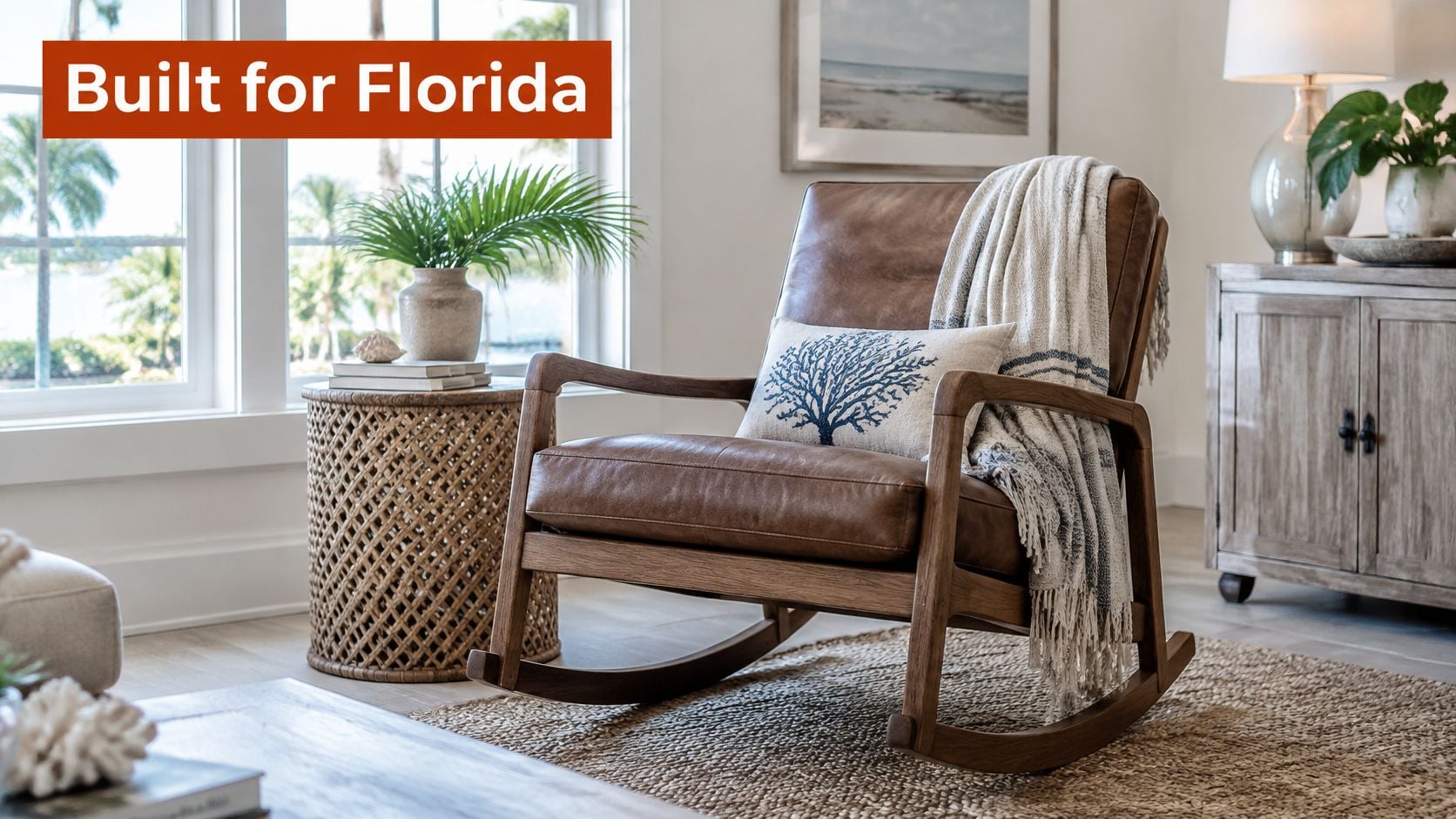
Florida rooms can alternate between dry, air-conditioned hours and humid stretches. Wood, leather, textiles and finishes absorb and release moisture, so material selection needs to account for more than the color of a swatch.
The Museum of Florida History's wood-care guidance explains how moisture fluctuations can stress joints, weaken fibers and damage finishes, and recommends household relative humidity between 35% and 65% for preservation. For a moving chair, that makes stable indoor conditions relevant to both appearance and structural comfort.
Compare the Surface and the Structure
Upholstery and frame materials compared
| Material | Feel | Strengths | Care considerations |
|---|---|---|---|
| Performance fabric | Soft, woven, familiar | Specified stain resistance, colorfastness and easy cleaning | Check weave density, breathability and the actual care specifications |
| Genuine leather | Smooth, supple, initially cool to the touch | Long life with appropriate care, wipes clean, develops patina | Can dry and crack in very dry rooms; condition as directed for the leather finish |
| Velvet | Plush, dense pile | Rich appearance, warm hand | Shows crushing; clean gently |
| Linen blend | Crisp, breathable | Airy feel in humid weather, relaxed look | Can wrinkle and show stains; choose a tight weave |
| Boucle | Nubby, textured | Soft and distinctive | Loops can snag; vacuum with care |
| Solid hardwood frame | Heavy, firm | Strength and joint stability with sound construction | Maintain stable indoor humidity and inspect joints |
Performance fabric is a starting category, not a complete specification. Ask what the particular textile resists and how it should be cleaned. Rub the sample gently with your palm, flex it over a cushion edge and notice whether the weave feels breathable or heavily coated.
Leather deserves equally specific questions. A protective finish can simplify everyday wiping, while a more natural surface may show marks and develop a stronger patina. Use only cleaning and conditioning products approved for that leather, rather than assuming every genuine leather needs the same treatment.
Protect Craftsmanship Through Placement
Solid hardwood frames and time-tested joinery provide a dependable foundation, but no upholstered indoor chair should be treated as weatherproof. Keep it away from damp walls, persistent condensation and direct sun. Studio Contour's guidance to protect upholstery from monsoon dampness offers a useful perspective on moisture-conscious care, though Florida homes still need their own indoor climate management.
Our Florida-focused material selection emphasizes performance fabrics, genuine leathers and solid hardwood construction for active coastal living. Our upholstery materials guide can help narrow the choices before you visit.
In the Rockledge showroom, you can feel leathers, touch solid hardwoods and compare cushion firmness. That tactile comparison reveals distinctions a photograph can't convey.
Choose texture for the way you live, not just the way it catches the light.
Choosing the Configuration, Arms and Finish
Start with configuration before choosing fabric. A rocker without swivel gives a straightforward fore-and-aft rhythm; a swivel rocker lets you turn toward different parts of the room; a rocker recliner adds a changing back angle and extending footrest. Each creates a different seated experience and operating footprint.
Arm shape deserves just as much attention. Low, open arms suggest a porch-like silhouette and keep the chair visually light, while deeper upholstered arms offer a broader resting surface for reading. A tall back may support your head, but only if its contour meets your body rather than pushing your neck forward.
Tailor the Support Before the Surface
Use these decisions to narrow the options available on each model:
- Cushion response: Compare how far you settle into the seat and how easily you shift position. A firmer core with a softer wrap can offer a different balance from an entirely plush cushion.
- Arm position: Rest your forearms naturally rather than lifting your shoulders to reach the arms.
- Back contour: Check lumbar contact and head support in your usual reading or television position.
- Visible frame: Coordinate exposed wood with existing furnishings without requiring every finish to match exactly.
Don't treat firmness alone as proof of longevity. Cushion construction, the supporting deck and your daily use all contribute to how a seat performs.
Keep the Finish Cohesive
For coastal interiors, a quiet wood tone and tactile upholstery can provide relaxed elegance without relying on nautical motifs. Traditional rooms may suit a shaped arm and deeper finish, while cleaner profiles work well alongside contemporary pieces.
Our in-house design team can coordinate scale, fabric and finish through a complimentary consultation with your furniture purchase. Ask which configurations and customization choices belong to the exact model you're considering. A thoughtful furniture investment can have heirloom character without copying an antique or following a passing trend.
Measuring for Size, Fit and Clearance
Measure the route into the room before measuring the wall behind the chair. Door openings, hallway turns and nearby cabinetry can determine whether a piece reaches its intended place. Record the narrowest unobstructed opening, not the width of the door slab.
Use a tape measure, a simple floor-plan sketch and removable painter's tape. Our guide to measuring furniture helps organize the room and access measurements you'll want to bring.
Dimensions to check before you buy
| Measurement | What to check |
|---|---|
| Overall width | Measure doorways and the wall space available |
| Seat depth | Back supported while feet sit flat on the floor |
| Seat height | Sitting and standing without pulling on the upholstery |
| Arm height | Forearms rest easily when relaxed |
| Rocking clearance behind | Full travel path free of furniture and cords |
| Walkway beside | Unobstructed passage and enough room for the intended user's transfer or mobility aid |
Mark the Moving Footprint
Tape the chair's resting footprint onto the floor, then mark its full operating envelope using the exact model's specifications. Include the footrest arc and swivel sweep when applicable. A side table that sits neatly beside a stationary chair may interfere once the chair turns or reclines.
Try the layout with the rest of the room in use. Open nearby drawers, walk toward the patio door and carry a laundry basket through the passage. A route that works when everyone stands still may feel restrictive during ordinary household activity.
For transfers, test the space with the person and mobility aid that will use it. Don't rely on a generic walkway allowance as a substitute for that assessment.
Translate Dimensions Into Body Fit
Seat depth and seat height work together. A deep cushion may feel luxurious until you slide forward to reach the floor, leaving the lower back unsupported. A higher seat can ease standing for one person while leaving another person's feet unsupported.
Compare arm height in your normal posture, not while sitting unusually upright for a quick test. Your forearms should rest without forcing the shoulders upward, and your elbows shouldn't disappear into a gap between cushion and arm.
A single rocker may work neatly in a corner, but a wider, shared motion seat needs its own measurements and operating clearances. Don't scale up from the smaller chair by eye.
Every sofa depth, recliner pitch and cushion density in our showroom has been personally sat in, evaluated and approved by ownership. That screening helps establish a thoughtful selection, but your own body remains the final fit test.
How to Test Stability and Motion Before You Buy
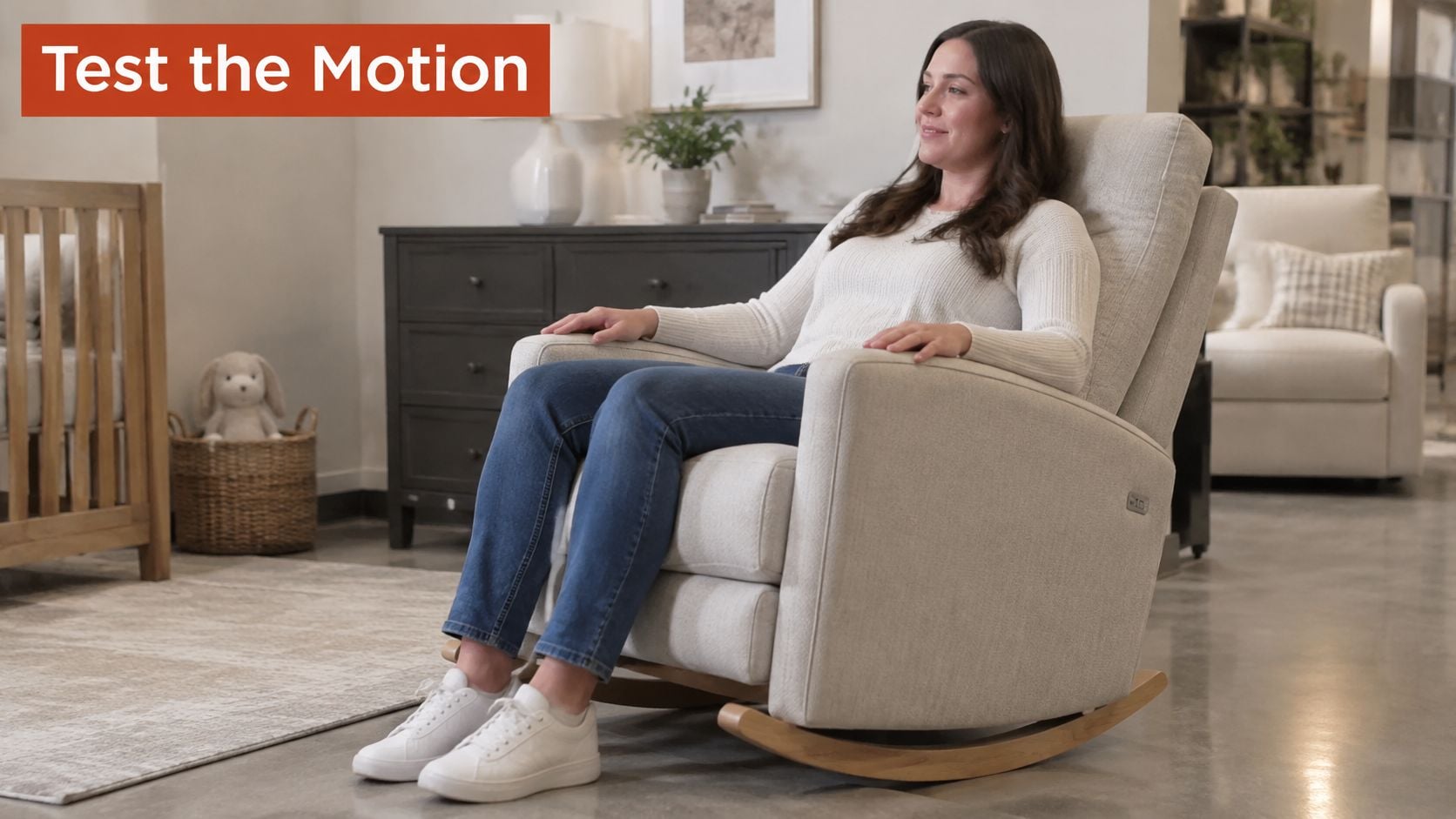
Photographs can show upholstery and shape, but they can't reveal side drift, binding, or the effort required to stand. A useful showroom test follows the chair through the positions you'll use, rather than stopping after the first comfortable impression.
Stability and strength are separate requirements. EN 1022:2023 addresses domestic-seating stability, including loading arrangements and support conditions; a chair that carries weight still needs suitable geometry to resist tipping during movement.
Follow the Chair Through Everyday Use
Settle fully back. Place your feet flat and check whether the back supports your spine without pushing you forward. Notice whether you need to brace yourself to remain comfortable.
Rock slowly through the usable range. Watch for sideways drift, catching at the travel limits or an inconsistent return toward the resting position. The movement should feel predictable rather than requiring correction.
Transfer weight gradually. Lean forward in a controlled way and confirm that the base remains supported and doesn't slide. Don't test stability by dropping into the seat or forcing it beyond its intended travel.
Operate the reclining function, if fitted. Extend the footrest and recline fully, watching for abrupt deployment or uncomfortable changes in support. Try every control one-handed without twisting to find it.
Listen through repeated movement. Clicking or creaking deserves investigation rather than dismissal as character. Ask the team to identify the cause before you decide.
Stand using the intended support surfaces. Move toward the front edge and rise without pulling on upholstery. Check whether armrest flex changes your balance.
Look for accessible pinch points. Have the team demonstrate moving components while keeping fingers clear. Consider where a child or pet could approach the mechanism.
Ask What Has Been Tested
ISO 7173:2023 defines structural strength and durability test methods for chairs, including load-bearing components, but excludes upholstery durability, ergonomics and electrical functions. It's a test-method standard, not a universal service-life guarantee.
Ask whether documented testing covers the complete chair and rocker mechanism, and request the published user-weight limit. The Consumer Product Safety Commission's recliner safety letter also identifies leg-rest strength, stability and pinch points as relevant performance concerns.
Our No Blind Ordering promise means ownership hand-tests every seat, sofa and recliner before it reaches the showroom floor, evaluating lumbar support, cushion resiliency and frame pitch. That hands-on screening complements, rather than replaces, manufacturer testing and your personal comfort assessment.
Book a Showroom Visit to Test Your Rocker Sofa Chair
Bring your tape measure, the painter's tape footprint from your living room floor and the shoes you wear around the house. A rocker that feels smooth in the store can behave differently under your own posture and weight, so sit in it exactly the way you plan to use it at home.
Our 32,000-square-foot Rockledge showroom sets those comparisons inside curated coastal vignettes, and you can walk in without an appointment seven days a week. Work through the stability and motion checks covered earlier, then compare cushion firmness and frame feel across several seats before narrowing your choice.
Bring the Room With You
Room photographs, access measurements and the footprint you have marked at home give the design team real context. Note anything that shapes daily use: a patio door that needs swing clearance, a reading lamp you refuse to move, or open floor a mobility aid relies on.
For full-room or whole-home projects, schedule a showroom appointment so the designer can prepare swatches and give your project undivided time. Full interior design consultations covering scale floor planning, fabric and finish selection, and room styling are complimentary when you purchase your furniture through Indian River Furniture.
Our in-house white-glove delivery team handles unboxing, inspection and full room setup for a flat $99 rate within the service area, carrying the same care from the showroom floor into your home.