Schedule your Complimentary Design Consultation


Best Sleeper Sofa Mattress: 2026 Buyer’s Guide

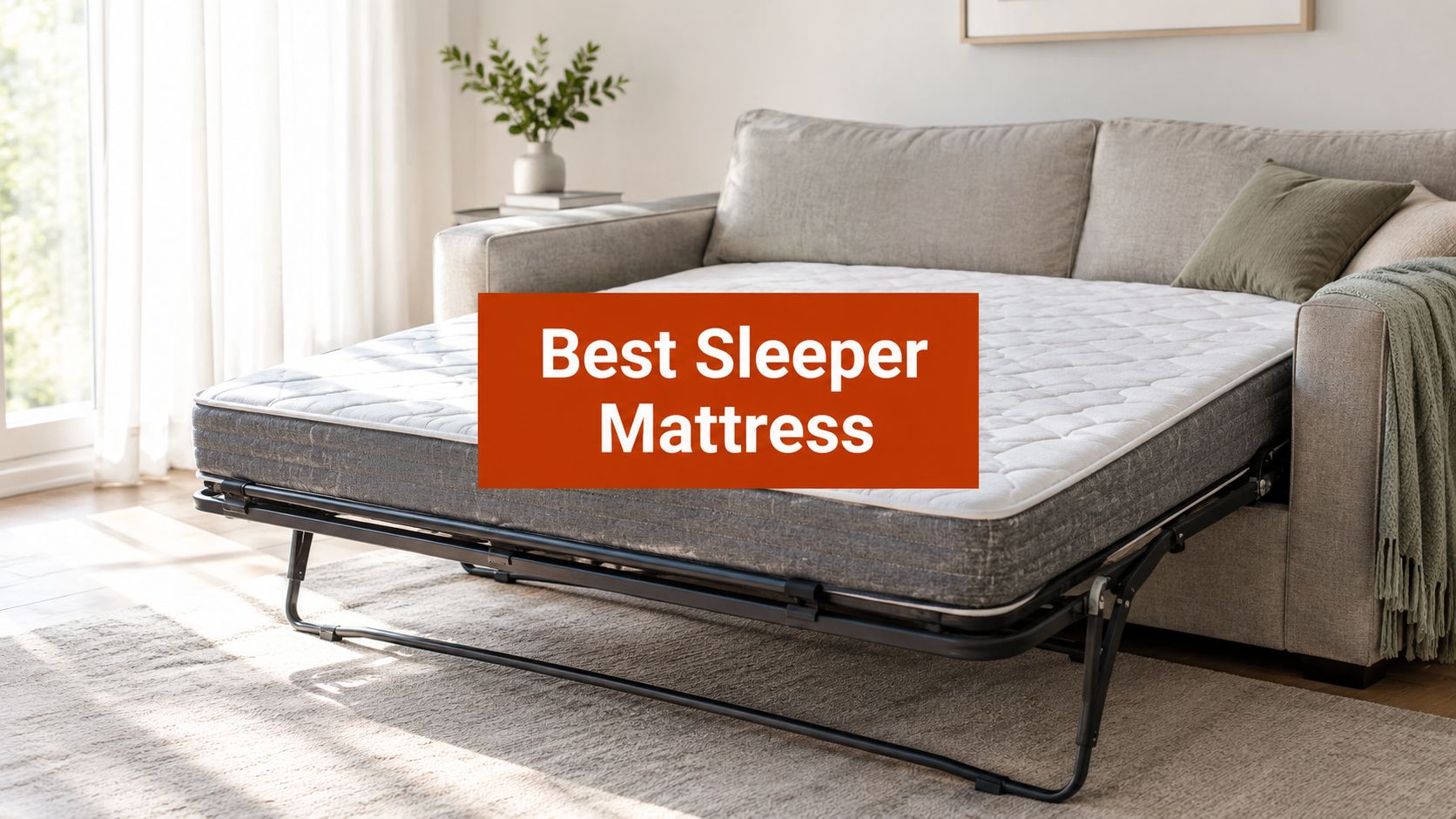
A guest arrives after a long day on the Space Coast, and you offer the sleeper sofa with genuine confidence. Then the mattress unfolds, the frame presses through the padding, and your visitor spends the night shifting from one uncomfortable position to another. By morning, the sofa still looks beautiful, but the hospitality feels less complete.
The best sleeper sofa mattress isn't chosen by thickness alone. Comfort depends on the interaction between the mattress material, folding mechanism, support distribution, frame geometry, and the way your household uses the piece. A thoughtful selection can turn a rarely appreciated sofa into a dependable guest retreat, a flexible family space, and a lasting investment in the way your home welcomes people.
| Mattress consideration | What it affects | Practical guidance |
|---|---|---|
| Material | Pressure relief, motion isolation, airflow, and feel | Memory foam generally cushions the mechanism well, while hybrids offer a balance of foam comfort and breathability |
| Thickness | Adult support and folding clearance | A practical sleeper-sofa range is typically 4.5 to 5.5 inches, subject to the mechanism |
| Density | Resistance to sagging and permanent compression | Higher-density base foam, often cited above 2.5 lb/ft³, is better suited to repeated use in independent sleeper-sofa guidance |
| Frame geometry | Ridge formation, spinal alignment, and stability | Inspect center bars, joints, support rails, and how evenly the frame carries weight |
| Sleeping dimensions | Guest comfort and bedding fit | A sleeper-sofa queen can be shorter than a standard queen mattress, so measure the open bed rather than assuming a familiar size |
Why Your Sleeper Sofa Matters
A sleeper sofa often earns its place in the room long before anyone unfolds it. During the day, it anchors conversation, gives children a place to read, and offers a comfortable landing spot after time outdoors. At night, it becomes a bed, and that transition reveals whether the piece was designed as a complete system or merely made to perform two jobs.
I've seen the same disappointment many homeowners know well. A guest removes the cushions, pulls the frame forward, and discovers a surface that feels narrow, uneven, or unforgiving. The sofa may have an inviting silhouette and carefully crafted upholstery, but the sleeping experience is governed by what lies beneath the fabric. A thin mattress can expose the center bar, while a tired support system can create dips that no decorative throw can disguise.

Comfort is part of craftsmanship
In a coastal home, hosting is rarely a formal event. Friends stay after dinner, family visits during school holidays, and a living room may need to shift gracefully from everyday use to overnight accommodation. The sleeper sofa should support that relaxed rhythm without making guests feel as though they've been given a compromise.
That means evaluating the mattress together with the frame. Pressure relief, surface stability, and ease of conversion all contribute to the experience. A mattress that feels pleasant in isolation can still perform poorly if the mechanism folds unevenly or concentrates weight along a rigid bar.
Practical rule: Treat the sleeper sofa as a bed system with upholstery, not as a sofa with an emergency sleeping surface.
A more complete way to judge the piece
Look at the sleeper as part of the room's long-term design. Its fabric should suit active Florida households, its frame should tolerate regular sitting, and its mattress should match the people who will sleep on it. Performance fabrics, genuine leathers, solid hardwood frames, and careful joinery all matter because a sleeper sofa is exposed to both daytime wear and nighttime conversion.
Storage can also influence how naturally the piece functions in a smaller room. A thoughtfully designed sleeper sofa with storage can keep bedding close at hand without turning the living area into a staging zone. The best result feels composed, not crowded.
A quality sleeper sofa supports more than guests. It protects the atmosphere of the home. When the bed opens smoothly, lies evenly, and feels inviting, visitors can settle in without apology, and the room continues to look polished when the mechanism is closed. That combination of comfort, reliability, and coastal ease is what makes the investment worthwhile.
Comparing Mattress Materials for Comfort
The material inside a sleeper-sofa mattress determines more than its initial softness. It affects pressure distribution, motion transfer, airflow, folding behavior, and how clearly the sleeper feels the frame beneath. Choose the material according to the people who will use the bed, the frequency of use, and the mechanism's construction.
Memory foam
Memory foam is often the most forgiving choice when the support deck or mechanism has noticeable structure. Its contouring surface can spread pressure and reduce the feel of bars beneath the sleeper. It also limits motion transfer, which helps when two people share a compact sleeping surface and one changes position during the night.
The trade-off is a slower, more enveloping response. Some sleepers value the cradle, while others want to turn easily on a more responsive surface. Foam density deserves careful attention. Higher-density base foam generally resists permanent compression more effectively, and 2.5 lb/ft³ is a useful durability reference when comparing replacement mattresses. In practice, press the surface and watch how quickly it recovers. Also check whether the foam is supported evenly across the frame, since a good material cannot compensate for a concentrated load over a rigid bar.
Hybrid construction
A hybrid combines foam comfort layers with coil-based support. It can feel more buoyant than all-foam, making position changes easier, while the open coil structure may encourage airflow in warm, humid rooms. For Florida homes, that breathability can make a noticeable difference during overnight use.
Compatibility remains the deciding factor. A hybrid that feels supportive when flat may resist folding, create pressure at the hinges, or sit unevenly inside the frame. Confirm the folded profile, attachment method, and manufacturer's compatibility guidance before treating a hybrid as an upgrade. Coil flexibility and the sofa's folding geometry must work together.
Innerspring construction
Innerspring mattresses provide a familiar, resilient feel with more bounce and natural air movement through the coil unit. They can suit occasional guests, especially those who prefer a firmer surface with less contouring. Their limitations become more apparent when the mattress is thin or the support deck has prominent bars.
Coils may transmit more movement than foam, and compressed padding can make the support structure easier to notice. That does not make innerspring a poor choice. It means the coil unit, padding, frame support, and sleeper's position must be assessed as one system.
| Material | Folding behavior | Typical feel | Best suited to |
|---|---|---|---|
| Memory foam | Usually folds cleanly when correctly sized | Contouring, quiet, pressure-relieving | Side sleepers, couples sensitive to movement, guests who value cushioning |
| Hybrid | Depends on coil flexibility and construction | Responsive with foam comfort | Regular use where support and airflow both matter |
| Innerspring | Traditional but can transmit frame feel | Buoyant and familiar | Occasional guests and sleepers who prefer a more resilient surface |
The room's textiles can soften the visual character of the sofa, but decorative layering does not replace mattress support. cashmere throw decorating inspiration can help create a warmer, more layered coastal setting around the piece.
For a closer comparison of memory foam, hybrid, and innerspring options, examine the construction before relying on labels. Lie on the mattress, check pressure at the shoulders and hips, test movement beside another sleeper, and fold it through the sofa's full conversion cycle. Material establishes the sensation. Frame geometry and support distribution determine whether that sensation remains comfortable in real use.
Finding the Ideal Mattress Thickness
Thickness affects comfort, but it also determines whether the sofa can perform its basic job. A mattress that feels generous in the showroom may prevent the mechanism from closing, strain the hinges, or shift out of alignment. Judge the profile together with the sofa's folding path and the way the mattress is supported.
A practical starting point is about 4.5 to 6 inches. The 4.5 to 5.5 inch range often provides a workable balance between adult support and folding clearance, as outlined in sleeper-sofa mattress guidance. A profile below 4 inches may feel spare for adult sleepers, while extra height can interfere with the mechanism. Treat these figures as a screening range, not a guarantee. Construction, compression, and the sofa's internal geometry still decide whether the mattress works.
Measure the working space
Open the bed completely before taking any measurements. Measure the cavity from inside edge to inside edge at three points, the head, center, and foot. Record the smallest width, length, and thickness clearance, then bring those figures to the showroom so you can test the actual mattress profile through the folding action.
Measure again with the mattress platform partially folded. Some mechanisms require the mattress to compress or bend at a particular hinge, and a mattress that fits when flat may bind during conversion. Check for nearby bars, hinges, fabric pockets, and retaining straps that reduce usable space.
Sleeping length also deserves attention. A standard queen mattress is usually 60 inches by 80 inches, while a sleeper-sofa queen can be shorter, including an example measuring 60 inches by 72 inches, as described in sleeper-sofa buying guidance. That difference affects taller guests, pillow placement, and fitted-sheet selection. Use this guide to mattress sizes for a dimensional reference, then verify the sofa's open-bed measurements in person.
Examine construction, not height alone
Two mattresses with the same profile can behave very differently. Foam resilience, internal layering, edge stability, and the way the mattress compresses at the hinge all influence whether sleepers feel supported or the frame beneath them. Ask for construction details when a specification lists thickness without explaining the materials inside.
A useful test: Fold the replacement through the sofa's full conversion cycle. Watch for buckling, rubbing, shifting, or force at the closing point.
The right mattress folds without excessive strain, stays positioned on the platform, and cushions the sleeper from the mechanism. Confirm clearance with the sofa open and partially folded. A residential mattress that fits the room may still be incompatible with the sleeper frame.
Evaluating Frame Geometry and Support
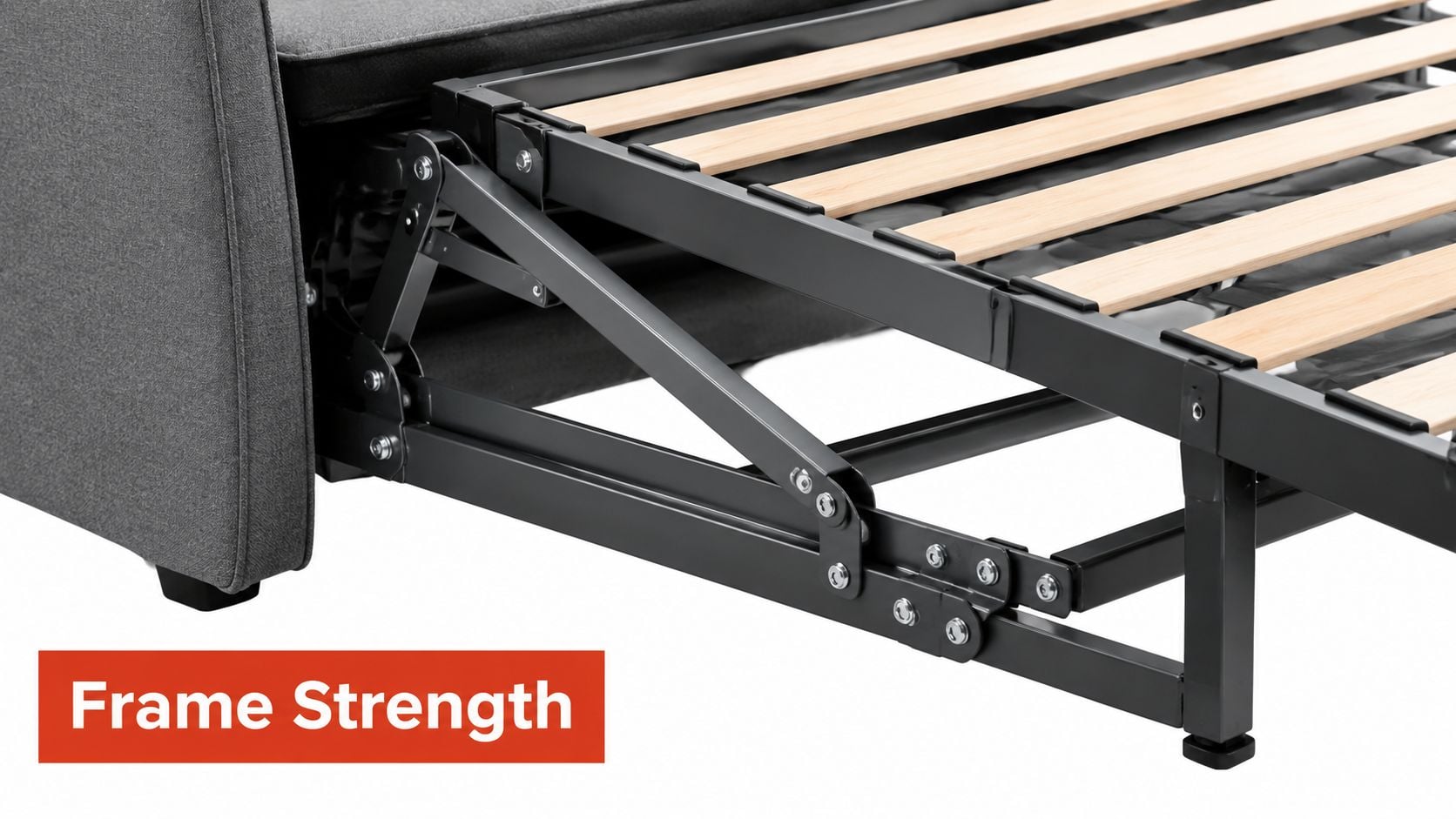
A sleeper sofa can feel uncomfortable even with a well-built mattress when its frame channels weight unevenly. Geometry determines how the body meets the sleeping surface, how pressure travels through the platform, and whether the mechanism remains stable under use. Examine that full support path before treating mattress specifications as the deciding factor.
Inspect the frame before choosing the mattress
Open the mechanism completely and inspect it in good light. Look for movement, gaps, sharp transitions, and sections that carry more load than the rest. The platform should present a consistent surface from head to foot and from side to side.
Find the center support. Run your hand across the platform, then lie down carefully with a thin folded blanket over it. A raised or hard center section shows that the frame is concentrating pressure in one place. That is a geometry problem, not just a request for a thicker mattress.
Study the joints. Hinges and folding points should move smoothly without scraping, twisting, or pulling the frame out of square. Resistance, knocking, or visible shifting may indicate wear, poor alignment, or a mechanism that does not suit the mattress construction.
Assess weight distribution. Press at the head, middle, foot, and both sides. Each area should respond with similar control. A platform that dips in one zone while another stays rigid can create uneven loading and premature wear.
Check the base materials. Solid hardwood framing, sturdy metal components, and securely fastened support rails generally provide more dependable service than loose, undersized, or poorly joined parts. A guide to what to look for in a new sofa or chair offers useful inspection principles for structure and tactile testing.
In our showroom checks, thin mattresses, sagging support systems, center bars, and frame joints commonly create pressure points. The relationship between the mechanism and sleeping quality also deserves attention when explaining the relationship between mechanism and sleeping quality. Use those observations to identify the source of discomfort rather than masking it with extra material.
Run a hands-on stability check
With the bed open, press firmly at the center bar and at each corner, listen for creaks, and watch for deflection greater than 0.5 inch, which signals uneven support distribution that thickness alone will not fix. Repeat the test while shifting your weight across the platform. The frame should settle steadily and return to position without wobbling.
Test conversion as part of the purchase
Pull the bed out, close it, and reopen it. Movement should feel controlled, with no scraping, abrupt drops, mattress buckling, or cushions pushed out of place. Confirm that the mattress stays aligned through the full cycle and that the mechanism does not pinch or drag it.
If a persistent ridge, twist, or unstable joint remains, replacing the unit may make more sense than searching for a mattress to compensate for unsuitable geometry.
Matching Mattress Type to Lifestyle Needs
A sleeper sofa in a guest room serves a different purpose from one used every night. Start with the household pattern, then match the mattress to the people using it. Sleeping position, body weight, temperature preference, sensitivity to movement, and the sofa's open-and-closed cycle all affect the right choice.
Occasional hosting
For visiting family or occasional adult guests, choose a mattress that folds cleanly, cushions the frame, and needs little maintenance. Memory foam can offer pressure relief and a settled feel. A quality innerspring may suit guests who sleep warm or prefer more responsive support.
The material must work with the mechanism. A softer mattress cannot correct poor frame geometry, uneven support, or a folded profile that forces the sofa closed. Check the exact mattress installed in the sofa, not merely a sample removed from the bed. For children or single guests, a simpler compatible mattress can be the practical choice if the surface feels even and secure.
Use also affects how quickly comfort changes. In our experience, an occasionally opened sofa-bed mattress often remains serviceable longer than one used nightly. Sagging, softened edges, and a returning bar sensation provide better replacement signals than the calendar alone.
Regular or nightly use
Nightly sleeping puts sustained demands on foam resilience, support distribution, ventilation, and the mechanism beneath the mattress. Look for construction that keeps its shape, manages heat, and tolerates repeated folding. A hybrid may suit someone who wants responsive support with more airflow, while memory foam can be preferable when pressure relief and motion isolation carry greater weight.
Daytime use matters too. The mattress must fold without permanent creasing, and the upholstery and frame must tolerate frequent conversion. Confirm that the thickness and flexibility suit the sofa's geometry. An impressive mattress that binds against the frame will provide less reliable comfort than a more modest option designed for that mechanism.
Couples and different sleep preferences
Two sleepers may need different levels of firmness and surface response. A side sleeper may prefer contouring around the shoulders and hips, while a back sleeper may want firmer resistance. Motion isolation becomes more useful on a compact sleeping surface, and breathability matters in warm rooms or for anyone who sleeps hot.
Discuss those preferences before choosing. This guide to shopping for a mattress as a couple provides a useful framework for weighing comfort needs instead of allowing one sleeper to make the entire decision.
| Your household pattern | Prioritize | Approach with caution |
|---|---|---|
| Occasional visitors | Clean folding, balanced comfort, simple upkeep | A mattress chosen only for a plush first impression |
| Repeated adult use | Resilience, support, airflow, and frame compatibility | Low-resilience foam or a surface that exposes the bar |
| Couples | Motion isolation, stable edges, and compatible comfort | A highly springy surface that transfers movement |
| Warm, humid room | Breathability, suitable upholstery, and ventilation | Materials that retain heat or feel enclosed |
A mattress upgrade can make sense when the existing frame opens smoothly and supports the sleeper evenly. Replacement is the sounder investment when the frame is twisted, the mechanism binds, or the support structure has deteriorated. Choose for the way the sofa will be used, not for thickness or softness in isolation.
Making Your Final Selection with Confidence
The final decision should begin with use, not upholstery color. Ask who will sleep on the sofa, how often the bed will open, whether two people will share it, and what the room feels like in the warmest part of the year. Those answers establish the comfort requirements before style enters the conversation.
Use a complete selection filter
A reliable choice passes four tests:
Material fit: Choose memory foam for contouring and motion control, a hybrid for responsive support and airflow, or innerspring for a more traditional feel when the frame and expected use make sense.
Mechanical fit: Confirm the mattress thickness, folded profile, attachment points, and open-bed dimensions. The sofa must close without force.
Structural fit: Check the center bar, hinges, support rails, and joint alignment. A premium mattress can't overcome a failing foundation.
Lifestyle fit: Match density and durability to the people who will use the bed. Occasional guests, nightly sleepers, children, and couples don't place the same demands on the furniture.
This process protects the investment from a common mistake, choosing a mattress that sounds impressive in isolation but performs poorly inside the sofa. Comfort is tactile, so sit on the piece, open it, lie down, and notice where your shoulders, hips, and lower back meet the surface.
Let the room guide the finish
A sleeper sofa should look at home when it isn't being used as a bed. Clean-lined upholstery, performance fabrics, genuine leather, and solid hardwood framing can support a relaxed coastal aesthetic while standing up to everyday life in Florida. The finish should invite touch without making the room feel precious or over-styled.
A local showroom can make that judgment more precise. At Indian River Furniture, established in 1939 and serving Brevard County, the Space Coast, and Central Florida, the ownership team hand-tests every seat, sofa, and recliner for pitch and comfort before it reaches the 32,000-square-foot Rockledge showroom floor. That no-blind-ordering approach lets you evaluate ergonomic support in person, explore curated coastal vignettes, and discuss custom performance fabrics, genuine leathers, and solid hardwood construction with the design team.
Complimentary in-house interior design consultations can help coordinate the sleeper with surrounding seating, rugs, lighting, and coastal finishes. Uniform white-glove delivery also keeps the final stage orderly, with the furniture brought into the home and placed with care.
The right sleeper sofa should feel convincing in both forms, inviting as a sofa in the afternoon and restful as a bed at night.
Take your measurements with you, describe the people who will use the bed, and be candid about what has disappointed you in the past. A knowledgeable furniture curator can then help you compare the mattress, mechanism, frame, fabric, and room proportions as one considered piece.
Visit the Rockledge showroom to hand-test sleeper sofas, open and close the mechanisms, and experience the difference between foam, hybrid, and innerspring support in person. Bring your room dimensions and sleeping preferences, then work with the design team to choose a custom, Florida-ready investment that gives your guests the comfort and reliability they deserve.