Schedule your Complimentary Design Consultation


Exposed Wood Frame Sofa: How to Choose One That Lasts


Afternoon light catches the wooden arm of a sofa you've been considering, and suddenly the grain looks as appealing as the cushions. You can already see it in your Space Coast living room. But will that smooth arm stay comfortable to touch, will the joints stay quiet, and will the finish hold up beside a bright Florida window?
An exposed wood frame sofa gives you something useful beyond its appearance: a chance to inspect part of the structure before bringing it home. The key is knowing what that visible wood can tell you, what remains hidden, and which questions matter in a humid, sunny home.
What Sets an Exposed Wood Frame Sofa Apart
An exposed wood frame sofa leaves parts of its wooden structure visible rather than wrapping everything in upholstery. Those parts can include the arms, legs, front and side rails, and sometimes the back frame. The visible wood works like stitching on a well-made jacket. It lets you see where separate pieces meet and how carefully they were joined.
The important distinction is visible wood versus a concealed wood frame. A fully upholstered sofa can also have excellent hardwood construction. Exposed framing makes selected surfaces and connections available for closer inspection, which helps in a humid, sunny home where a loose joint will show itself early.
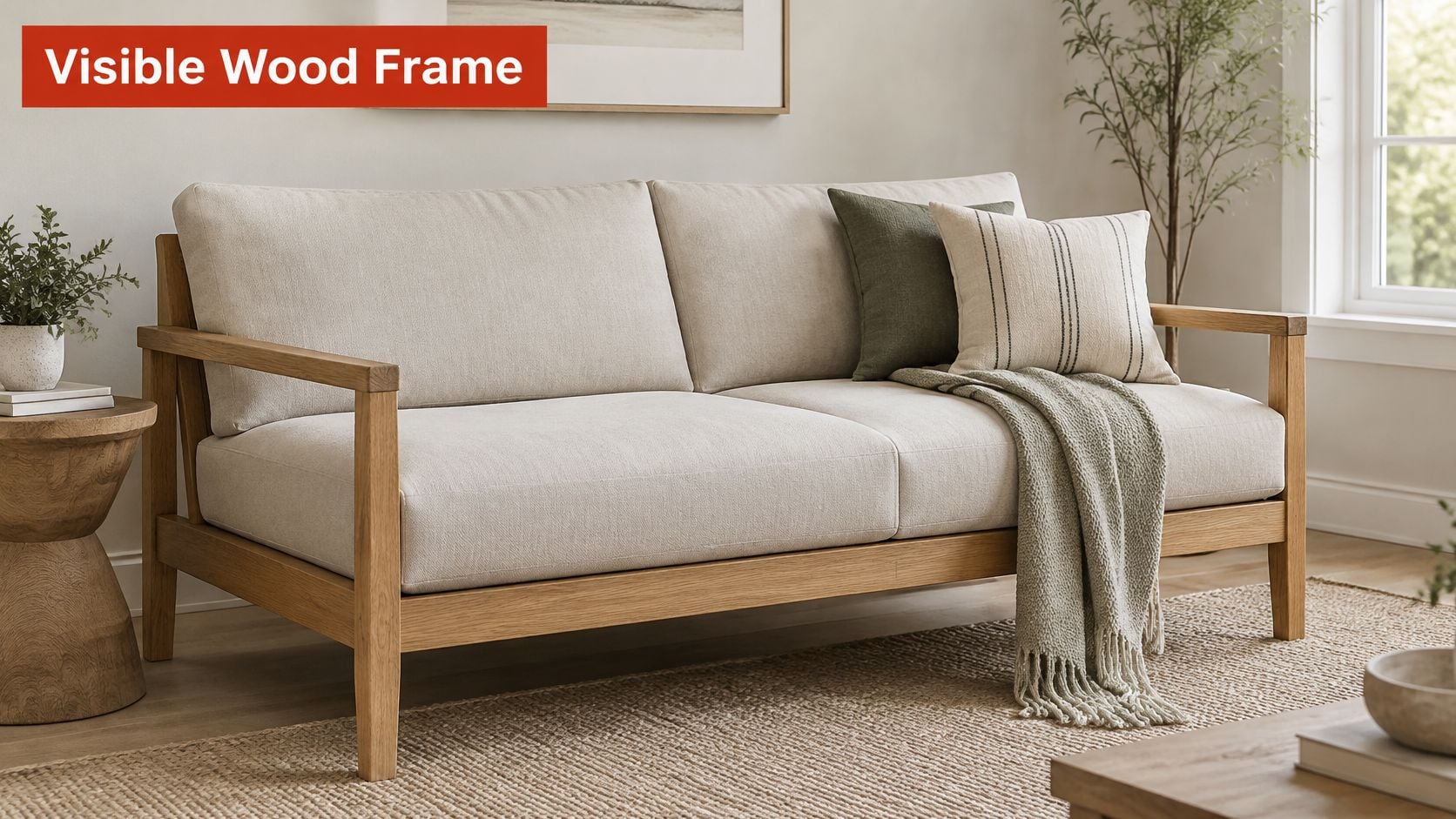
Read the visible structure
Look at the frame in distinct zones:
- Arms and rails display the grain, finish, and lines where separate members meet. They are also surfaces you will touch while sitting down or standing up.
- Legs and base lift the upholstered body away from the floor and influence how substantial or airy the sofa appears.
- Back framing outlines certain silhouettes and deserves attention when the sofa will float in an open room.
Visible framing has a long lineage in late eighteenth and early nineteenth century European and American furniture, including formal American parlors where the wood outline was part of the design.
Recognize the style without overlooking the build
Mid-century modern silhouettes often combine tapered legs, clean horizontal rails, and walnut, teak, or cherry tones. Their simplicity makes a poorly aligned joint especially noticeable.
Coastal relaxed designs favor light oak or ash, gentler curves, and cushions with an easy, slipcover-like appearance. The visual effect is open and informal without giving up a defined outline.
Traditional and Hepplewhite-inspired forms introduce carved or turned details and deeper wood tones. Here, the carved surface should feel deliberate and clean, not rough where your hand naturally rests.
Whatever the style, the exposed frame is both furniture structure and an everyday tactile surface. Grain, finish, and joint lines deserve the same attention as fabric color. Silhouette tells you what the sofa looks like; the joints tell you how it will age.
Construction Quality Indicators Worth Checking
Use this quick reference during a showroom visit. It separates features you can inspect from details that require a construction explanation.
Construction quality indicators for an exposed wood frame sofa
| Indicator | What Good Looks Like | Red Flag |
|---|---|---|
| Frame material | Kiln-dried solid hardwood or multi-layer engineered hardwood | Unspecified wood or a wood-look finish over a weaker core |
| Primary joinery | Mortise-and-tenon or double-dowel joints | Frame held mainly by screws, staples or metal brackets |
| Corner reinforcement | Fitted, glued corner blocks with tight corners | Visible gaps or movement at the corners |
| Leg attachment | Legs fixed through the rails and tight | Legs that wobble or loosen under light pressure |
| Finish continuity | Finish runs around joints and end grain | Bare end grain or uneven sheen at joints |
| Racking test | Frame holds still when the arms are shifted gently | Creaking, sway or a joint that opens |
| Seat support | Eight-way hand-tied springs or an equivalent system | Sagging deck or uneven seat height |
Follow the load through the joints
Start with the frame material, but don't stop there. A named material and drying method tell you more than a broad description such as wood construction. Engineered hardwood isn't automatically inferior; its suitability depends on its quality and structural role.
Next, establish how the rails connect. A mortise-and-tenon joint fits a shaped wooden projection into a matching opening. Double dowels help connect members and resist rotation. Independent sofa-construction guidance recommends kiln-dried hardwood or multi-layer engineered hardwood, mechanically interlocking joinery, and corner-block reinforcement.
Joinery matters more than apparent thickness. Sitting loads the seat rails vertically, while shifting sideways works the corners. A thick arm can look reassuring even when the connection beneath it allows movement.
Fitted, glued corner blocks reinforce those connections. Ask to see a construction diagram or an accessible underside rather than assuming an upholstered corner contains reinforcement.
Check attachment, finish, and support
Continue down the table in order. Leg connections should remain tight under gentle pressure, without movement where the leg meets the rail. Don't confuse a floor irregularity with a loose leg; have the showroom team establish the cause of rocking.
Then trace the finish around a joint and toward the end grain. Look for consistent coverage, not necessarily identical grain color. Natural variation is different from a bare patch or an unfinished edge.
Gentle alternating pressure on the arms tests resistance to racking, the sideways distortion of a frame. Stop if a joint visibly opens. Finally, sit across the seating positions and notice whether the support remains even rather than dropping abruptly.
Our construction baseline is solid wood with eight-way hand-tied springs. Pieces with a sagging frame, leather that doesn't wear well under Florida sun, or a spring assembly that compromises posture never make it past our showroom doors.
Inspection rule: A substantial-looking frame still needs sound connections and a supportive suspension system.
Use a three-minute showroom sequence
- Look and touch. Follow the rails, inspect corner alignment, and feel the arm surfaces.
- Sit and shift. Sit near the front edge, then move back and gently shift laterally while listening for repeatable creaking.
- Check and clarify. Test the arms gently and have the team explain hidden joinery, suspension, and accessible hardware.
For broader questions about cushions and seating configurations, use our living-room sofa buying guide.
Choosing Wood Species and Finish for Florida Humidity
A sofa with visible wood gives you something most upholstered frames hide. You can read the skeleton directly. Grain tightness, edge wear, and how completely the finish wraps each member all show before you buy, and each one predicts how that frame will behave through humid summers and air conditioned winters.
Wood keeps exchanging moisture with the air after it is built. Hardwood works well in Florida when the lumber was dried correctly, joined to allow small movement, and finished on all exposed surfaces including end grain and the backs of rails. Finish slows that exchange. It never seals wood completely.
Wood species for exposed sofa frames in Florida
| Species | Look on Exposed Parts | Florida Note |
|---|---|---|
| White oak | Strong grain, honey to pale tone | Stable when kiln dried, suits coastal and traditional lines |
| Red oak | Open grain with visible pattern | Porous grain needs thorough, even finish coverage |
| Hard maple | Fine, uniform grain, light tone | Dense surface resists dents, fits clean lined designs |
| Black walnut | Rich brown with varied figure | Review in person, since light exposure shifts tone over time |
| Cherry | Warm reddish tone that deepens | Expect gradual darkening, so finish quality matters |
| Genuine mahogany | Reddish brown, fine grain | Traditional choice that depends on proper drying |
| Ash | Pale tone with bold grain | Springy character suits gently curved backs and arms |
| Rubber wood | Light, even tone common in modern frames | Verify kiln drying and coverage on every exposed edge |
| Eastern white pine | Soft, pale and easily marked | Better suited to concealed framing than exposed rails |
Hardness ratings measure resistance to a dent. They do not show whether a joint was cut accurately or whether the lumber was conditioned for a coastal home, so use the table above as a guide to appearance and care, then inspect construction.
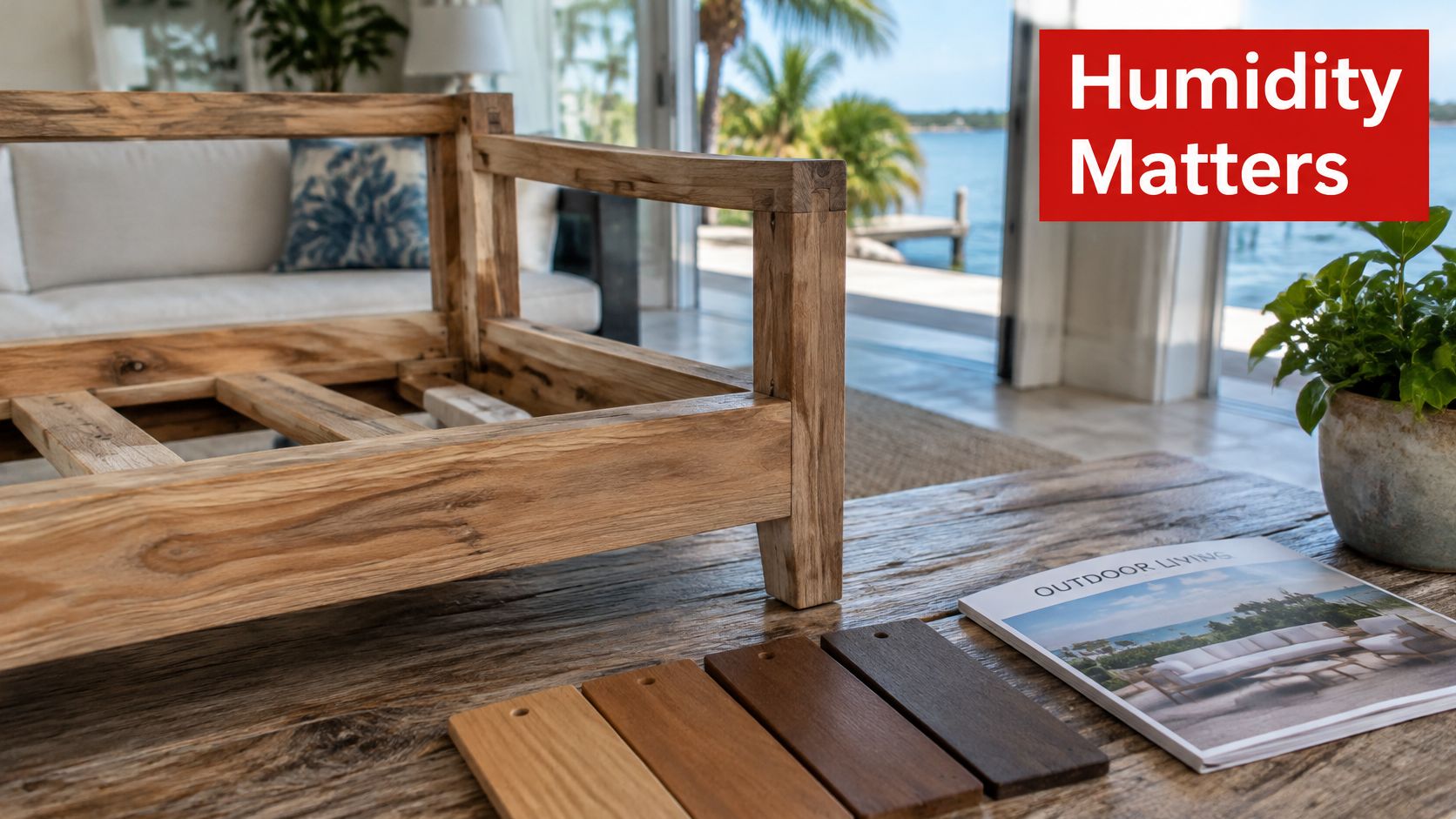
Put moisture preparation ahead of species prestige
Purdue Extension's furniture-moisture guidance explains that a 6-percentage-point moisture-content change can produce approximately 2.5% dimensional change in a sugar-maple component. Movement at that scale can stress fitted parts and joints.
Ask three direct questions. How was the lumber kiln dried. Was it acclimated before assembly. How does the construction allow movement across the grain. Then trace the finish with your finger around a leg, along a rail, and onto the end grain. Consistent coverage counts more than identical color, because natural variation is normal and a bare patch is not.
Historically, makers often used decorative hardwoods on visible surfaces and pine for concealed framework, as described in this overview of sofa materials and manufacturing. That old habit is still a useful warning. A soft, easily marked rail needs extra scrutiny when it is left exposed.
Compare tone and finish in person
Walnut and cherry deserve a second look under different light. Cherry deepens with exposure. Walnut shifts with finish and lighting. Neither will hold an exact showroom color forever, so judge whether you will still like the direction it moves.
For vocabulary that helps distinguish finish choices, RMK Contractors' cabinet finish guide offers a useful companion resource. Use those terms to ask sharper questions, then confirm the sofa maker's own finish specifications for cleaning, touch up, and sun exposure.
Our guide to hardwood longevity and style can also help narrow your preferences. In Rockledge, you can touch solid hardwoods, feel leathers, and compare cushion firmness while checking whether an arm feels silky, overly slick, or rough at its edges.
How to Measure a Room and Test Fit Before You Buy
An exposed wood frame gives you one advantage before you buy. You can see the rigid outline, so you can judge size with unusual accuracy. Tape tells you the rest of the story.
- Measure the intended wall. Reserve space for side tables and lamps before deciding how much width the sofa can occupy.
- Mark the circulation route. Tape out a walkway of 30 to 36 inches, then physically walk through it. Keep a main passage distinct from the smaller reach space beside a coffee table.
- Measure the delivery route. Record doorways, hallways, stair turns, and overhead obstructions. Depth, diagonal clearance, and the largest rigid section can matter more than overall length.
- Locate fixed features. Mark windows, vents, and outlets so the layout does not block airflow or make everyday access awkward.
- Sit fully back. Place both feet on the floor and check that your pelvis stays stable without pressure behind your knees. Seat depth and cushion resiliency change this feeling more than overall size.
- Rest your forearms naturally. Notice whether the arm height supports your elbows or makes you lift your shoulders. Because the arm is wood, not padding, an inch too high or too low is easy to feel.
Typical sofa dimensions to check against your room
| Dimension | Why It Matters |
|---|---|
| Overall width (three-seat) | Must fit the wall with room for side tables |
| Overall depth | Sets how far the sofa projects into the walkway |
| Seat height | Determines how easily you stand up |
| Seat depth | Controls thigh support and posture |
| Arm height | Affects elbow comfort and how the arms frame the view |
| Walkway clearance | Gives a comfortable path around the sofa |
Feel the pitch rather than guessing
Pitch is the seat slope from front to back. A more upright seat often feels supportive and easier to exit. A deeper recline feels more cradling through the lower back.
Test pitch, depth, and cushion density together. Sit the way you sit at home, then shift, lean, and stand. Short legs need a shallower seat to avoid pressure at the knee. Taller frames often prefer extra depth for full thigh support.
Every sofa depth, recliner pitch, and cushion density in the showroom has been personally sat in, evaluated, and approved by the ownership team. That screening sets the baseline. Your own seated test confirms the fit for your body.
Bring a sketch and use our furniture measuring guide to organize the dimensions before you visit.
Pairing Fabrics and Leathers with Exposed Wood
A walnut rail beside cognac leather reads warm and grounded in a Rockledge living room with afternoon sun across the floor. The same rail beside a pale washed cotton reads higher contrast, so dust and fading show faster. Start from that daily picture, then pick the textile that will live comfortably against the wood you like.
Warm walnut or cherry tones sit well with muted linen, cognac or saddle leather, and textured neutrals. Light oak and ash sit well with soft linen, washed cotton, and bouclé, especially when you want a coastal room to feel relaxed rather than overly matched. A quiet textile lets figured grain stay visible. A plainer frame can carry more texture without looking busy.
Fabric and leather pairings by wood tone
| Wood tone | Pairing fabrics or leathers | Care note |
|---|---|---|
| Walnut or cherry | Muted linen, cognac or saddle leather, textured neutrals | Top-grain leather develops a patina with use |
| Light oak or ash | Soft linen, washed cotton, bouclé | Performance fabrics resist fading, stains, and sun wear |
| Any frame in a busy household | Performance fabric or genuine top-grain leather | Choose by how people will use the sofa |
| Velvet on any frame | Luxurious texture for formal rooms | Needs gentler care |
Match the material to everyday habits
Performance fabric suits active households with kids, pets, and frequent guests. Protection still varies by textile, so confirm the selected fabric for stain removal, abrasion, and light resistance, plus its approved cleaning method. Some finishes clean with water, others call for solvent based care.
Genuine top-grain leather offers a supple surface that develops character with use. Compare samples for feel and finish rather than choosing solely by color. Velvet adds directional texture for a formal sitting area, though its pile calls for gentler handling and appropriate cleaning.
Our leather-versus-fabric upholstery guide walks through that daily use decision with side by side examples. For the floor beneath the seating group, Rubber Ducky Rug Cleaning Birmingham's guide to the best rug materials for heavy foot traffic gives a companion view on choosing materials for busy rooms.
Plan for different components to age differently
Solid wood construction with eight-way hand-tied springs gives the exposed frame long structural service under normal indoor use. Cushions, foam, suspension, and upholstery usually need attention sooner, which is normal in Florida sun and active coastal living. Upholstery engineered for that climate holds color and surface wear longer when it is cleaned as directed.
Ask whether cushion cores can be rebuilt or replaced and whether reupholstery can be completed without damaging exposed wood. A repairable finish also makes it possible to address wear while preserving the grain.
Choose upholstery for how people will use the sofa, then select a wood tone that harmonizes with it.
Styling and Placing Your Sofa in a Florida Home
A light oak frame against a warm wall, a linen throw folded over an arm, a woven basket, and a lamp at the corner can create an inviting coastal setting. The frame supplies definition without making the room feel formal. Before arranging the finishing touches, check what the room will expose that wood to throughout the day.
The Canadian Conservation Institute's furniture-finish guidance explains that light can degrade finishes and that protective coatings don't make wood immune to environmental movement. Positioning is therefore part of caring for the furniture.

Walk through the placement checklist
- Soften direct sunlight. Use window treatments where prolonged afternoon exposure would fall across an arm or rail.
- Allow airflow behind the back. Avoid pressing the sofa tightly against an exterior wall.
- Move away from supply vents. Don't let conditioned air blow directly across exposed wood.
- Clean gently. Wipe spills promptly, dust with a soft cloth, and use manufacturer-approved cleaning methods.
- Manage seasonal absences. In a vacation or seasonal home, maintain consistent climate control and monitor humidity where the sofa sits.
Give the silhouette room to read
For a mid-century frame, try a low-profile rug, a sculptural lamp, and warm wood accents that relate without matching exactly. Traditional forms benefit from layered pillows and a rug positioned beneath the front legs to connect the seating group.
If your coastal room includes farmhouse details, Farmhouse World's ideas for personalized signs for farmhouse living rooms can help guide a restrained wall accent. Keep surrounding decoration quiet enough that carved arms or an expressive back frame remain visible.
Our design help can cover a single accent chair or full-home furnishings. Designers are on the showroom floor 7 days a week to pull swatches, check dimensions, and help you test comfort, so layout and daily use stay part of the same conversation.
Customizing and Delivering Your Exposed Wood Frame Sofa
An exposed frame is a made-to-suit investment when its visible details and seated feel work together. Customization should begin with how you want to live with the piece, not an isolated swatch.
Coordinate the visible and tactile choices
- Wood tone and finish. Select the available species and finish with your room's flooring, existing furniture, and natural light in mind. Compare larger samples when possible so grain variation doesn't come as a surprise.
- Upholstery. Our custom library offers over 1,000 performance upholstery options, genuine top-grain leathers, and hand-finished wood swatches. View the textile against the wood rather than approving them separately.
- Comfort. Work with the design team on available cushion-firmness and seat-depth choices. Customization options depend on the particular frame, so establish what can be adjusted before finalizing the selection.
Delivery checkpoint: The finished sofa should sit level, with tight connections and the placement you intended.
Protect the choices through delivery
Our premium white-glove delivery service uses a uniform, in-house team for unboxing, inspection, and full room setup. The arrival check should include the exposed finish, frame alignment, joints, and leg connections before the sofa is accepted in its final position.
Precise placement matters with visible wood. A slight angle can change how the frame relates to a rug or catches light from a window, so confirm the position while the team is there.
Keeping delivery within one consistent team supports care and accountability. That's an appropriate finish to choosing an heirloom-minded piece: careful handling from the showroom decision to the room where you'll enjoy it.
Confirm Your Sofa in the Rockledge Showroom
Photographs show the outline of an exposed wood frame sofa. Touch confirms whether that frame will stay tight for decades. Run a hand along rails and arms to feel for smooth joints and even finish, then sit for seat depth, arm height, and lumbar support in one visit.
Curated coastal vignettes help judge the frame against rugs, lighting, and nearby seating instead of as an isolated object. Compare finish continuity side by side in natural light. A small shift in tone between arm and base becomes clear when pieces sit next to each other.
Bring a useful showroom checklist
- Your room sketch. Include wall dimensions, window and vent positions, and space reserved for walkways.
- Your delivery measurements. Bring doorway widths, hallway restrictions, and any difficult turns.
- Your material references. Flooring samples, existing fabric swatches, or room photographs make finish comparisons more meaningful.
- Your comfort priorities. Note whether you prefer upright conversation seating, a relaxed lounge position, or easier standing support.
For a full room or whole home, schedule a complimentary appointment so a designer can prepare swatches and give your project undivided time. Full interior design consultations, including scale floor planning, fabric and finish selections, and room styling, are completely complimentary when furniture is purchased through Indian River Furniture.
Close with three checks. Joints feel flush and solid. Finish looks consistent across every visible rail. Seat comfort supports posture without sagging.